






Care & how-to
Why Does My Dog Chew Everything? And How to Stop It
Chewing is normal for dogs. Puppies chew to explore and to ease teething pain, and adult dogs chew to keep their jaws busy, relieve boredom, and calm themselves. A dog who chews everything usually needs more exercise, more mental work, and better things to chew. Destructive chewing only when left alone can be a sign of separation distress, and sudden chewing can have a medical cause.
By Matt GarnettUpdated November 14, 20264 min read2 sources
Why puppies chew everything
Puppies explore the world with their mouths, the way babies use their hands. Between roughly three and six months of age, they also lose their baby teeth as the adult teeth come in, and chewing soothes sore gums. During this stage almost anything within reach, from shoes and table legs to cables and fingers, is fair game.
This is a phase to manage, not punish. Puppy-proof the home, give a variety of puppy-safe chew toys, and supervise or confine your puppy in a safe area when you cannot watch them. Most puppies chew far less once the adult teeth are in, if they have learned what is theirs to chew.
Why adult dogs chew
Adult dogs chew to keep their jaws strong and teeth clean, and because it feels good. Chewing is also a natural way to relieve boredom, frustration, and mild anxiety. A dog who is under-exercised or left with nothing to do for long stretches will often find their own entertainment in the couch cushions.
Hunger can play a part too. Dogs on a calorie-restricted diet may chew and scavenge more, and some dogs chew things that smell of food, such as kitchen towels or trash. Some breeds, including retrievers and working breeds, are especially mouthy.
Chewing and separation distress
If chewing happens mainly when your dog is alone, especially around doors and windows, and comes with barking, howling, pacing, drooling, or accidents, your dog may be distressed by being left. These dogs are not being spiteful; they are panicking.
Separation-related problems need patient, gradual training, starting with very short absences, and often help from a qualified trainer or veterinary behaviorist. Food puzzles can help mild cases. Never punish a dog for chewing you discover later, because they cannot connect the punishment with what they did, and it adds to their anxiety.
How to stop destructive chewing
Step 1: Dog-proof your home. Put shoes, remote controls, children's toys, and cables out of reach, and use baby gates to block off rooms. Step 2: Offer several chew toys of different textures, such as a tough bear chew toy, rotate them so they stay interesting, and choose sizes too large to swallow. Step 3: Supervise, and when your dog picks up something they should not, calmly swap it for a toy and praise them for chewing that instead.
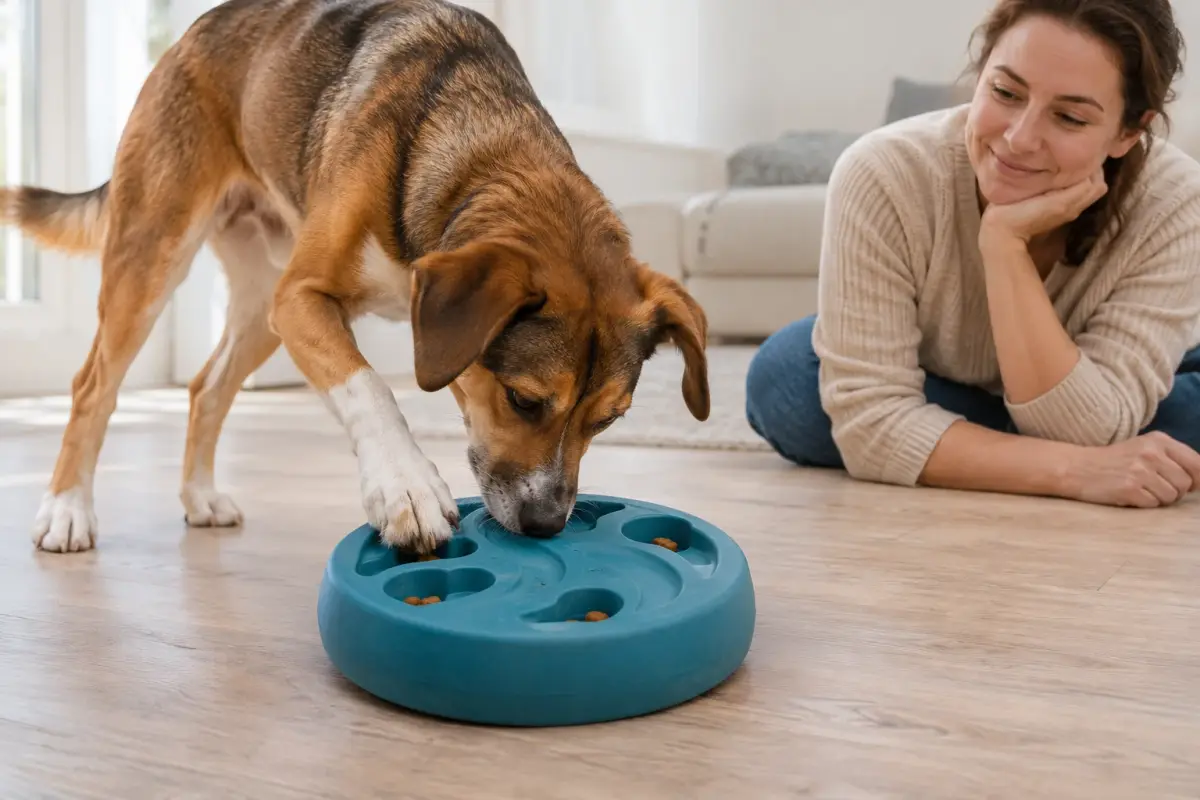
Step 4: Increase exercise and mental work, such as longer walks, sniffing games, short training sessions, and food puzzles. Step 5: Use a safe taste deterrent on furniture your dog targets. When you must leave your dog unsupervised, use a safe crate or dog-proofed room with toys and water.
Safe and unsafe things to chew
Choose chews suited to your dog's size and chewing style, such as chews made for aggressive chewers, and supervise with any new item. Rubber chew toys, including a rubber dental chew bone, food-dispensing toys, and appropriately sized dental chews are good options for many dogs. Throw away toys once they start to break apart.
Avoid cooked bones, which splinter, very hard items such as antlers and hooves that can break teeth, and anything small enough to swallow, including socks and rope fibers. Swallowed objects are one of the most common reasons for emergency surgery in dogs.
When to call your vet

Book a vet visit if an adult dog suddenly starts chewing much more, chews on themselves, or eats non-food items such as rocks, fabric, or plastic, which can be a sign of pica, nausea, dental pain, or other illness. Your vet can also help with separation-related chewing.
Go to an emergency vet if your dog may have swallowed an object and is vomiting, retching, not eating, or has a painful belly, or if they have chewed something toxic such as medicine, batteries, or a plant. Call ASPCA Animal Poison Control at (888) 426-4435 or the Pet Poison Helpline at (855) 764-7661; a fee may apply.
This page is general information, not veterinary advice, and it cannot replace an examination by the vet who knows your pet.
Common questions
At what age do puppies stop chewing everything?
Most puppies chew most intensely while teething, roughly between three and six months, and many settle by about a year. Dogs keep needing to chew throughout life, so provide suitable chews at every age.
Why does my dog chew things when I leave?
Chewing only when alone can be boredom, but it can also be separation distress, especially with barking, pacing, or accidents. Talk to your vet or a qualified trainer about a gradual training plan.
Should I punish my dog for chewing?
No. Punishment does not teach what to chew and can make anxious dogs worse. Prevent access, redirect to a chew toy, and reward your dog when they choose the right item.
Sources we checked
This guide is general information, not veterinary advice. If your pet is unwell or injured, contact your veterinarian.


