






Buying guides
Are Antlers Safe for Dogs?
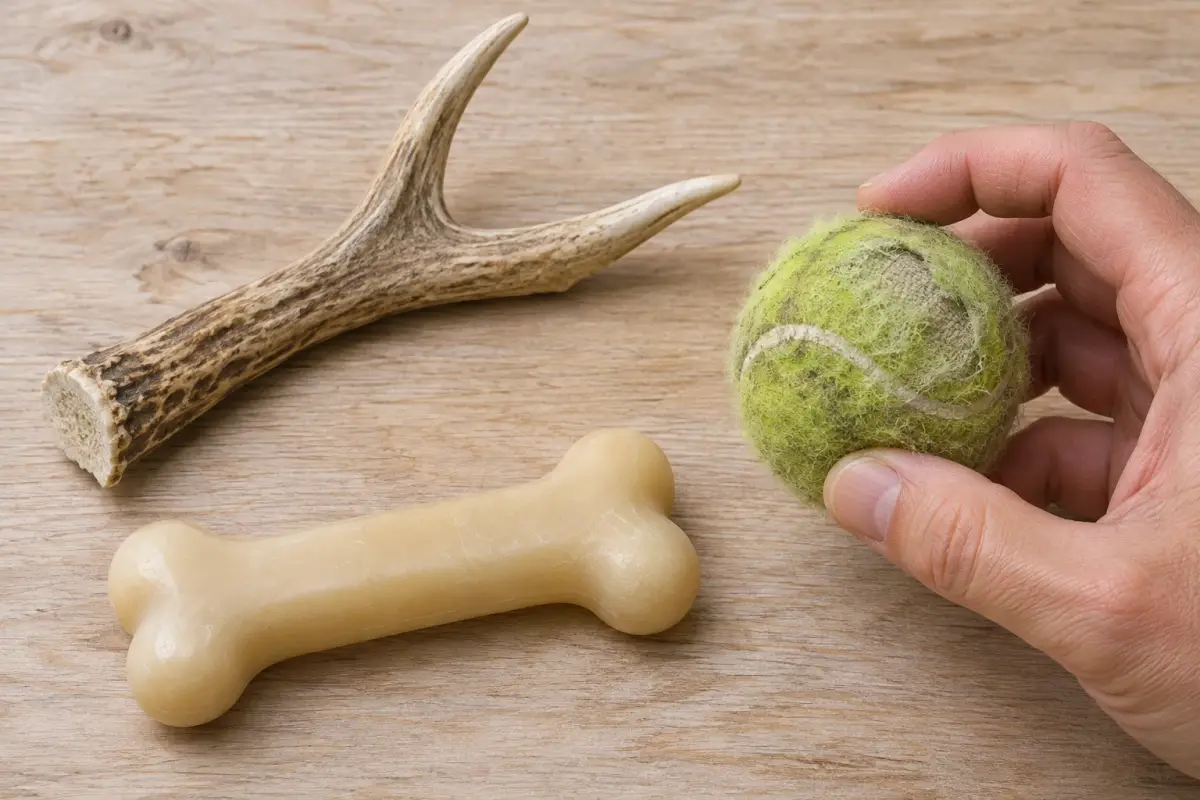
Antlers are not a safe chew for most dogs. They are extremely hard, and VCA lists antlers among the hard, non-bending chews that commonly cause fractured teeth, usually the big upper cheek teeth or the canines. The AKC notes many veterinarians recommend avoiding them, and that splinters can cut the mouth or lodge in the throat or gut. A safer chew bends or dents under pressure. If you do offer antlers, supervise closely.
By Matt GarnettUpdated November 14, 20264 min read4 sources
Why antlers break teeth
A dog's teeth are strong, but they are not built to grind against something harder than they are. Antlers are dense bone, and a dog that bites down hard at the wrong angle can split a tooth. VCA names antlers, bones and other hard, non-bending chews as common causes of fractures, with the canine teeth and the large upper cheek teeth at the back of the mouth broken most often.
Tufts veterinary dentists take the same line, calling bones a big no-no and naming antlers, cow hooves, yak chews and hard nylon bones alongside them. The problem is not usually one dramatic crunch you notice. Many fractures happen quietly, and dogs are very good at hiding mouth pain.
The other risks: splinters and swallowed pieces
Antlers can also splinter. The AKC warns that sharp shards can cut the gums or lodge in the mouth, throat or intestines, sometimes requiring emergency surgery. Split antlers, sold because they are easier to chew, expose softer marrow but still leave hard, sharp edges.
As an antler wears down, the leftover piece becomes small enough to swallow whole, which is a choking and blockage risk. The ASPCA advises discarding durable chews before they become excessively worn, and calling your vet right away if your dog swallows a chunk of chew material.
Signs your dog has cracked a tooth
VCA lists chewing on one side of the mouth, dropping food, drooling more than usual, grinding the teeth, pawing at the mouth, shying away when you touch the face, facial swelling and refusing hard food or chews. You may also see a tooth that looks chipped, discolored or has a pink or dark spot in the center, which can mean the nerve is exposed.
Dogs often show no obvious signs at all, so a fracture may only be found at a checkup. A broken tooth with an exposed nerve is painful and can become infected, and VCA explains it usually needs root canal treatment or extraction. If you suspect a broken tooth, book a visit with your vet.
The bend and thumbnail test
A simple rule from VCA: discard any chew or toy that does not readily bend. Tufts adds a thumbnail test: if you cannot flex a chew, press your thumbnail into it and leave a mark, or dissolve it in water, do not buy it. Antlers fail every one of these tests.
Also think about size and shape. The chew should be too big to swallow whole and suited to how your dog chews. A gentle nibbler and a powerful gulper need different products, and the ASPCA advises choosing durable products for aggressive chewers that will not break into swallowable pieces.
Safer alternatives to antlers
Firm rubber chew toys that bend and dent are a good everyday option for most dogs. Dental chews that carry the Veterinary Oral Health Council seal have been tested for plaque or tartar control, and VCA suggests looking for that seal when choosing chews. Food puzzles and frozen stuffed toys satisfy the urge to work at something for a long time.
For edible chews, pick ones that soften as your dog chews and suit your dog's size, and supervise. Take any chew away once it is small enough to swallow. If you are not sure what suits your dog, especially a strong chewer, ask your vet at the next dental check.
If you still choose to give an antler
Choose one larger than your dog's mouth, never let your dog chew it unsupervised, limit chewing sessions, and take it away the moment it is small enough to swallow or starts to splinter. Avoid antlers entirely for puppies, seniors and dogs with existing dental problems or crowns.
Call your vet if your dog seems to have mouth pain, a broken tooth, bleeding gums or trouble eating after chewing.
This page is general information, not veterinary advice, and it cannot replace an examination by the vet who knows your pet.
Common questions
Do vets recommend antlers for dogs?
Many do not. The AKC notes many veterinarians recommend avoiding antlers, and VCA lists them among common causes of fractured teeth. Ask your own vet before choosing hard chews.
Are split antlers safer for dogs?
Split antlers are a little easier to chew because the softer center is exposed, but the outside is still very hard and can break teeth or splinter. They carry the same basic risks.
Are antlers safe for puppies?
No. Puppy teeth and young adult teeth are vulnerable, and a hard antler can damage them. Give puppies softer, flexible teething toys that bend and dent instead.
Sources we checked
This guide is general information, not veterinary advice. If your pet is unwell or injured, contact your veterinarian.


