






Buying guides
Are Nylon Dog Chews Like Nylabones Safe?
Hard nylon chews, the type sold under names such as Nylabone, are a mixed bag. They are durable and many dogs love them, but very hard ones can fracture teeth, and VCA and Tufts veterinary dentists both list hard nylon chews among the items to avoid. The ASPCA adds that nylon chews wear down into thin pieces that can break off and be swallowed. If a chew does not bend or dent under your thumbnail, it is too hard.
By Matt GarnettUpdated November 14, 20263 min read3 sources
Why hard nylon chews can damage teeth
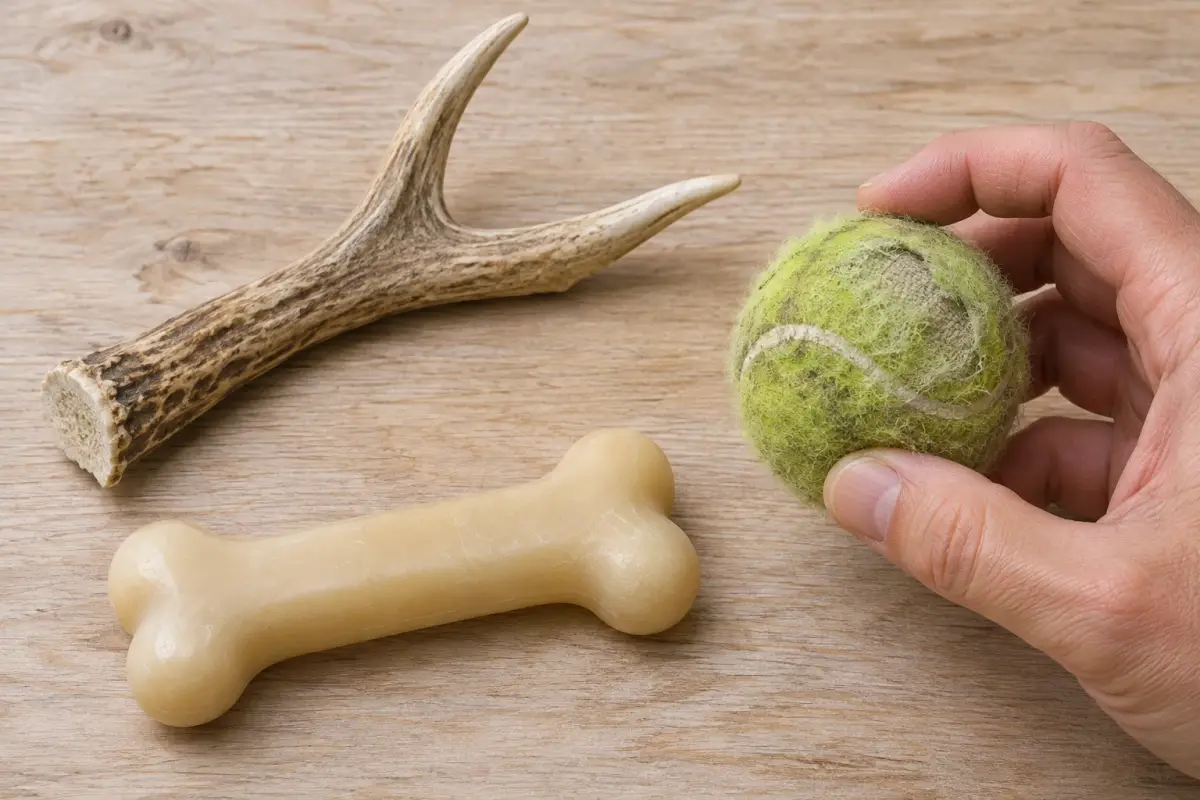
Nylon is tough enough to stand up to strong chewers, which is the appeal. The trouble is that a material harder than tooth enamel can crack a tooth when a dog bites down at the wrong angle. VCA includes nylon chews on its list of things to avoid to prevent fractured teeth, alongside bones, antlers, cow hooves and pizzle sticks.
Tufts veterinary dentists say the same about hard nylon bones, and offer a simple rule: if you cannot bend or flex a chew, or press your thumbnail into it and leave a mark, do not buy it. Some nylon products are softer than others, so the test matters more than the brand.
The swallowing risk as a chew wears down
Dogs scrape nylon chews into rough ends and small shavings as they gnaw. The ASPCA notes that durable nylon or plastic chews suit aggressive chewers but wear down into thin pieces that can break off and be swallowed. Small shavings usually pass, but larger chunks can cause problems in the stomach or intestines.
The ASPCA advises discarding durable chews before they become excessively worn and contacting your vet right away if your dog swallows a chunk. Check the chew every day, and replace it when the ends are sharp, it has shrunk noticeably, or pieces are missing.
How to choose a safer nylon chew
If you decide to use one, pick a size bigger than your dog's mouth and rated for your dog's weight and chewing style. Try the bend and thumbnail test in the store: VCA suggests discarding any chew that does not readily bend. Softer, flexible nylon and rubber chews are generally a better bet than rock-hard ones.
Watch how your dog chews. A dog who gnaws slowly and scrapes is lower risk than one who clamps down with the back teeth and tries to crunch through. If your dog has had a fractured tooth before, has crowns or has worn teeth, ask your vet before giving any hard chew.
Signs a chew has hurt your dog
After chewing, watch for chewing on one side of the mouth, dropping food, drooling, pawing at the face, a swollen jaw or refusing hard food, which VCA lists as signs of a fractured tooth. Bleeding gums or a chipped tooth are also reasons to book a visit.
Vomiting, retching, a painful belly, not eating or straining to poop after your dog has been chewing could mean a swallowed piece, and need a call to your vet the same day.
Alternatives to hard nylon
Firm, flexible rubber chew toys, stuffed and frozen with your dog's food, satisfy a strong chewer without the same tooth risk. Dental chews carrying the Veterinary Oral Health Council seal, which VCA suggests looking for, have been tested for plaque or tartar control. Edible chews that soften as your dog works on them are another option, with supervision. A rubber chew bone is one example of the flexible type, so still press a thumbnail into it before handing it over.
For strong chewers who destroy rubber, ask your vet what they recommend. Daily tooth brushing is still the best home care for teeth, and Tufts calls it the preferred method.
Supervision and when to ask your vet
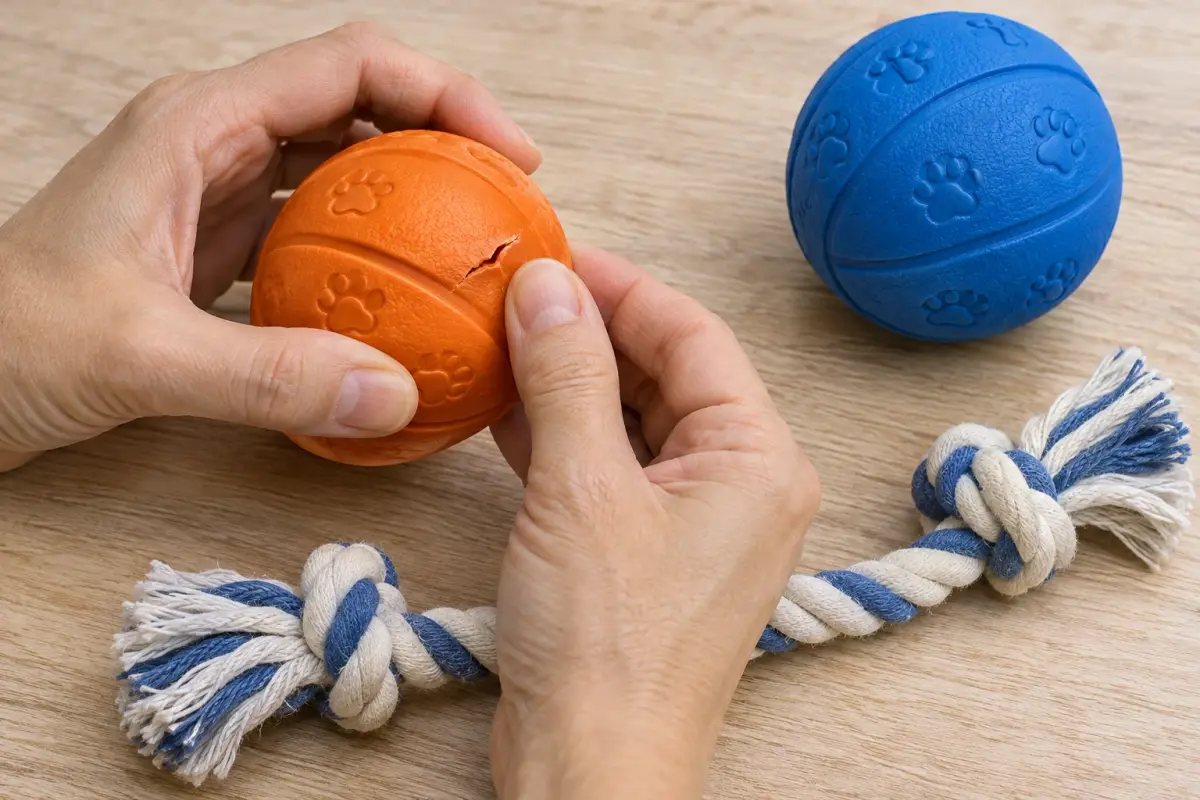
Supervise any new chew, rotate chews so your dog does not fixate on one, and take a chew away if your dog is breaking off pieces. Puppies and seniors should have softer options, and dog toys for strong chewers can be sorted by material so you can look for the flexible ones. At your dog's next checkup, ask your vet to look at the teeth and tell you whether your dog's chews are a good fit.
This page is general information, not veterinary advice, and it cannot replace an examination by the vet who knows your pet.
Common questions
Can dogs digest nylon chew pieces?
No. Nylon is not digestible. Tiny shavings usually pass, but larger pieces can cause trouble. The ASPCA advises calling your vet right away if your dog swallows a chunk of chew material.
When should I throw away a nylon chew?
Before it becomes very worn, according to the ASPCA. Replace it when the ends are sharp or frayed, pieces are missing, or it has shrunk enough that your dog could swallow it.
Are Nylabones safe for puppies?
Puppies do better with softer, flexible teething toys that bend and dent. Hard nylon can be too tough for young teeth, so check the firmness with the thumbnail test and ask your vet.
Sources we checked
This guide is general information, not veterinary advice. If your pet is unwell or injured, contact your veterinarian.


