Buying guides
Best Puppy Toys: How to Choose Safe Toys for Teething and Play
The best puppy toys are a soft-but-tough rubber chew for teething, a plush or tug toy for play with you, and a food puzzle for quiet time, all sized so your puppy cannot swallow them. Teething runs from about 3 or 4 months to 6 months, so chews should give a little under the teeth. Very hard bones and antlers wait until adulthood, and every toy gets checked for damage.
By Matt GarnettUpdated November 13, 20264 min read2 sources
What matters most: safe size, the right hardness and supervision
The AKC says puppy teething usually begins between 3 and 4 months and is mostly done by 6 months, and that adult teeth settle at around 9 months. During that time puppies chew constantly, so the most important toy features are a size too large to swallow and a firmness that gives slightly when pressed with a thumbnail. Toys that are too hard can damage developing teeth, and toys that are too soft get shredded and swallowed.
Supervision is the other half. The AKC advises supervising chewing and play, and throwing toys out once they show rips, tears or deep punctures. A puppy that is given the right things to chew, and praised for choosing them, learns to leave shoes and furniture alone far faster than one that is only corrected.
The main puppy toy types compared
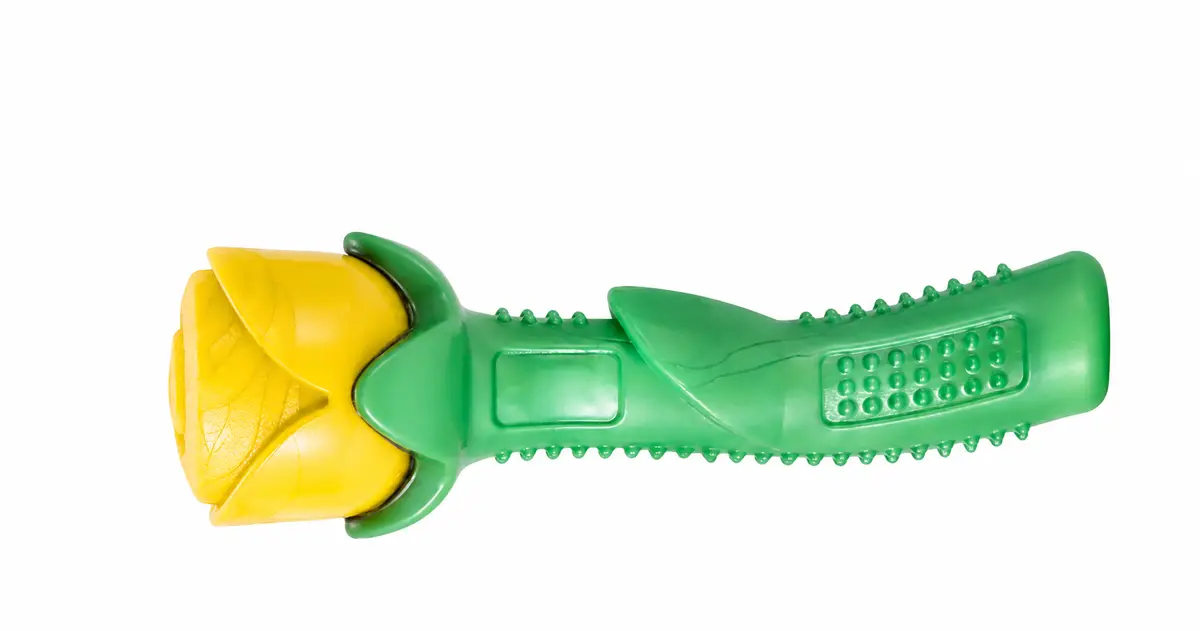
Teething rubber toys are the core of any puppy toy box. Flexible natural or synthetic rubber gives under the teeth, and hollow designs can be stuffed with a little soft food and frozen overnight, which the AKC suggests to soothe sore gums. Nylon chews made for puppies are firmer and last longer but should still flex slightly. Plush toys are for gentle carrying, cuddling and tug with you, not for unsupervised chewing.
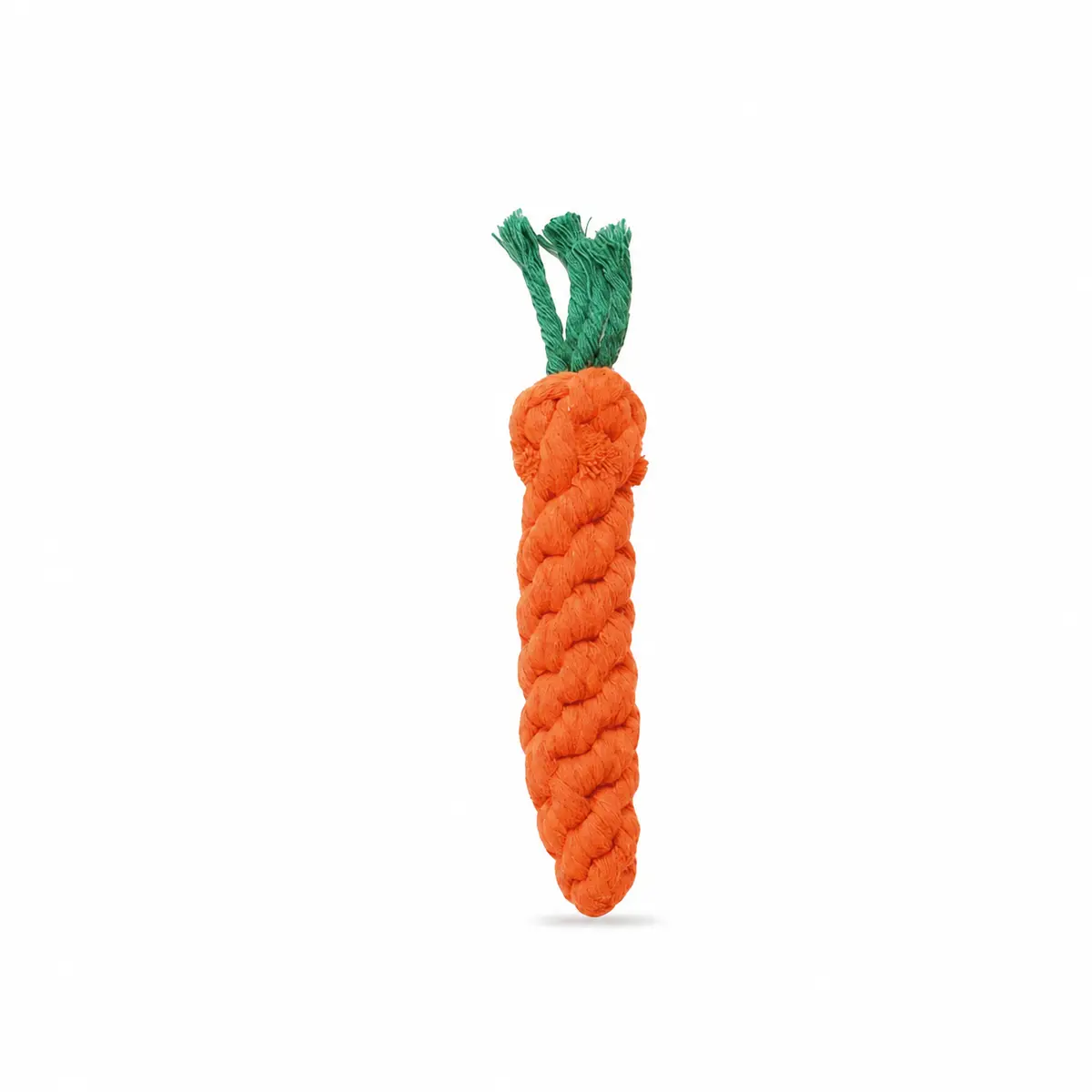
Rope toys are good for tug and for flossing teeth, but loose strands can be swallowed, so retire a rope toy as it frays. Food puzzles and treat-dispensing balls give mental work and help with crate time. Balls should be large enough that they cannot lodge in the throat; for most puppies that means bigger than a tennis ball once they reach medium size.
Best toy for each puppy
For a small-breed puppy, choose small, soft rubber teething toys and light plush toys, and make sure even the small ones are larger than the puppy's mouth can close around. For a large-breed puppy, choose bigger, firmer rubber toys that will not fit past the back teeth, and skip toys designed for toy breeds altogether, because a large puppy can swallow them whole.
For a heavy chewer, durable rubber is better than plush or rope. For a mouthy puppy that nips hands, a long tug toy keeps teeth on the toy. For a puppy left in a crate for short periods, a stuffed frozen rubber toy is the safest solo option. For a shy puppy, soft squeaky toys can encourage play, but remove the squeaker toy once it starts to tear.
What to avoid before adult teeth arrive
The AKC cautions against very hard bones and antlers for puppies, because their teeth are still developing, and warns that rawhide can break into large pieces that cause choking or blockages. Avoid cooked bones, hooves and anything you cannot dent with a thumbnail. Avoid toys with small parts, button eyes or bells that can be chewed off, and adult toys for small dogs if your puppy is a large breed.
Rubber toys with a single hole can create suction that traps a tongue; the AKC suggests choosing toys with a hole at each end. If your puppy swallows part of a toy, vomits, stops eating, strains or seems painful in the belly, call your vet straight away rather than waiting to see whether it passes.
How to size and introduce toys
A simple check is that a toy should be at least as wide as your puppy's mouth when it is open, and ideally wider for balls. Size up as your puppy grows, roughly every few weeks for large breeds. Watch how your puppy chews each toy for the first few sessions before leaving it alone with it, because chewing styles vary a lot even within a litter.
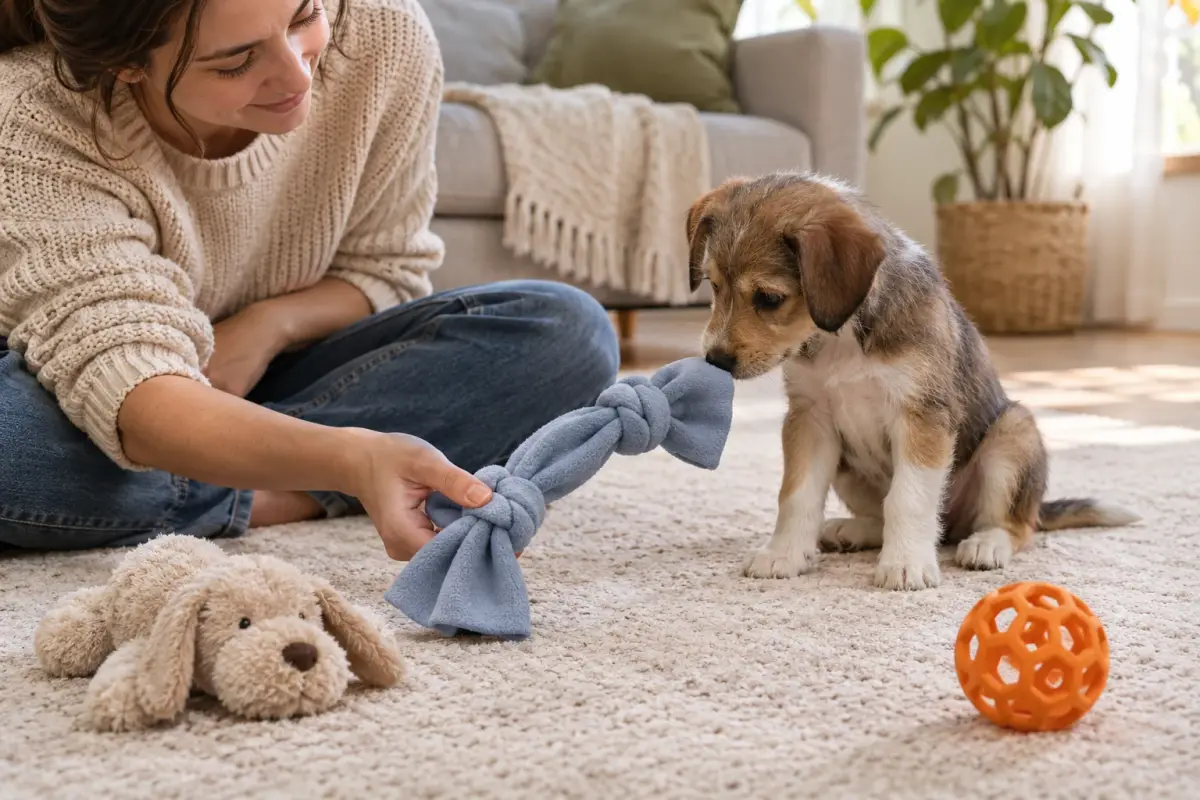
Introduce toys through play. Wiggle a tug toy along the floor, roll a ball, or let your puppy find a treat inside a puzzle. Praise and reward when your puppy chooses a toy over your hands or furniture. Puppies need short play sessions and plenty of sleep, so finish while your puppy is still keen.
Rotation, cleaning and when to replace toys
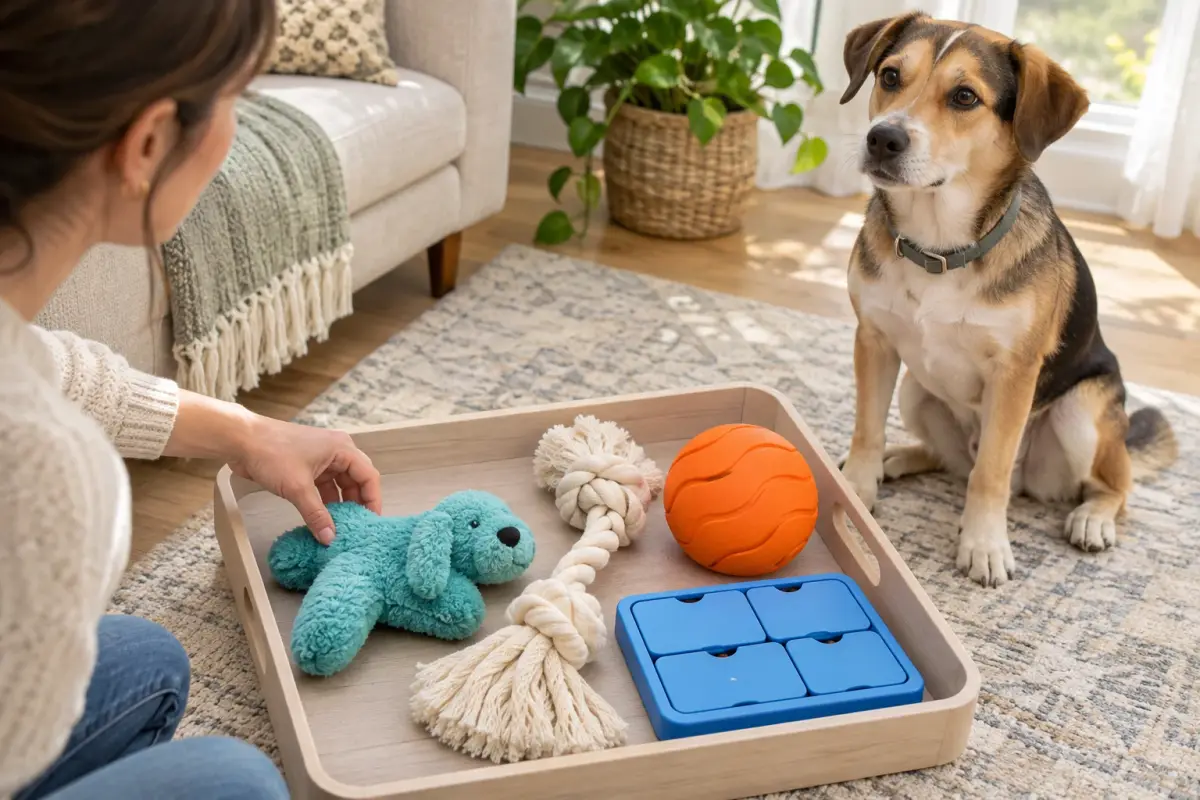
Keep four or five toys out and rotate the rest every few days so they stay interesting. The AKC notes that even an old toy seems new when a dog has not seen it for a while. Wash rubber toys in warm soapy water weekly, and wash plush toys in the machine. Dry everything fully to prevent mold.
Check every toy before handing it back. Replace rubber toys with deep tooth marks or missing chunks, rope toys that are fraying, and plush toys with exposed stuffing. Once your puppy's adult teeth have settled, at around 9 months, reassess its chewing style and move to firmer adult toys if it has become a power chewer.
Puppy toy shapes and play roles
| Format | Construction described | Inspection focus |
|---|---|---|
| Flexible rubber | A flexible solid or hollow body | Size,condition and any fillable cavity |
| Nylon chew | A firmer chewing body | Exact product instructions and surface wear |
| Plush | Fabric shell with softer filling | Seams and loose components |
| Rope | Braided or twisted strands | Fraying and rope ends |
| Food puzzle or treat ball | Food hidden or released during play | Food access and cleaning |
| Ball | A separate chase object | Actual size and whether it can lodge in the mouth |
Common questions
What toys are safe for teething puppies?
Flexible rubber teething toys, puppy nylon chews that bend slightly, and hollow rubber toys stuffed with soft food and frozen. Avoid very hard bones, antlers and rawhide until adult teeth are in.
How many toys does a puppy need?
Five to ten is plenty: a couple of rubber chews, a plush toy, a tug toy, a ball and a food puzzle. Keep a few out and rotate the rest every few days.
Are plush toys safe for puppies?
For supervised play, yes. Many puppies shred plush quickly, and stuffing and squeakers can be swallowed, so do not leave plush toys in the crate and throw them out once they tear.
When can a puppy have harder chews?
Once adult teeth have settled, at around 9 months, you can try firmer adult chews that suit your dog's chewing style. Very hard items can still crack teeth in adults, so check with your vet.
Sources we checked
This guide is general information, not veterinary advice. If your pet is unwell or injured, contact your veterinarian.