Buying guides
Best Puppy Toys for Aggressive Chewers: How to Choose
The best toys for a puppy that chews hard are firm rubber or tough textured chews that still give a little under a fingernail, sized so they cannot be swallowed. Skip bones, hooves and anything rock hard, because puppy teeth are still changing. Supervise every session. You can browse tough toys for puppies once you know which type fits.
By Matt GarnettUpdated November 14, 20264 min read3 sources
Why a hard-chewing puppy needs different toys
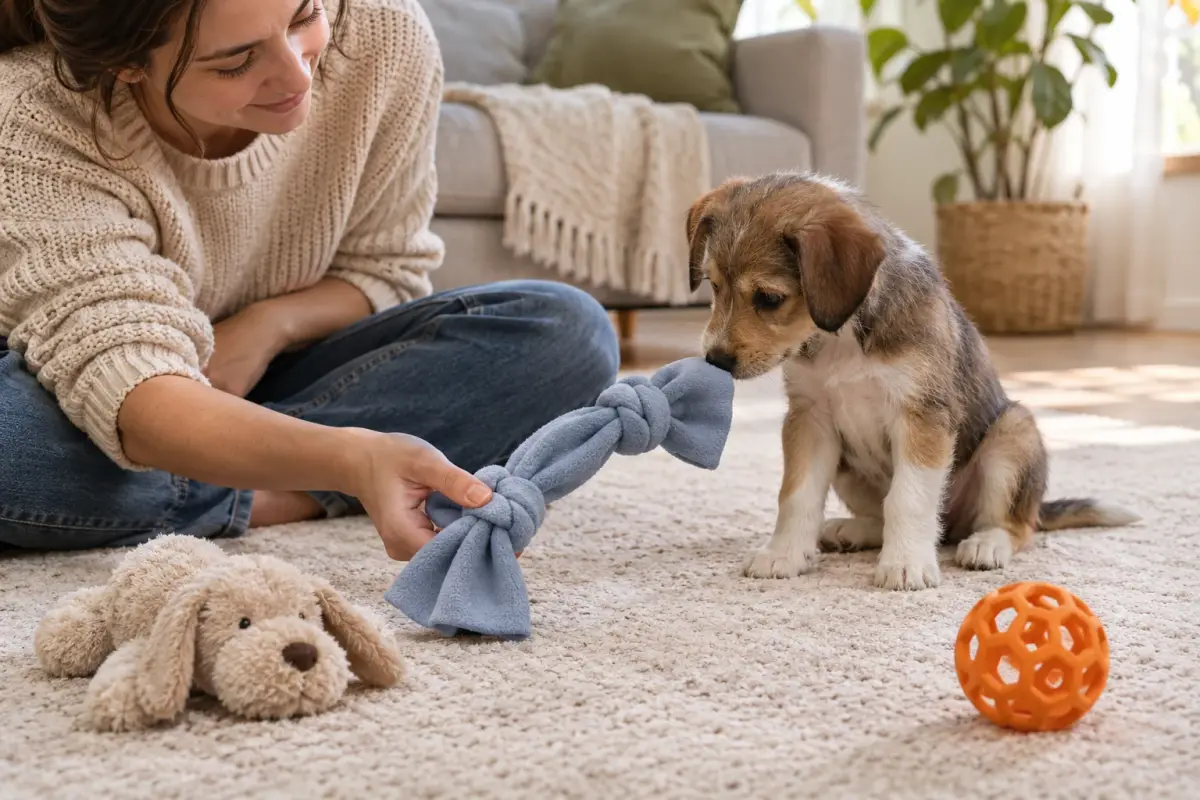
A puppy that chews hard is not being naughty. The AKC explains that puppies lose all their baby teeth before they reach 6 months old as adult teeth come in, and chewing helps relieve the discomfort. A strong chewer simply does more of it, with more force. That makes the toy choice matter more, because the toys sold as indestructible for adult dogs are often the wrong thing for a mouth that is still changing.
The tension is real. Toys that are too soft get shredded and swallowed. Toys that are too hard can chip or fracture teeth, which the VCA warns about for bones, cow hooves and hard rawhides. The answer is a middle path: firm and durable, but with a little give. Our wider guide to best dog toys for aggressive chewers covers adult dogs, and this page narrows it to puppies.
The hardness test that applies to puppies
The VCA gives a simple test: a toy should be soft enough that you can indent it with a fingernail, and long toys should flex when you bend them between your hands. Use that as your starting filter and put back anything that fails it. A rubber chew that dents slightly under a nail but bounces back is usually in the right range.
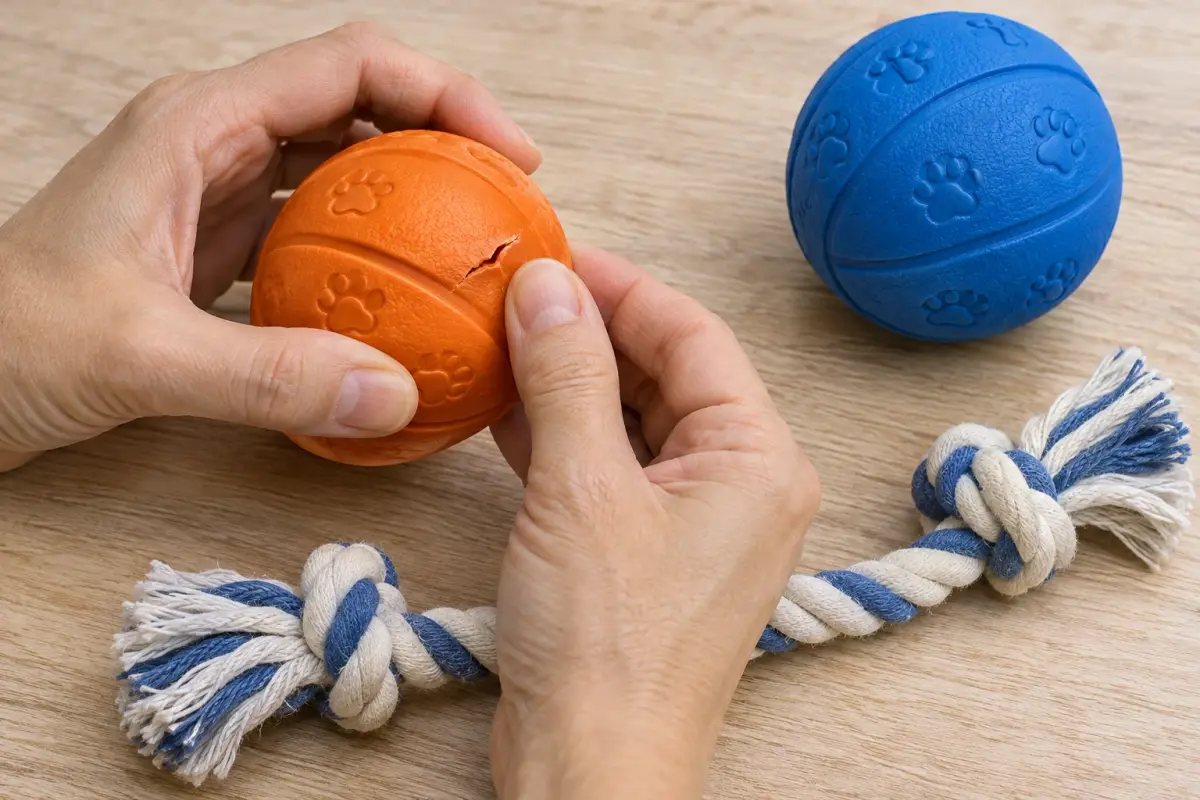
The AKC adds that power chewers can tear chunks off softer rubber, so a firmer option may suit them better, while gentle chewers may prefer squishier textures. For a hard-chewing puppy, that means going to the firmer end of the dentable range rather than the soft end. Check the toy after every session for chunks missing, and retire it when rubber breaks, rope frays or stuffing shows.
Main toy types compared for strong puppy chewers
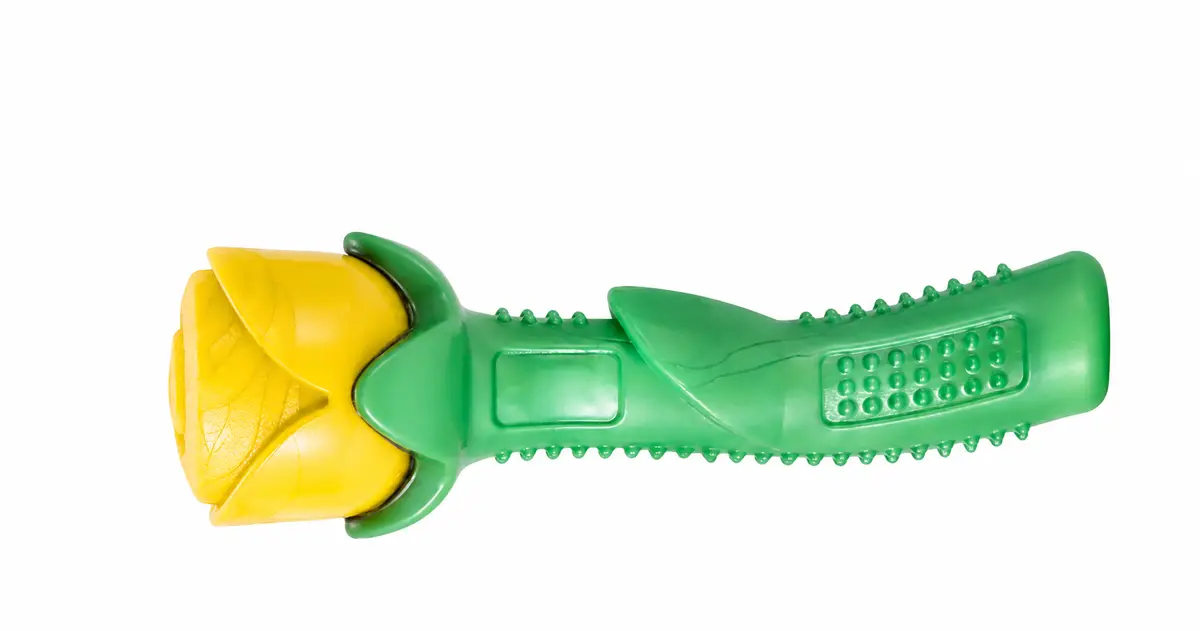
Solid rubber chews are the usual first choice because they are firm, hold their shape and can be chilled. A shape like a tough rubber bear chew gives a puppy something substantial to gnaw. Frozen or food-stuffed toys help sore gums; the AKC lists frozen chew toys and toys stuffed with mushy kibble or broth as teething relief, and it also mentions ice cubes and frozen wet washcloths.
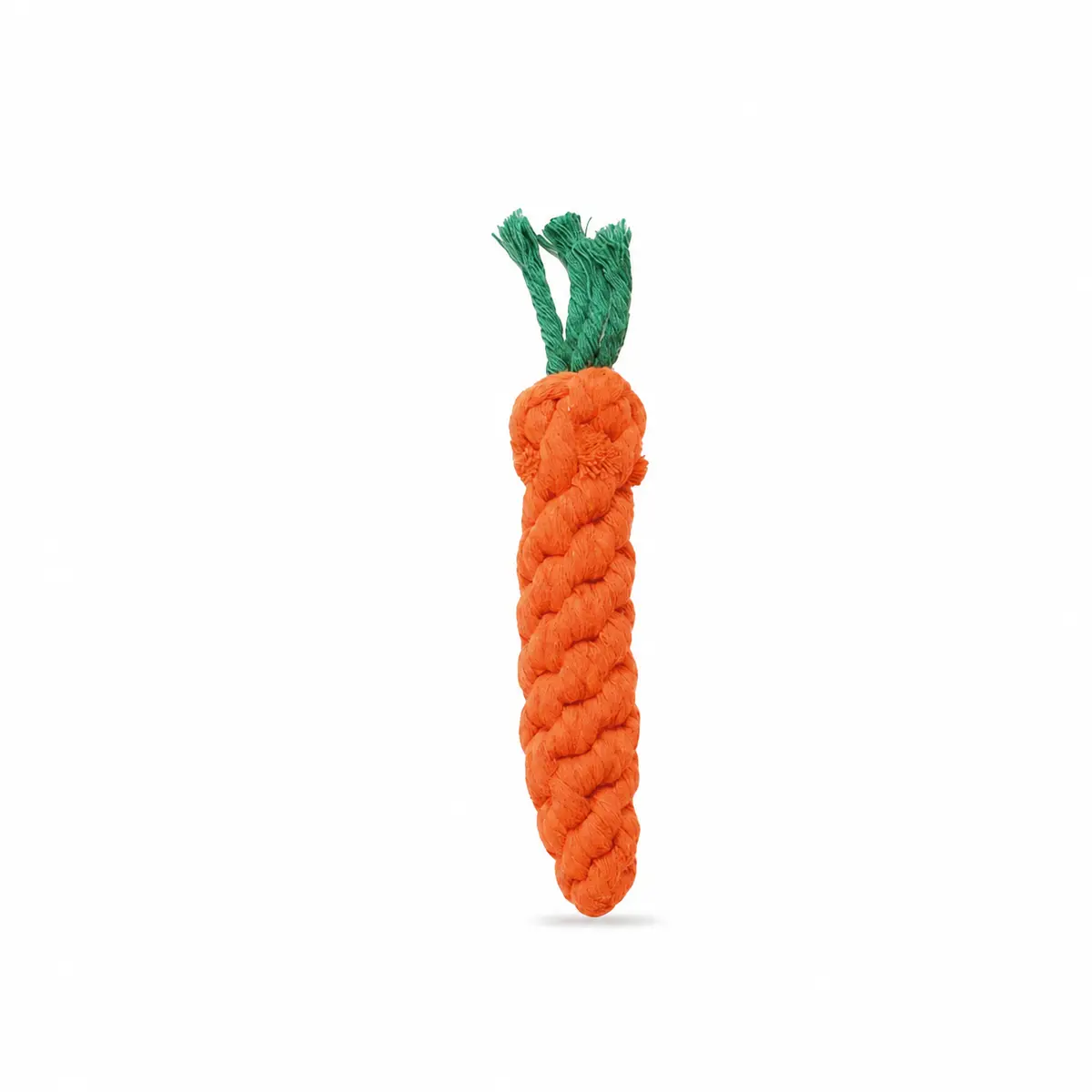
Reinforced plush toys can work for puppies that also like to carry and cuddle, though no stuffed toy survives a determined chewer without supervision. Options such as bite-resistant teething toys with a squeaker and bite-resistant teething plush toys are for supervised play, not for a puppy left alone. The AKC warns that a small puncture can let stuffing come loose, which risks bowel obstruction. For more teething ideas, see our puppy teething toys.
What to avoid before adult teeth are in
Avoid very hard items: bones, cow hooves, hard rawhides and large ice cubes can fracture teeth according to the VCA. Avoid scratchy, sandpaper-like surfaces such as tennis balls for puppies that chew them obsessively, because they can wear teeth down over time. Avoid toys with ribbons, eyes or other removable parts, and toys small enough to fit entirely in the mouth.
Do not leave a hard-chewing puppy alone with any toy until you know how it fails. The VCA notes that swallowed chunks can lodge in the stomach and may need surgery. If your puppy swallows a piece of toy, vomits, refuses food or seems painful, call your vet the same day.
Supervision, crate time and keeping chewing in check
The AKC advises supervising puppies during all waking hours and redirecting them to an appropriate chew as soon as they pick something else. When you cannot watch, use a crate or dog-secure area with several chew toys, and food-stuffed toys work well there. Rotating a few toys keeps them interesting.
Boredom drives a lot of destructive chewing. Short walks, training sessions and a food puzzle toy all help a puppy settle. The AKC also advises limiting strenuous exercise because it can harm growth plates, so favor short bursts over long sessions. Teaching leave it and drop it, and trading rather than chasing, makes toy time safer.
When to move on to tougher toys
Once adult teeth are in, which the AKC puts at around 6 months, you can review tougher options. Even then, apply the fingernail test and the size rule, and match the toy to how your dog actually chews. Ask your vet at routine visits what suits your dog's teeth and chewing style.
For the next stage, browse our full range of indestructible dog toys or check tough toys for puppies again as your puppy grows. If your puppy is a very heavy chewer, a short list of two or three well-chosen toys beats a pile of cheap ones.
This page is general information, not veterinary advice, and it cannot replace an examination by the vet who knows your pet.
Toy bodies and failure points
| Format | Physical construction | Inspect before another session |
|---|---|---|
| Solid flexible shape | A molded body in the stated material | Cuts and missing pieces |
| Stuffable toy | A body with a food cavity | Opening,edges and compatible fillings |
| Plush | Fabric around filling if listed | Seams and exposed stuffing |
| Squeaking body | A toy with an internal sound part | Damage exposing the sound insert |
Common questions
What toys are safe for a puppy that chews everything?
Choose firm rubber or tough chews that dent slightly under a fingernail, too big to fit entirely in the mouth. Avoid bones, hooves and very hard items, and supervise every session while teeth are changing.
Are indestructible dog toys safe for puppies?
Many are too hard for puppy teeth. Apply the fingernail test, since the VCA warns that very hard items can chip or fracture teeth, and treat the word indestructible as marketing rather than a guarantee.
How long does puppy teething last?
The AKC says puppies lose all their baby teeth before they reach 6 months old. Chewing helps relieve discomfort during that time, so plan safe chew options until adult teeth are in.
Can I give my puppy a frozen toy for teething?
The AKC lists frozen chew toys, including food-stuffable toys filled with mushy kibble or broth, as teething relief. Supervise, and stop if your puppy bites off pieces.
What should I do if my puppy swallows part of a toy?
Take the toy away and call your vet or an emergency vet the same day, especially if there is vomiting, loss of appetite or pain. Swallowed pieces can lodge in the stomach.
Sources we checked
This guide is general information, not veterinary advice. If your pet is unwell or injured, contact your veterinarian.