Care & how-to
Puppy Teething: Ages, Signs and How to Help
Puppies go through two rounds of teeth. Baby teeth come in from about 3 weeks, and the main teething stage, when baby teeth fall out and 42 adult teeth come through, runs from roughly 12 weeks to 6 months. Expect heavy chewing, some mouthing and the odd tiny tooth on the floor. Safe, flexible puppy chew toys and supervision help, and a vet should check any baby tooth that refuses to fall out.
By Matt GarnettUpdated November 9, 20263 min read2 sources
The puppy teething timeline
VCA Animal Hospitals lays out the stages. Around 3 weeks, baby teeth start to erupt. By about 6 weeks, all 28 baby teeth are in; puppies have no baby molars. Around 12 weeks, baby teeth begin to loosen and fall out as adult teeth push up. By about 6 months, the adult set of up to 42 teeth is usually complete.
Adult teeth tend to arrive front to back: incisors first, at around 3 to 4 months, then canines (fangs) at around 5 months, then premolars and molars between about 4 and 7 months. Some dogs take a little longer, and small breeds are more prone to delays.
Signs your puppy is teething
Chewing is the main sign, often on furniture, shoes, hands and anything at mouth height. You may also notice drooling, red or slightly swollen gums, small spots of blood on toys, a mild dip in appetite for hard food, and baby teeth found on the floor or bedding. Many puppies simply swallow the tiny teeth, which is harmless.
A teething puppy is also mouthier and can be grumpier, especially when tired. A sudden refusal to eat, a lot of bleeding, a bad smell from the mouth, facial swelling or pawing at the mouth are not normal teething and need a vet visit.
Safe ways to help a teething puppy
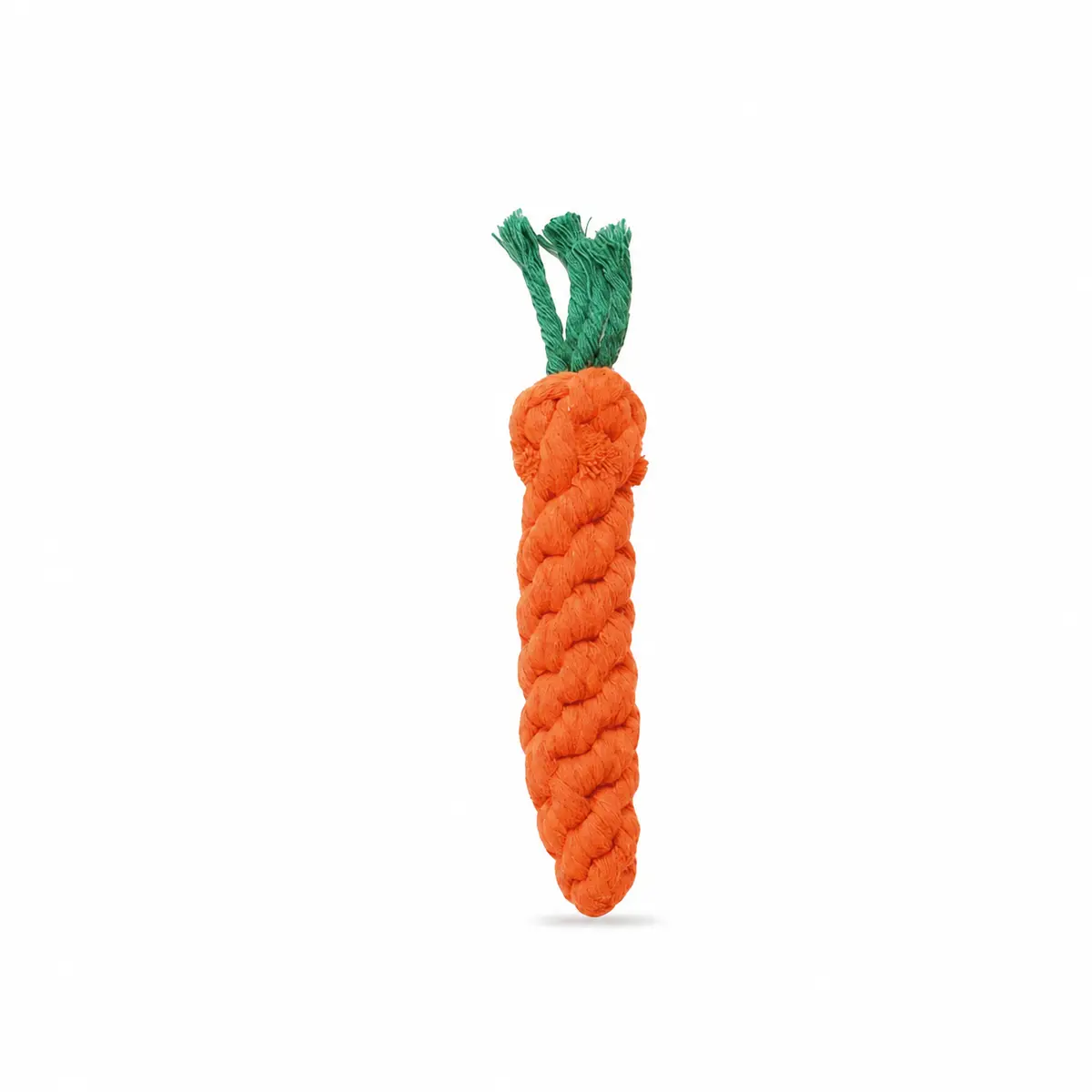
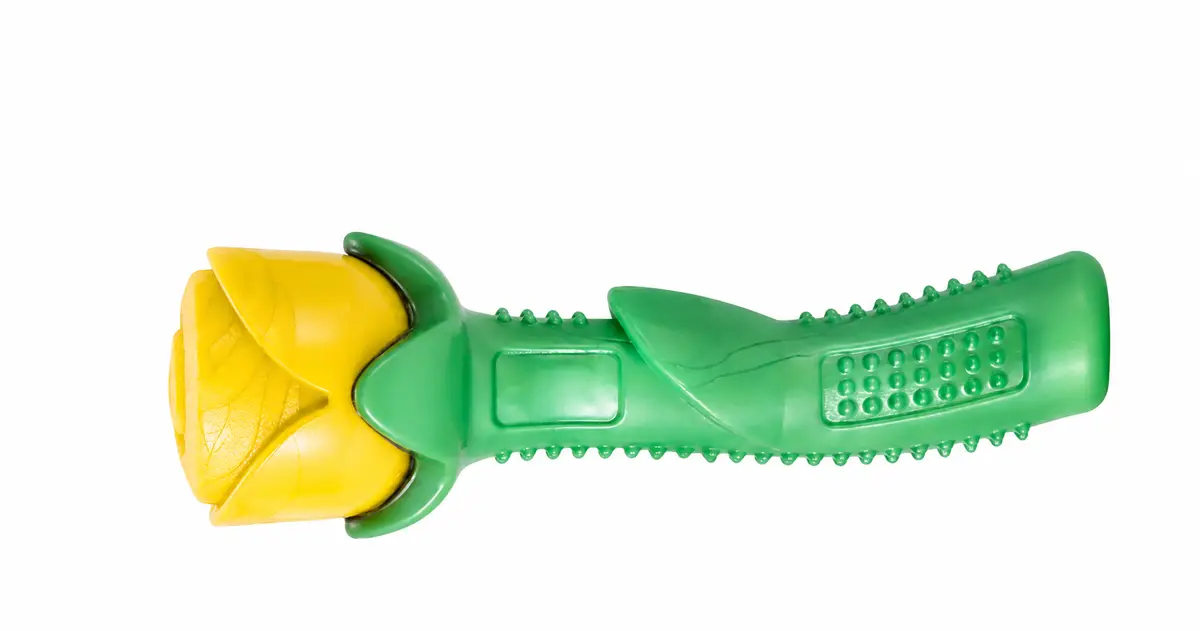
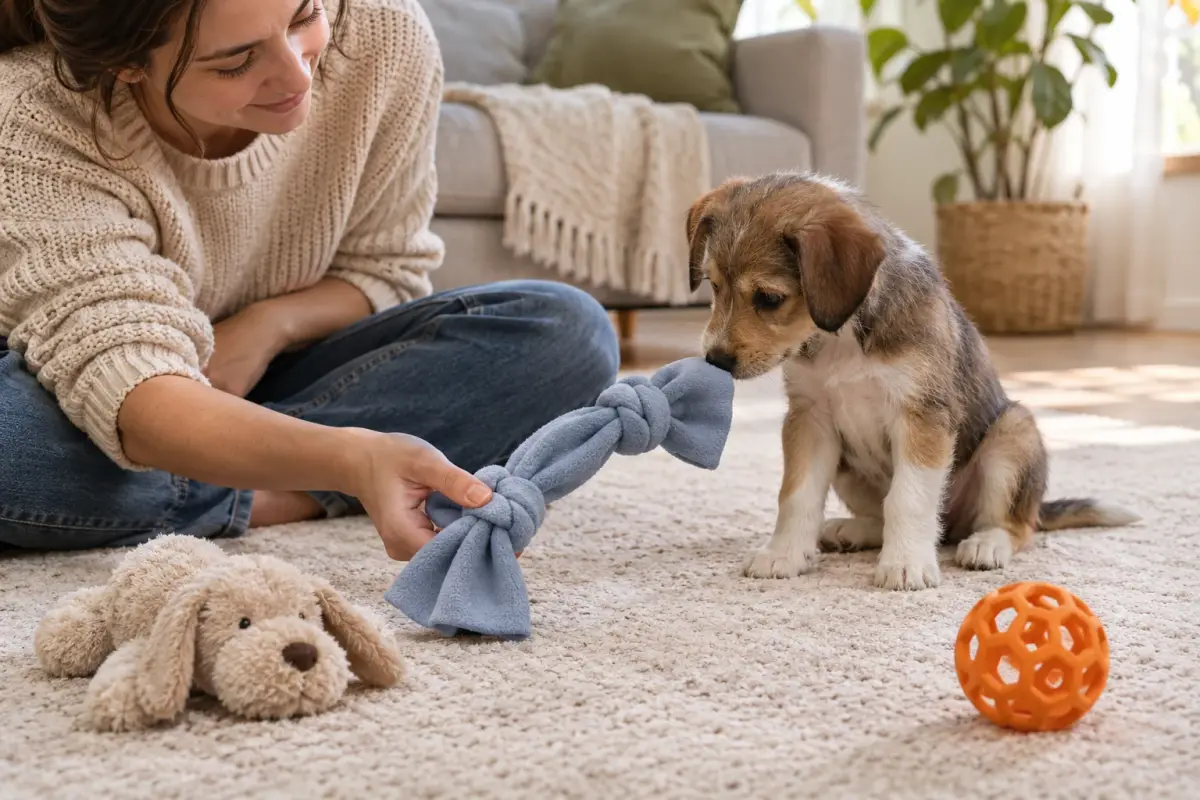
Offer a few puppy-appropriate chew toys and rotate them so they stay interesting. Rubber toys that can be stuffed with a little of your puppy's own food and frozen can soothe sore gums and keep your puppy busy. A soft rope toy or a damp washcloth chilled in the freezer can also help, under supervision. A flexible teether toy or a soft plush teething toy fits that rotation, as long as it bends and you supervise.
Manage the environment so there is less to destroy: pick up shoes, socks, kids' toys and cords, and use a crate or pen when you cannot watch. Plenty of exercise, short training sessions and puzzle feeders reduce frantic chewing. If your puppy mouths you, say "ouch," pause play and offer a toy instead.
Chews and objects to avoid
Hard items can fracture both baby and adult teeth. VCA's guidance warns against bones, antlers, hooves, hard nylon and other very hard chews, and notes rawhide, pig ears and bully sticks can cause choking or intestinal blockage. A widely quoted rule from veterinary dentists: do not let your puppy chew anything that does not bend.
Supervise all chewing, since no toy is completely indestructible, and throw away toys once pieces come off. Our puppy teething toys and the puppy toy guide are a place to start. Never use human toothpaste or teething gels meant for babies, which can contain ingredients that are harmful to dogs.
Retained baby teeth and when to see the vet
Sometimes a baby tooth stays put while the adult tooth comes in beside it, leaving two teeth in one spot. This is most common in small and short-nosed breeds, usually with the canines. Retained teeth can push adult teeth out of line, trap food and lead to gum disease, so they usually need removing.
Check your puppy's mouth weekly until about 7 to 8 months old. If you see a double row of teeth or a baby tooth still present once the adult tooth is through, mention it to your vet. Removal is often done at the same time as a spay or neuter, under the same anesthesia.
This page is general information, not veterinary advice, and it cannot replace an examination by the vet who knows your pet.
Common questions
When do puppies stop teething?
Most puppies have all their adult teeth by around 6 months, although some take up to 7 or 8 months. Chewing can continue well beyond that, often easing off by about 18 months.
Do puppies swallow their baby teeth?
Often, yes. Baby teeth are tiny and many puppies swallow them while eating or chewing. This is harmless, so do not worry if you never find any teeth around the house.
Can I give my teething puppy ice cubes?
Many vets suggest frozen stuffed rubber toys or chilled wet washcloths instead, since hard ice can be rough on teeth. Ask your vet what they recommend for your puppy's size.
Should I brush my puppy's teeth while teething?
You can start gently, using a soft brush and toothpaste made for dogs, if your puppy's gums are not too sore. Early brushing builds a lifelong habit that protects against dental disease.
Sources we checked
This guide is general information, not veterinary advice. If your pet is unwell or injured, contact your veterinarian.