






Buying guides
Best Indoor Dog House: How to Choose One for Your Home
The best indoor dog house is one your dog can stand up, turn around and lie down in, with good airflow, a washable floor and walls matched to your dog's chewing habits. Wooden houses suit calm small dogs and blend with furniture, tents suit light, portable use, and a crate suits dogs that need confinement. Pick by your dog's size and temperament first, looks second.
By Matt GarnettUpdated November 14, 20265 min read3 sources
What an indoor dog house is for
An indoor dog house is a covered, den-like space inside your home where your dog can rest, hide from household noise and feel secure. It is not outdoor shelter. The idea builds on a real instinct: the AKC explains that a dark, cozy spot under a blanket can mimic the feeling of a natural den, and VCA Hospitals describes how a crate used as a den gives a dog a secure, comfortable place to rest or chew a favorite toy.
Our indoor dog houses range from wooden cabins and side-table condos to fabric teepees and pop-up tents. They suit small dogs and puppies best, plus nervous dogs that like to hide. They are a poor fit for a large dog, a dog that destroys fabric, or a dog that panics when enclosed.
Size first: stand, turn and lie down
VCA gives the sizing rule for a den-style space: it should be large enough for your dog to stand, turn and play with its toys. Measure your dog from nose to base of tail and from floor to the top of the head or ears when standing, then add a few inches to each. A house that is too small cramps joints, and one that is too large defeats the cozy, enclosed feeling that makes a den appealing.
Check the doorway as well as the interior. A small dog should step in without ducking awkwardly, and a senior or arthritic dog needs a low threshold. Allow for bedding inside, since a cushion takes up room. If your dog is still growing, buy for the adult size and use a folded blanket to fill the space for now.
Materials and types compared
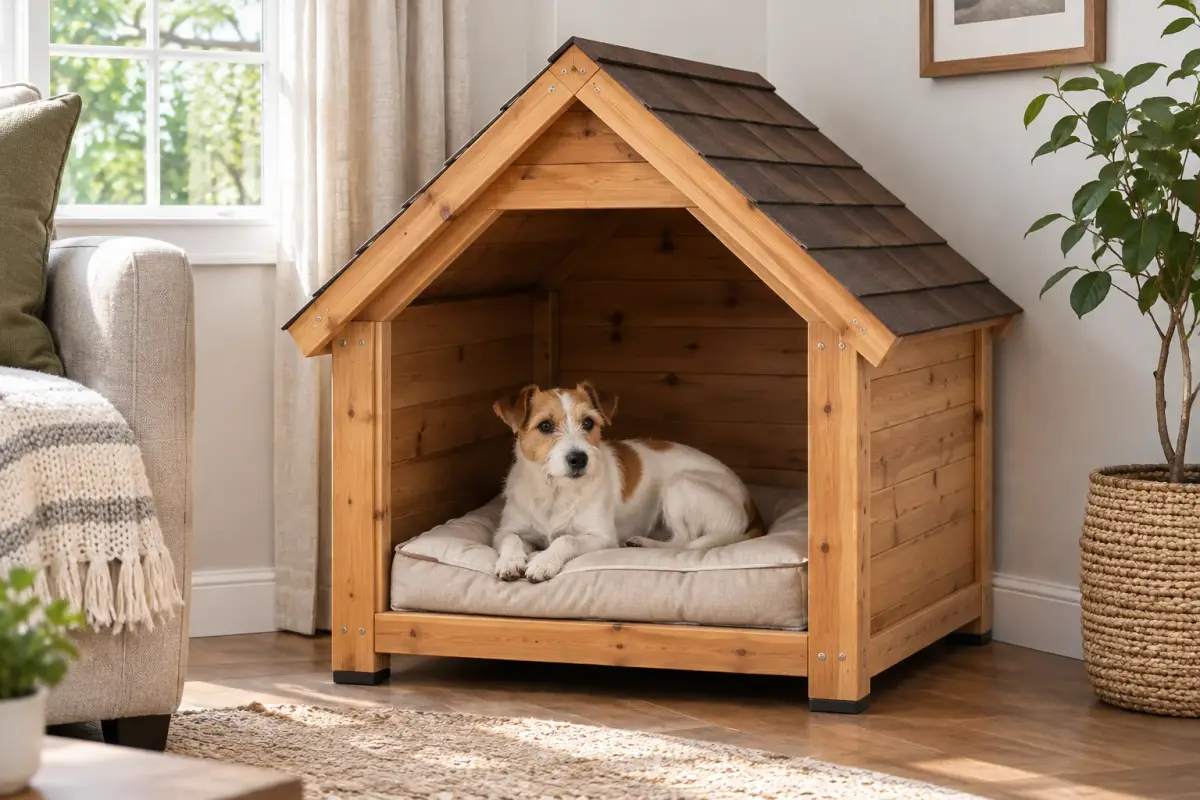
Wooden indoor houses are sturdy and look like furniture. A wooden indoor dog house with a removable cushion is the kind to look for if you want a stable house that also sits neatly in a living room. Check that edges are smooth, the floor is solid and the cushion cover can be washed. Wood can be chewed, so a dog that gnaws furniture may gnaw this too.
Fabric tents and teepees are light, fold away and are simple to wash. A pet teepee tent with a cushion shows the style. They suit calm small dogs, but they lose shape under a dog that digs, climbs or chews, and their poles and seams are a hazard if swallowed. Furniture-style houses with a table top, and crate-style units, offer a surface for lamps or plants, but keep anything breakable or hot away from a dog's reach.
Safety: ventilation, chewing and confinement
Airflow matters. The AKC warns that thick covers can leave a dog struggling to breathe or overheating, and that a dog that cannot get out of tight or heavy cover may become trapped. In a house, that means choosing open windows or mesh, never draping thick blankets over every side, and keeping the house away from radiators, heaters and direct sun.
Watch for chewing. A house is not a toy, and a dog that bites off wood splinters, fabric or stuffing can swallow them. If your dog destroys bedding, choose a hard-walled house or a crate and skip soft tents. Never lock a dog inside; a house is a place a dog chooses to go. If your dog needs confinement for safety or house training, VCA cautions against leaving a dog confined too long and says dogs with separation anxiety need extra care, so that is a job for a crate and a plan from your vet.
Which type suits which dog
For a calm small dog or a toy breed that loves to burrow, a fabric tent or teepee with a soft cushion is usually enough. For a small dog that likes a sturdier retreat, and for a home where looks matter, a wooden house works well. For a puppy in training, a proper crate is often a better tool; our dog crates cover wire and plastic styles, and VCA describes how a crate becomes a den.
For a nervous dog, put the house in a quiet corner where the family still passes, not behind a door. For a multi-pet home, make sure each pet has its own space, because VCA notes that some pets guard enclosed spaces, particularly new ones. If your dog needs a flat bed more than a den, browse our dog beds as well.
Introducing and caring for the house
Put the house where your dog already likes to rest, leave the entrance open, and drop treats inside. Let your dog explore at its own pace, and never push it in or close it in. Praise calm visits and let your dog decide when to nap there.
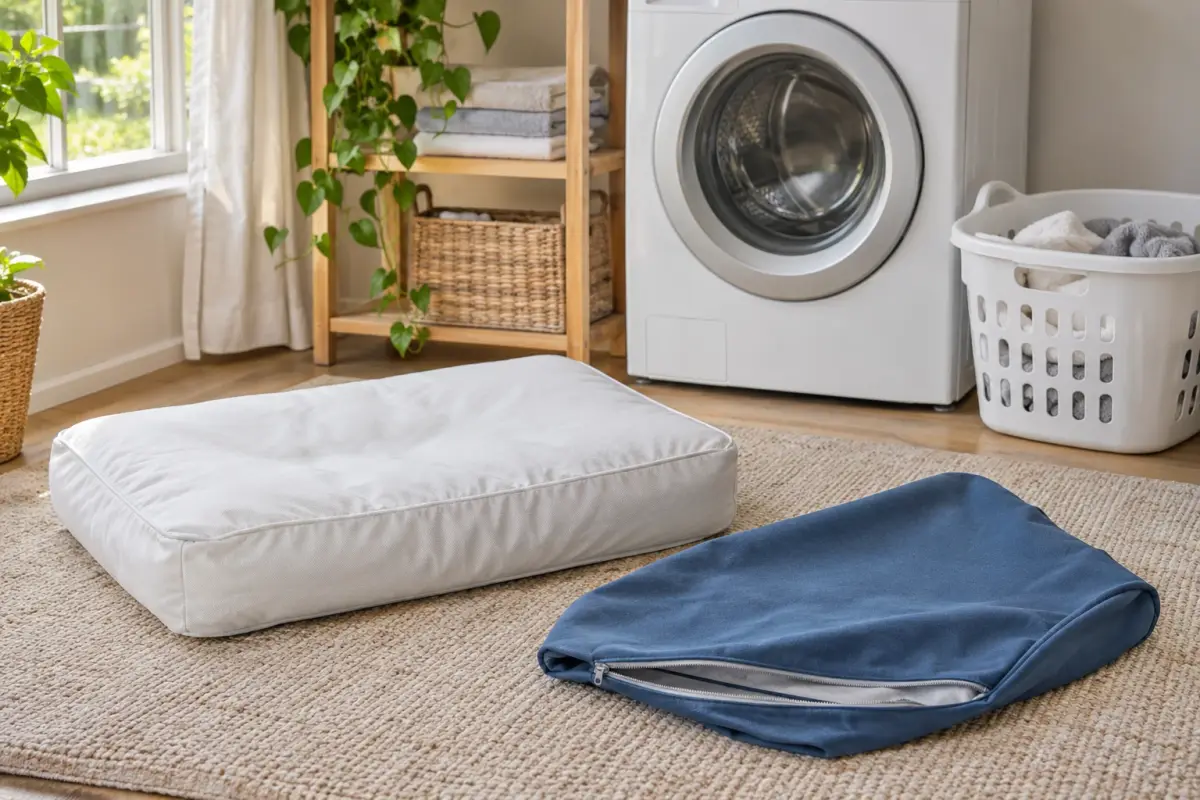
Vacuum the floor, wash the cushion cover regularly and check for loose screws, splinters, torn seams and frayed edges. Replace the house when it is damaged, and see all our indoor dog houses if you need a different size or style. If your dog suddenly avoids its house, starts chewing it, or seems stressed or in pain when getting in and out, talk to your vet. This page is general information, not veterinary advice, and it cannot replace an examination by the vet who knows your pet.
Indoor house bodies and access
| Construction | Body arrangement | Inspection point |
|---|---|---|
| Wooden house | Rigid walls and floor | Edges,floor and cushion access |
| Fabric tent | Fabric over a light frame | Poles,seams and frame connections |
| Furniture-style house | An enclosure with a furniture surface | Door access and items placed above it |
| Crate-style unit | A more open framed enclosure | Inside space and latch arrangement |
Common questions
What size indoor dog house does my dog need?
Your dog should be able to stand, turn around and lie down comfortably. Measure nose to tail base and standing height, add a few inches to each, and allow room for a cushion.
Is an indoor dog house the same as a crate?
No. A house is an open, voluntary resting den, while a crate is closed and used for confinement. Crates suit house training and safety; houses suit dogs that like a cozy place to hide.
Can large dogs use an indoor dog house?
Most indoor houses are designed for small dogs and puppies. A large dog usually needs a big bed or a large crate, so check the interior size against your dog rather than the product name.
Are fabric dog tents safe?
They are fine for calm dogs that do not chew, but supervise at first. Fabric, poles and stuffing can be swallowed, so skip tents for dogs that shred bedding.
Where should I put an indoor dog house?
Choose a quiet corner where your dog already rests, away from heaters, direct sun and drafts, but where the family still passes so your dog does not feel isolated.
Sources we checked
This guide is general information, not veterinary advice. If your pet is unwell or injured, contact your veterinarian.


