






Buying guides
Best Insulated Dog House: How to Choose One for Cold Weather
The best insulated dog house is sized snugly so your dog's body heat warms it, has insulated walls and roof, a floor raised off the cold ground, and a door offset or covered with a flap to block wind. Add dry bedding, keep water from freezing, and use only heating products made for pets. In real cold, bring your dog indoors.
By Matt GarnettUpdated November 14, 20263 min read2 sources
What matters most: size and insulation
Bigger is not warmer. A dog house heats up from the dog's own body, so it should be large enough for your dog to stand, turn around and lie curled, but not so large that most of the warmth escapes into empty space. Measure your dog standing and lying curled, and choose a house only a little larger. Browse our insulated dog houses once you have those measurements.
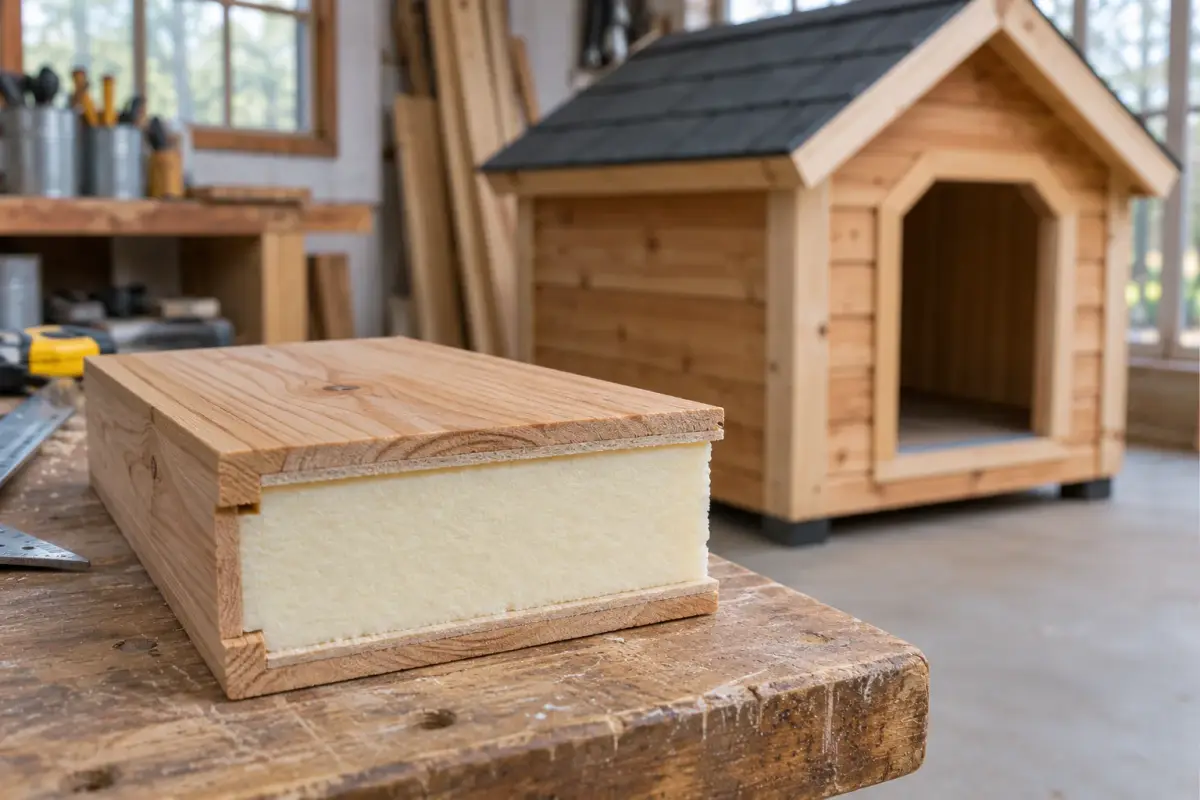
Insulation comes next: foam-filled walls, roof and floor slow heat loss. The AKC's winter kennel advice recommends weather stripping and foam board insulation for kennels, and the same principle applies to a dog house: seal gaps, insulate surfaces and stop drafts. If your dog will share the house with another dog, size for both lying curled together rather than doubling the footprint.
Floor, door and roof
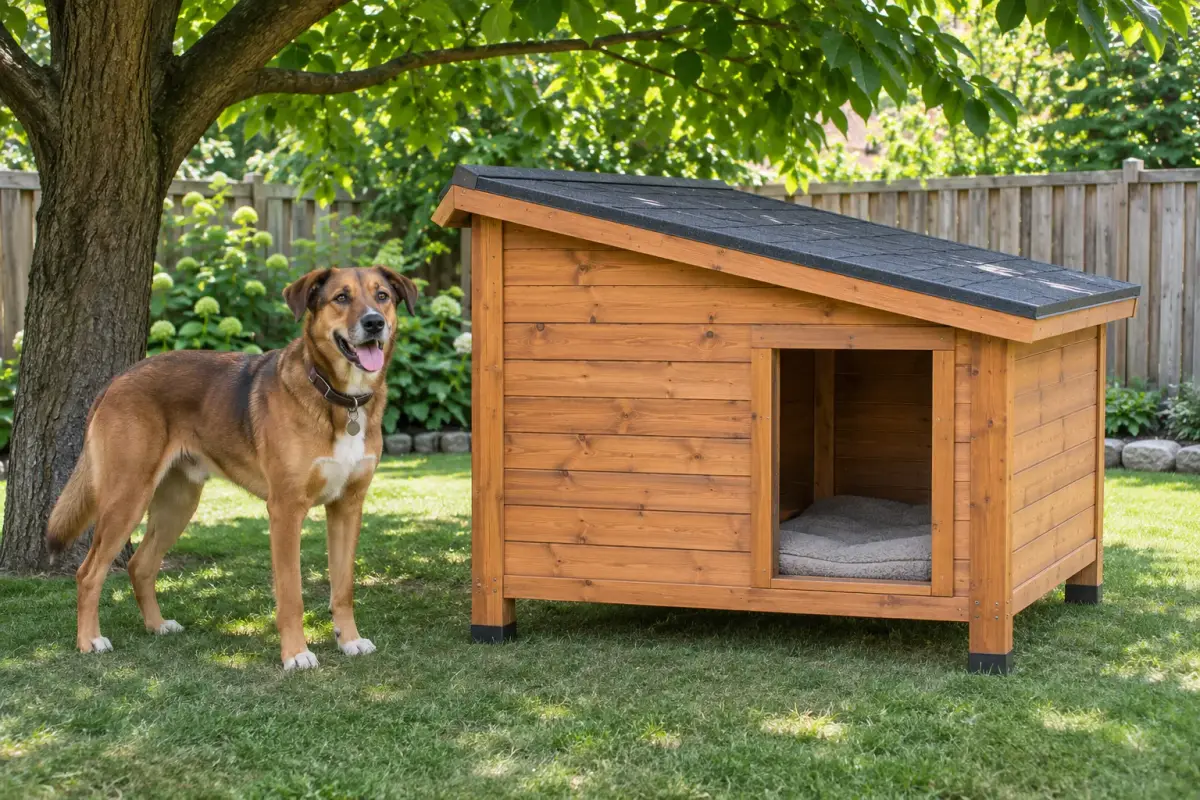
A raised floor, a few inches off the ground, keeps the base out of snow, puddles and frozen ground and lets air insulate underneath. Plastic and treated wood floors are easier to keep dry than bare boards.
The door is where most heat leaves. An offset door, a short entry hall or a heavy flexible flap blocks wind while letting the dog in and out. Face the door away from prevailing winds. A sloped roof sheds rain and snow; a hinged or removable roof makes cleaning and checking bedding easy.
Heating and bedding, safely
If you add heat, use products made for pets. The AKC advises keeping heaters clean, working and properly ventilated, keeping flammable material away from heat sources, keeping lamps and cords out of reach, and covering exposed cords so they cannot be chewed. It also mentions waterproof, thermostat-controlled heat mats for steady temperatures.
Bedding should stay dry; damp bedding draws heat away from the body. Replace wet bedding quickly and check it daily in winter. A heated water bowl or regular refills stop water freezing, because dehydration is a risk in cold weather too.
Which dogs, and when to bring them in
An insulated house shelters a dog that spends time outdoors, but it does not make every dog safe in any weather. Small, short-coated, lean, young, old and unwell dogs lose heat quickly, and the AKC lists them among dogs that may need coats in cold weather. Thick-coated breeds tolerate cold better but still need shelter from wind and wet.
The AKC cites expert advice to limit outdoor play to about 15 to 20 minutes when windchill falls below 20°F. Shivering, lifting paws, lethargy and seeking shelter are signs your dog is too cold. Bring it inside and call your vet if it seems weak, confused or unusually cold to the touch.
Placement and care
Place the house on high, level ground out of the wind, in sun if possible during winter, and away from fence lines a dog could use to climb out. Raise it on blocks if the house has no built-in legs. In summer, move it to shade and remove the door flap for airflow.
Clean the house and replace bedding regularly, check for leaks after storms, repair cracked panels and replace chewed flaps. A ventilated plastic dog house is one example of an outdoor shelter. Inspect any heating equipment and cords before each cold season. If you are still choosing, browse our insulated dog houses or large dog houses.
Common questions
What size insulated dog house does my dog need?
Just big enough to stand, turn around and lie curled. A snug house holds your dog's body heat; an oversized one stays cold. Measure your dog standing and lying curled before buying.
Do insulated dog houses keep dogs warm?
They slow heat loss and block wind, especially with a raised floor, door flap and dry bedding. They do not make extreme cold safe; bring your dog inside.
Is it safe to heat a dog house?
Use only pet-rated heating products, keep cords covered and out of reach, keep flammable material away and check equipment regularly, as the AKC advises. Never use a space heater meant for people.
What is the best bedding for an outdoor dog house?
Dry, insulating bedding that you check daily and replace when wet. Damp bedding pulls heat away from your dog's body. Check it daily in winter and keep a spare supply of dry bedding on hand.
Sources we checked
This guide is general information, not veterinary advice. If your pet is unwell or injured, contact your veterinarian.


