






Care & how-to
How to Build a Dog House: Size, Insulation and Safety
To build a good dog house, size it to your dog so they can stand, turn around and lie down comfortably, but no bigger, so their body heat warms it in winter. Raise the floor off the ground, use a sloped, waterproof roof, insulate the walls and roof, add ventilation for summer, and face the door away from the prevailing wind. A dog house is shelter for part of the day, not a replacement for coming indoors in extreme weather.
By Matt GarnettUpdated November 14, 20264 min read4 sources
Step 1: Size the dog house to your dog
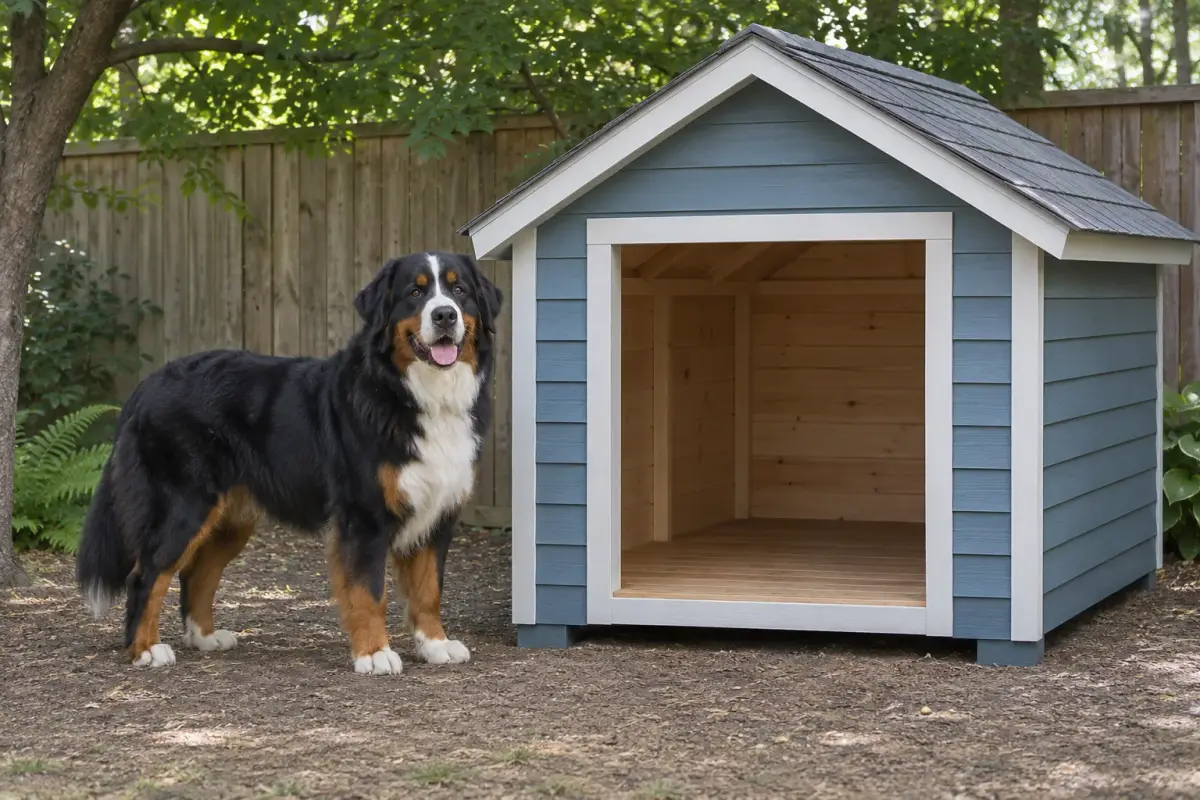
Measure your dog standing, from nose to the base of the tail, and from the floor to the top of the head, and note the shoulder height. The inside should let your dog stand up without ducking, turn around and lie stretched out. The ASPCA asks for a warm, dry, covered shelter in cold weather, and a snug house holds warmth far better than a cavernous one. If you would rather buy than build, compare ready-made dog houses against these measurements.
A good working rule is an interior a little longer than your dog and a little taller than their standing head height, with a door just higher than the shoulder so they duck slightly to enter. That keeps wind and rain out. If you have a puppy, build for the adult size and add a removable divider to make the space smaller for now.
Step 2: Build a raised, solid floor
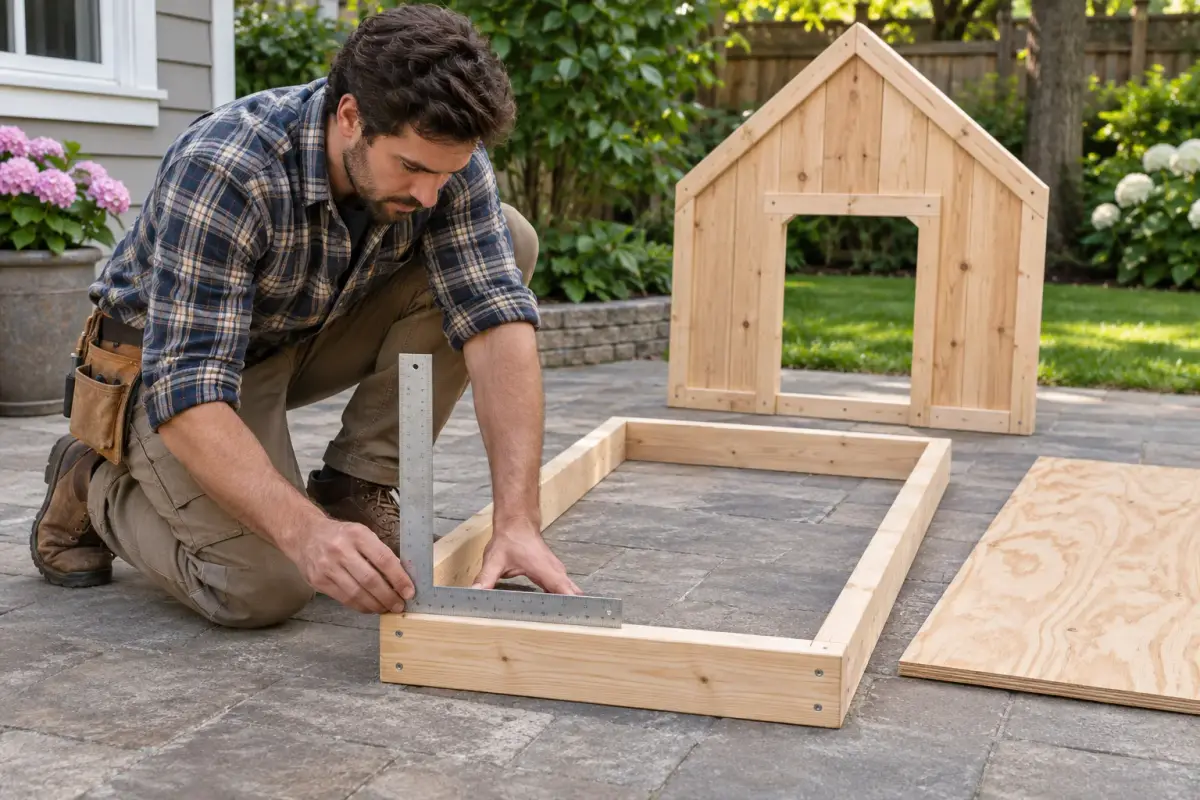
Build the floor as a frame of exterior-grade lumber with a solid plywood deck, and set it on runners or blocks so it sits a few inches off the ground. A raised floor stays drier, insulates against frozen or wet ground and lets air flow underneath. Do not build directly on the soil, where damp will rot the floor and chill your dog.
Choose a level, well-drained spot. AKC guidance on kennel design stresses drainage, so your dog is never forced to lie in a damp area. Avoid low spots where rain pools, and place the house where it gets shade in summer and some shelter from winter wind.
Step 3: Walls, insulation and roof
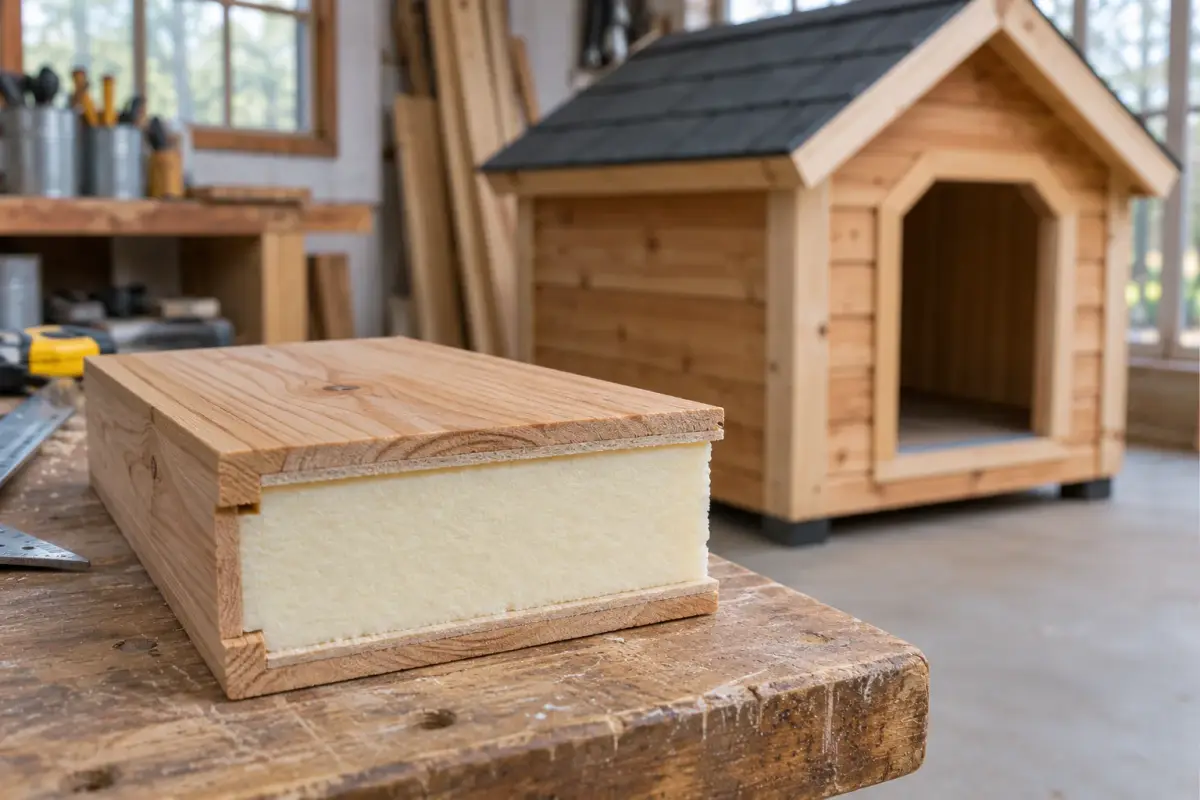
Frame the walls with studs and sheathe them in exterior plywood. For a cold climate, add rigid foam insulation between an inner and outer wall, which the AKC suggests for kennels because it holds up well, and cover it completely so your dog cannot chew it. Insulate the roof too, because heat rises and escapes there first.
Use a sloped roof with an overhang that sheds rain and snow away from the door, and roofing that is fully waterproof. A hinged or removable roof makes cleaning and changing bedding much easier. Use non-toxic exterior paint or stain on the outside only, and let it cure fully before your dog moves in.
Step 4: The door, ventilation and summer heat
Set the door toward one side of the front rather than dead center, so your dog can curl up in a corner out of the draft, and face it away from the prevailing wind. A heavy, flexible flap over the opening helps in winter. Smooth or cover every cut edge so there are no splinters or sharp corners.
Ventilation matters as much as insulation. Add small, covered vents high under the roof line so moist air and summer heat can escape. VCA lists poorly ventilated dog houses among the places dogs can overheat, so in hot weather the dog house is not enough shade: provide shade that moves with the sun, fresh water and bring your dog in during the heat of the day.
Step 5: Bedding and finishing touches
Bedding needs to stay dry to keep a dog warm. Anything that soaks up rain or snow and then freezes, such as a wet blanket, ends up colder than no bedding. Check and replace bedding often in winter, and use a raised dog bed or cot inside if your dog likes one. Keep a water bowl outside that cannot tip over or freeze.
If you add heat, follow AKC kennel safety advice: keep heaters clean, vented and away from flammable material, keep cords out of reach in approved conduit, and consider a waterproof heated mat on a thermostat. Never use a space heater a dog can knock over.
How long a dog should stay outside, and when to call your vet
Even a well-built house has limits. The AKC suggests small dogs stay out only 10 to 15 minutes below 32°F or above 90°F, while thick-coated arctic breeds usually manage 30 minutes to an hour below freezing. It also reports most state tethering laws bar confining dogs outside below freezing or during storm warnings. Bring your dog in when weather turns severe. If you buy a ready-made outdoor dog kennel instead, check its interior against the sizing in Step 1.
Call your vet if your dog shivers hard, seems stiff or sluggish after time outside, or pants heavily and seems unwell on a hot day.
This page is general information, not veterinary advice, and it cannot replace an examination by the vet who knows your pet.
Common questions
How big should a dog house be?
Big enough for your dog to stand, turn around and lie stretched out, but not much bigger, so body heat can warm it. Build for your dog's adult size and use a divider for a puppy.
What is the best material for a dog house?
Exterior-grade plywood on a lumber frame is common, with a raised floor, rigid foam insulation fully covered so it cannot be chewed, and a sloped waterproof roof. Use non-toxic finishes on the outside only.
How do I keep a dog house warm in winter?
Raise the floor, insulate the walls and roof, face the door away from the wind with a flap over it, keep bedding dry, and bring your dog inside in freezing weather or storms.
Sources we checked
This guide is general information, not veterinary advice. If your pet is unwell or injured, contact your veterinarian.


