






Buying guides
Best Harness for a Pug: What Actually Matters
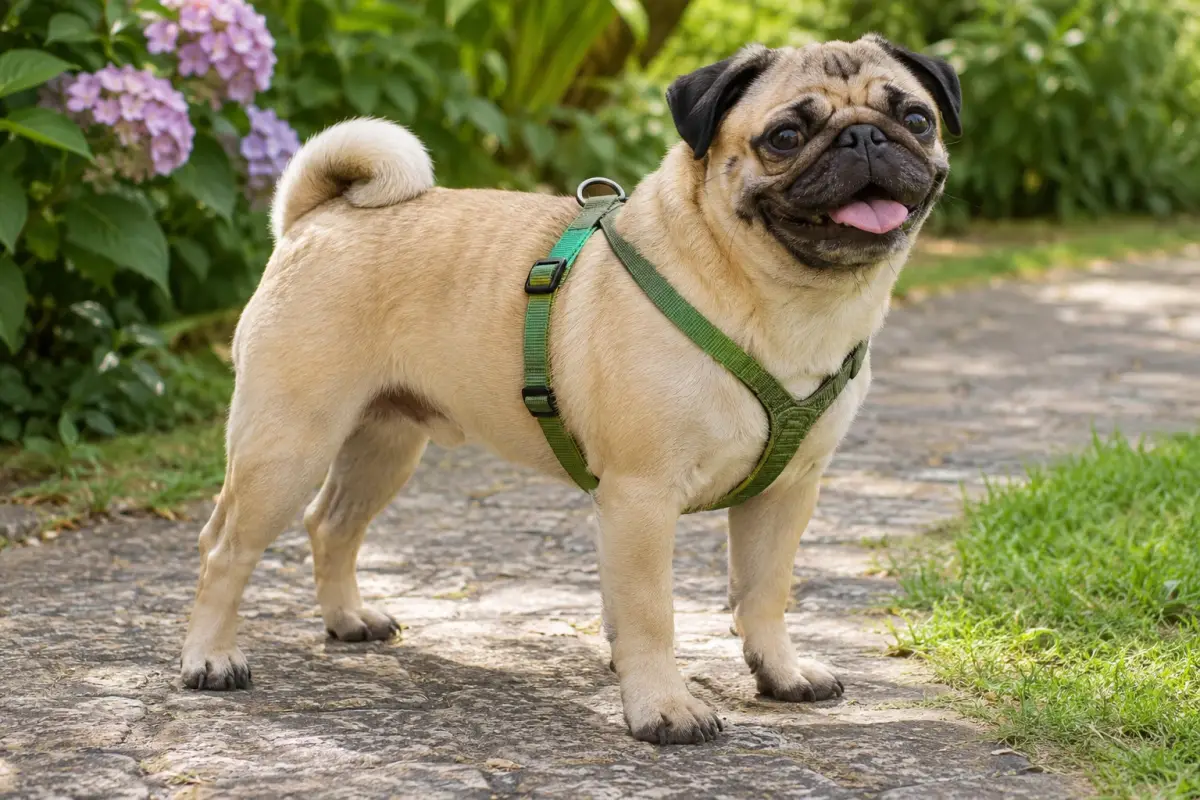
The best harness for a pug is one that keeps all pressure off the neck and throat, fits snugly without rubbing, and is easy to get on. For a short-muzzled breed like the pug, three things decide it: a design that does not tug at the neck, breathable straps, and a fit you have checked yourself. This guide explains each, and which type suits which pug.
By Matt GarnettUpdated November 13, 20265 min read3 sources
Why a harness suits a pug better than a collar
Pugs are on the list of flat-faced breeds that VCA Animal Hospitals names in its guidance on brachycephalic airway syndrome. For dogs affected by it, VCA advises a harness that does not tug at the neck area and warns that a regular neck collar can put undue pressure on the neck. The same article says signs are often worse in hot or humid weather, and that mildly affected dogs often have noisy breathing, especially with exercise.
The American Kennel Club also notes that breeds with wide necks, including bulldogs, French bulldogs and pugs, can slip out of collars more easily, and that harnesses can help dogs with neck pain or breathing problems. So a harness gives a pug two advantages: it spreads pressure across the chest and it is harder to back out of. A collar still has a job, which is holding identification, so keep a light one on for the tag.
What matters most when choosing
Start with the design. A body harness puts pressure on the chest and shoulders instead of the throat, and VCA calls it an excellent choice for dogs with tracheal disease or neck pain. Look for a front panel or straps that sit below the throat, not a strap that rides up under the chin. If your pug coughs, gags or wheezes on walks, the harness is not a fix for that, and the dog needs a vet visit.
Next comes material. The AKC describes mesh as breathable and lightweight, which suits warm weather, but less padded and less durable, so it can chafe more. Nylon is light and durable but can trap heat and moisture, and neoprene is padded but can also retain heat. For a breed that overheats easily, a breathable, padded-where-it-touches design is the sensible compromise. Our dog harnesses collection includes breathable harnesses and reflective, breathable designs of this kind.
The main types compared for a pug
The AKC describes several designs. Over-the-head harnesses slide on from the top and many dogs tolerate them, but a pug with a wide head and short face can dislike having it pulled over the nose. A step-in harness, where the dog steps into two openings and it fastens on the back, avoids the head entirely, and the AKC says it suits dogs sensitive to anything touching their head.
For leash attachment, a back clip between the shoulder blades suits a pug that walks politely. A front clip, or a dual-clip design with both, can help a dog that pulls, because the front attachment redirects forward movement. Dual-clip harnesses also let you start at the front and move to the back as the dog gets reliable. A harness does not train a dog to walk nicely on its own, and a pug that pulls into a harness is still putting pressure on its chest.
How to measure and fit it
The AKC advises measuring two points: the base of the neck where it meets the shoulders, and the widest part of the chest behind the front legs. Start loose, then tighten gradually until snug but not tight. The AKC gives the two-finger gap as a check, and notes some experts consider it slightly tight as a general standard, so look for comfort as well as the number.
Test it before regular use. Walk your pug to see that the shoulders and legs move naturally, pull gently from several directions, and back the dog up to confirm it cannot slide over the head. Watch for rubbing behind the front legs and around the chest. Check the fit again after weight changes, since pugs gain weight easily, and look at the skin folds for irritation after a walk.
What to avoid
Avoid anything that presses on the throat, including thin cord-style or rope-type strap setups that sit high on the neck. A collar-only walking setup is the thing VCA advises against for dogs with airway concerns. Avoid stiff, non-adjustable harnesses sold in generic small sizes, since pugs are short, wide and deep in the chest, and a harness cut for a leaner dog may gape or rub.
Skip very heavy hardware and tight straps that limit chest expansion. The AKC also says some front-clip styles that rest over the shoulder joints can restrict movement, so check that your pug's legs swing freely. For a dog that overheats easily, avoid a thick, dark harness in summer, and shorten walks on hot or humid days, because VCA says these dogs overheat more easily since their panting is less effective.
Care and when to call the vet
Wash the harness when it picks up dirt or smells, and check stitching and buckles for wear. Replace any harness that frays or loses its fit. Keep a light collar for the ID tag on, since the harness should not be the only place your pug's contact details live.
Call your vet if your pug has noisy breathing that is getting worse, gags or retches on walks, tires quickly, or seems distressed after exercise. VCA notes that severely affected dogs may collapse or faint after exercise, which is an emergency. Fit and gear choices help comfort, but they do not treat breathing problems. For more flat-faced breed advice, compare our guides on harnesses for French bulldogs and harnesses for bulldogs. This page is general information, not veterinary advice, and it cannot replace an examination by the vet who knows your pet.
Harness entry and ring layouts
| Feature | Physical arrangement | Check before choosing |
|---|---|---|
| Over-the-head | Neck opening passes over the head | Opening and fitted neck range |
| Step-in | Legs enter openings before fastening | Leg openings and back closure |
| Back clip | A ring on the upper back | Ring placement and adjustment |
| Front clip | A ring on the chest | Chest position and strap path |
| Dual clip | Rings at front and back | Permitted leash configurations |
Common questions
Is a harness better than a collar for a pug?
For walking, usually yes. VCA advises a harness that does not tug at the neck for flat-faced dogs with airway problems, and the AKC says pugs can slip out of collars. Keep a light collar for the ID tag.
What size harness does a pug need?
Measure your own dog instead of relying on a breed label. Measure the base of the neck and the widest part of the chest behind the front legs, then compare those numbers with the maker's size chart.
Are step-in harnesses good for pugs?
They can be, because the dog steps in and nothing goes over the short face. The AKC says step-in styles suit dogs sensitive to anything touching the head, as long as the fit is correct.
Can a harness stop my pug from pulling?
A front-clip or dual-clip harness can reduce pulling by redirecting the dog's forward movement, but training is what teaches loose-leash walking. Ask a trainer if pulling continues.
How do I know if my pug's harness is too tight?
Look for rubbing behind the front legs, red marks, hair loss or restricted shoulder movement. You should be able to slide two fingers under the straps, and your dog should breathe and move normally.
Sources we checked
This guide is general information, not veterinary advice. If your pet is unwell or injured, contact your veterinarian.


