






Buying guides
Best Harness for a Bulldog: What Actually Matters
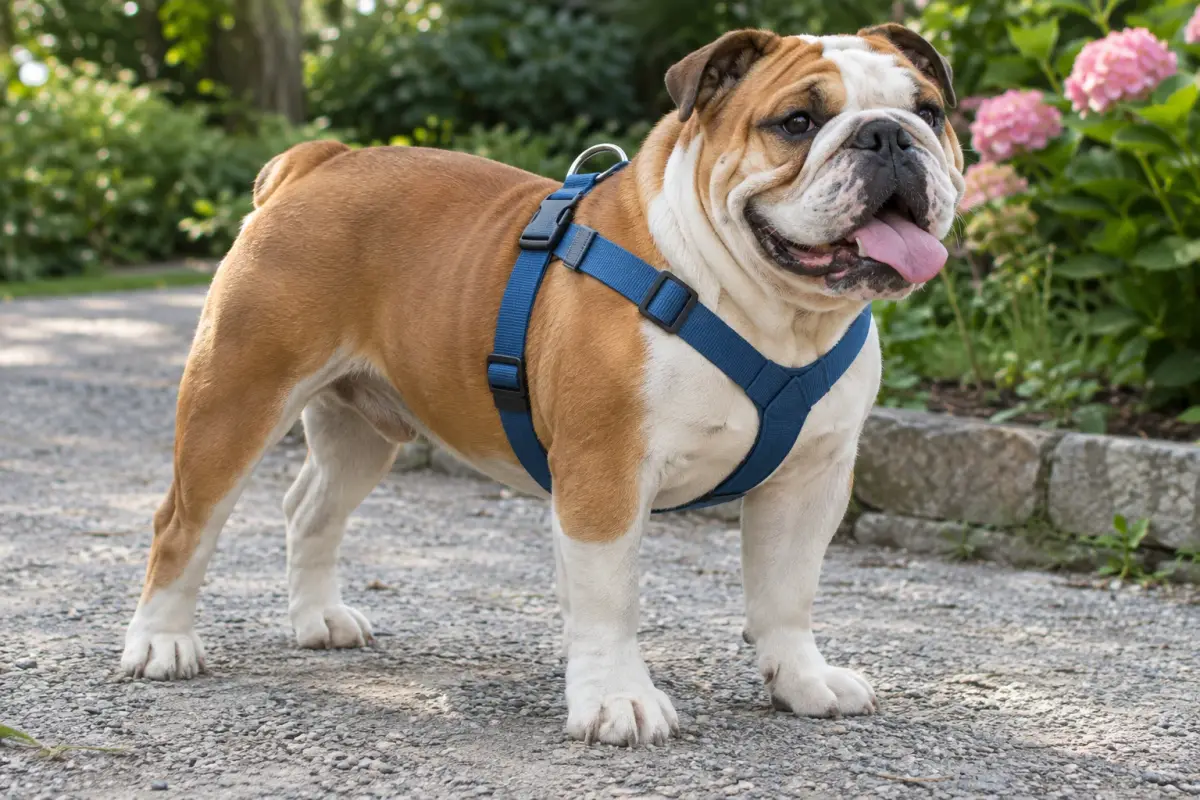
The best harness for a Bulldog is adjustable in every dimension, keeps pressure off the neck, and has a wide, breathable chest panel that does not rub behind the elbows. Measure the chest, check skin folds after each walk, and keep walks short in heat. Browse our harnesses for Bulldogs with those checks in mind.
By Matt GarnettUpdated November 13, 20264 min read3 sources
Why a harness suits a Bulldog
The AKC describes the Bulldog as a thick-set, low-slung, well-muscled bruiser, a docile and loyal companion that adapts well to town or country. That broad, heavy build is exactly why gear fit matters. VCA Hospitals lists bulldogs among the breeds prone to brachycephalic airway syndrome, and advises a harness that does not pull on the neck area rather than a regular collar.
The AKC also notes that broad-necked breeds, including the Bulldog, are less likely to slip out of a harness than out of a collar. A harness therefore gives you both a gentler hold and a more secure one. Keep any collar for ID tags.
Harness types compared
Back-clip designs are the simplest and suit a dog that walks calmly. A front-clip harness redirects a puller, but VCA warns that some designs sit over the shoulder joints and restrict movement, which a heavy-chested Bulldog does not need. Look for a front clip that sits on the chest strap and leaves the legs free.
Many owners choose a plain adjustable option such as the pet harness, the dog harness or the dog harness and leash set. Step-in styles avoid pulling anything over the head, which can help a dog with wrinkles and a short neck. Compare more options in our no pull dog harnesses.
Fit for a wide, low body
The AKC says to measure the widest part of the rib cage, usually just behind the front legs, snug but not tight, and the neck at its base. Bulldogs have deep, broad chests, so they often fall at the top of a size range. If between sizes, size up and use the adjustable straps rather than choosing a smaller size.
VCA says a body harness should adjust in every dimension, should not limit front-leg movement and should not rub behind the elbow. Because the Bulldog sits low to the ground, check that belly straps do not drag or chafe and that the harness does not shift sideways as your dog walks.
Breathing, heat and skin folds
VCA says airway signs are often worse in hot or humid weather and that affected dogs overheat more easily because they cannot pant efficiently. Choose breathable fabric, avoid thick padding that holds heat, and walk in the cooler parts of the day.
Skin folds and heavy shoulders mean rubbing can happen quickly. Check under the legs, behind the elbows and along the chest after each walk for redness or moisture, and dry the straps if they get wet. Keep your dog lean, which VCA notes reduces the strain on breathing.
What to avoid
Avoid narrow, thin straps across the front of the throat, loose fits that let your dog back out, and rough or stiff edges that rub. Skip heavy hardware that adds weight to a short-legged dog, and anything with trims that can catch in folds.
Introduce a new harness gradually in a calm place with treats, before the first walk. Supervise your dog while it wears one and remove it when you cannot watch. Check stitching and buckles regularly, and remove trapped hair from hook-and-loop closures. For a related breed, read our best harness for French bulldogs.
When to call your vet
Loud snoring, snorting, gagging, noisy breathing during exercise or tiring quickly are worth raising with your vet. Collapse, blue or pale gums or struggling to breathe is an emergency and needs a vet at once, especially in hot weather.
If you find a sore spot, hair loss or a smelly, moist skin fold where a harness sits, change the harness and have the area checked. For more on collar versus harness, see our harness vs collar guide, and for the wider range see the best dog harness guide.
This page is general information, not veterinary advice, and it cannot replace an examination by the vet who knows your pet.
Harness entry and leash-ring layouts
| Feature | Physical difference | Check before choosing |
|---|---|---|
| Back clip | A ring on the upper back | Position and adjustment |
| Front clip | A ring at the chest | Chest-ring position and leg clearance |
| Step-in | Leg openings entered before closure | Opening sizes and fastenings |
| Adjustable straps | Sections that change the fitted circumference | Exact neck and chest ranges |
Common questions
Is a harness better than a collar for a Bulldog?
For walking, yes. VCA advises a harness that does not pull on the neck for bulldogs prone to airway problems, and the AKC notes broad-necked breeds are less likely to slip a harness.
What size harness does a Bulldog need?
Measure the widest part of the rib cage behind the front legs and the base of the neck. Bulldogs often sit at the top of a size range, so size up and adjust if between sizes.
Can a harness cause rubbing on a Bulldog?
Yes, especially behind the elbows and in skin folds. Check those areas after each walk, make sure the harness does not limit front-leg movement and change it if you see redness.
Should a Bulldog wear a harness in hot weather?
Choose a light breathable one and walk in the cooler parts of the day, because Bulldogs overheat easily. Stop at once and call your vet if breathing becomes labored.
Which clip is best for a Bulldog that pulls?
A front-clip design can reduce pulling, but choose one that does not sit over the shoulder joints. A dual-clip harness lets you switch to the back clip as your dog learns.
Sources we checked
This guide is general information, not veterinary advice. If your pet is unwell or injured, contact your veterinarian.


