






Buying guides
Best Harness for French Bulldogs: How to Choose One That Fits
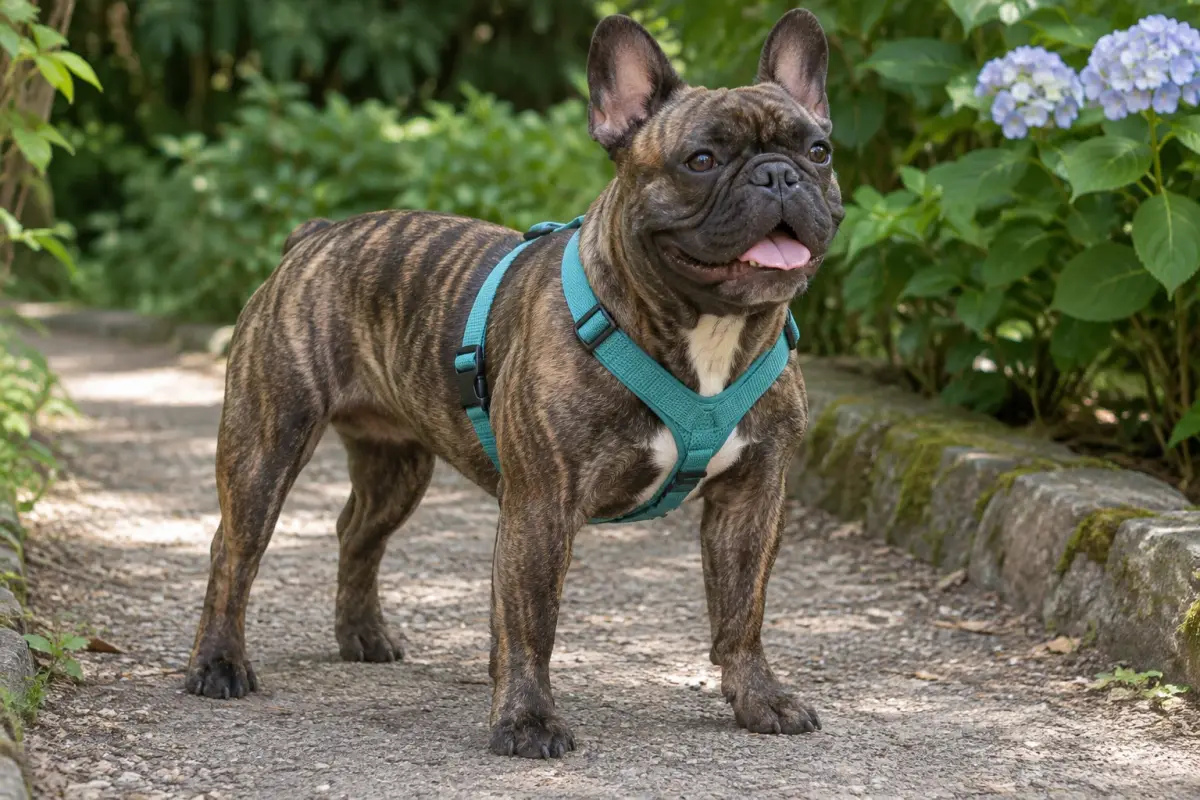
The best harness for a French bulldog keeps all pressure off the neck and throat, fits a deep chest and short back, and stays cool. VCA advises that dogs with brachycephalic airway syndrome wear a harness that does not pull on the neck, which is why a collar alone is a poor choice for most Frenchies. A Y-front harness with a wide chest piece usually fits the breed's build best.
By Matt GarnettUpdated November 14, 20264 min read3 sources
Why the neck matters for Frenchies
French bulldogs are a brachycephalic, or flat-faced, breed. VCA lists French bulldogs among breeds affected by brachycephalic airway syndrome, in which a narrowed nose, long soft palate and other features restrict airflow. For these dogs, VCA says a regular neck collar is not advised because it can put undue pressure on the neck.
A harness spreads the pull across the chest instead. For a Frenchie, that is not a matter of preference; it is the safer way to walk. Keep a collar for ID tags if you like, but clip the leash to the harness.
What matters most in the fit
Frenchies are built chest-first: a broad, deep chest, a thick neck, short legs and a short back. Many harnesses sized by weight gap at the neck and pinch under the front legs on this shape. Look for adjustable neck and chest straps, a Y-shaped front that sits on the breastbone rather than across the throat, and a short body section.
The AKC suggests measuring at the base of the neck where it meets the shoulders and around the widest part of the chest, then starting loose and tightening gradually. The harness should be snug but not restrictive, not slide over the head when the dog backs up, and leave the front legs free to reach forward.
Harness types compared
Y-front or strap harnesses are lightweight and open, which keeps a heat-sensitive breed cooler, and suit most Frenchies. Padded vest harnesses spread pressure widely and are easy to put on, but can be hot; choose mesh or breathable fabric. Step-in harnesses are quick to fit but often pinch the shoulders on a broad chest.
Front-clip harnesses help with pulling and can work well (a no-pull harness and lead set is a related option), though any harness that tightens across the throat when the dog pulls should be avoided. A back handle is useful for lifting a Frenchie over obstacles or into a car, but should not be used to dangle the dog by its body.
Heat and exercise
Flat-faced breeds struggle to cool themselves. VCA notes signs of the airway syndrome are often worse in hot or humid weather, and advises avoiding hot conditions and keeping affected dogs in air conditioning in summer. The AKC lists short-snouted breeds among those at higher risk of heatstroke.
Choose a light, breathable harness, walk in the cooler hours, keep walks short and slow in warm weather, and carry water. Noisy breathing, gums turning bluish or gray, collapse or extreme panting mean stop at once, cool the dog with tepid water, and get to a vet immediately.
What to avoid
Avoid harnesses with a strap that sits across the throat, and any design that tightens around the neck. Avoid heavy, fully padded vests in summer. Avoid choosing by weight alone, as a 25 lb Frenchie may need a size larger at the chest than a 25 lb dog of another breed.
Avoid using flexi leads that let the dog hit the end at speed, which jolts the chest. Avoid leaving a harness on all day, as straps can rub the short coat and skin folds. If you see rubbing, hair loss or sore skin under the straps, adjust the fit and ask your vet if it does not settle.
Care and lifespan
Check the fit every few weeks and after weight changes. Frenchies gain weight easily, and VCA notes keeping these dogs lean helps their breathing, so a harness that was right last season may now be tight. See also our best food for French bulldogs guide.
Hand-wash or machine-wash in a laundry bag and air dry. Replace a harness when buckles crack, stitching frays or webbing stretches, since a broken buckle on a busy street is a real escape risk. Browse all our French bulldog harnesses.
This page is general information, not veterinary advice, and it cannot replace an examination by the vet who knows your pet.
Harness panel and attachment layouts
| Layout | Construction | Measure or inspect |
|---|---|---|
| Y-front straps | An open arrangement of webbing | Chest path and adjustment range |
| Padded vest | A broader fabric body panel | Panel edges and neck opening |
| Step-in | Leg openings fastened around the body | Leg opening and shoulder clearance |
| Front clip | A chest attachment point | Ring location and strap path |
| Back handle | A handle attached to the top | The exact maker-approved use |
Common questions
Should French bulldogs wear a collar or a harness?
A harness for walking. VCA advises that dogs with brachycephalic airway syndrome, common in Frenchies, wear a harness that does not pull on the neck. A light collar can still carry ID tags.
What size harness does a French bulldog need?
Measure the neck base and the widest part of the chest and use the maker's chart, not weight alone. Frenchies are deep-chested, so many fall into a larger chest size than their weight suggests.
Are vest harnesses good for French bulldogs?
They spread pressure well and are easy to fit, but can be warm. Choose a breathable mesh vest with a Y-shaped front that stays off the throat, and avoid heavy padding in hot weather.
Do French bulldogs need a no-pull harness?
Only if they pull. A front-clip harness can help (browse our no-pull dog harnesses), but make sure no strap tightens across the throat. Loose-leash training with rewards helps more than any piece of equipment. See how to stop a dog pulling on the leash and the best no-pull dog harness guide.
Sources we checked
This guide is general information, not veterinary advice. If your pet is unwell or injured, contact your veterinarian.


