






Buying guides
Best Harness for Goldendoodles: What Actually Matters
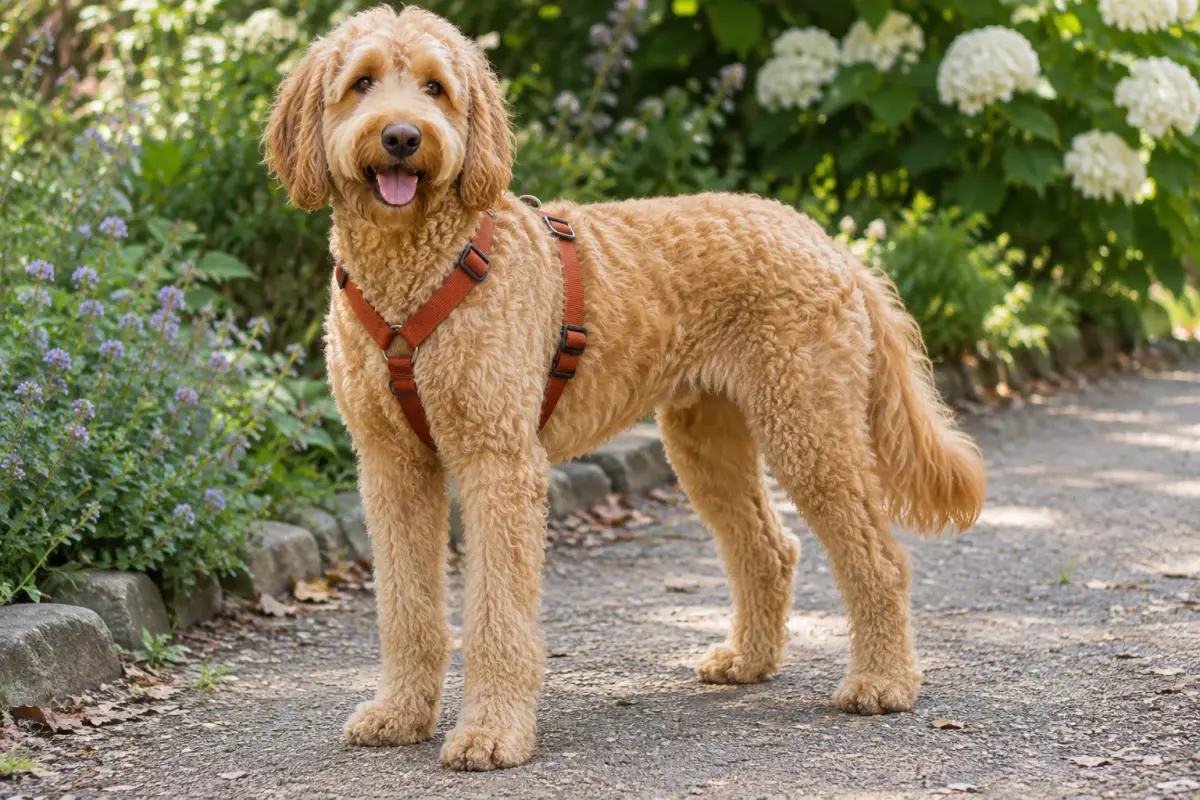
The best harness for a Goldendoodle is one sized to your dog's actual chest, with smooth, padded straps that will not drag or mat a curly or wavy coat. Goldendoodles come in many sizes, so ignore the breed name, measure the chest, and use the AKC's fit check: two fingers under the straps on a large dog.
By Matt GarnettUpdated November 13, 20264 min read3 sources
Why a Goldendoodle harness is chosen by measurement, not breed
A Goldendoodle is a Golden Retriever and Poodle cross, and the AKC notes that Poodles come in Standard, Miniature and Toy varieties, so the size of the Poodle parent changes how big the dog ends up. VCA lists Golden Retrievers at 21.5 to 24 inches tall and 55 to 75 pounds, which is a useful reference for the larger end, but your dog may be much smaller or sturdier. Start with your dog's chest girth and our dog harnesses, not a size label.
Doodles also vary in build and coat from one litter to the next. Two dogs of the same weight can need different harness sizes, especially if one has a thick, fluffy coat that hides the true chest. Measure around the widest part of the ribcage, just behind the front legs, and have your dog standing, so you are fitting the dog and not the fur.
Fit and the coat: the checks that matter
The AKC says a harness fits if you can slip two fingers between your dog's skin and the harness on a large breed, and one finger on a small dog. Because a doodle's coat adds bulk, push the fingers right through to the skin rather than resting them on top of the fur, or the harness will end up looser than it feels. Too loose lets a dog back out; too tight is uncomfortable, especially in warm weather.
VCA describes the Golden Retriever's dense coat as needing frequent brushing to prevent mats, and the AKC describes the Poodle coat as curly. A Goldendoodle can inherit either, so check for friction points. Look behind the front legs and under the chest strap for hair rolling into tangles. If a harness leaves hair matted after every walk, try a smoother strap, brush to the skin afterward, and see a groomer if a mat has formed.
Harness styles compared
The AKC describes back-attachment harnesses, front-clip harnesses and no-pull designs, which put pressure on the chest rather than the neck. For a bouncy, strong doodle that pulls, a front-attachment design gives you leverage. Browse our no-pull dog harnesses, or read our guide to front-clip dog harnesses for how they work.
Step-in and vest-style harnesses are quicker to put on and spread pressure across a wider panel, which suits a dog that dislikes things going over its head. Padded designs, listed under our padded dog harnesses, are gentler on a thick coat. Neither is automatically the best choice: the right style is the one that fits your dog and that you can put on in seconds.
Straps, padding and visibility
Choose smooth, flat straps with rounded edges, because rough webbing rubs the coat and can pull hair into knots. Padding helps with comfort, but thick padding can hold heat on a dense coat, so watch your dog in warm weather. Breathable mesh is a reasonable compromise. A collar and harness set for larger dogs is one way to get matching pieces for a bigger doodle.
Doodles are often dark or parti-colored and love evening walks, so visibility is worth considering. A light-up chest strap harness is one option, and reflective trim is another. Whatever you pick, check the buckles and stitching before the first walk.
Walking, pulling and training
A harness makes pulling less effective, and the AKC notes harnesses can discourage pulling, but it does not teach loose-leash walking. Doodles are smart and energetic, so reward your dog for staying beside you and keep sessions short and positive. Our guide to putting on a dog harness covers getting a wary dog used to one, and harness vs collar explains why many owners use both.
If your dog suddenly resists the harness, starts limping or seems sore around the shoulders, see your vet before changing gear. For a young doodle, check the fit weekly, because puppies grow quickly and a snug harness can be too tight within weeks.
Sizing by life stage
Puppies need an adjustable harness that you will replace as they grow, so avoid spending heavily on the first one. Adult doodles can move to a better-fitting, more durable harness once their size settles, usually after the first year or so. Re-measure after any haircut, because a short trim changes how the harness sits.
Senior dogs may need extra padding and a handle for stairs or getting into the car. If your doodle is carrying extra weight or recovering from injury, ask your vet how to walk and support your dog. When you are ready to compare, browse our dog harnesses with your dog's chest measurement in hand.
Harness entry and attachment choices
| Feature | Physical difference | What to inspect |
|---|---|---|
| Back attachment | A leash ring on the back | Ring position and strap path |
| Front attachment | A leash ring at the chest | Chest-ring position and fit |
| Step-in entry | Legs enter openings before closure | Leg openings and adjustment |
| Vest body | A broader fabric panel | Neck opening,panel edges and lining |
| Padding | Extra layers at contact areas | Placement and permitted cleaning |
Common questions
What size harness does a Goldendoodle need?
It depends on the dog, since Goldendoodles vary with the Poodle parent's size. Measure the chest girth just behind the front legs with a soft tape and compare it with the maker's chart, rather than choosing by weight or breed.
How tight should a Goldendoodle's harness be?
The AKC says to fit two fingers between the straps and the skin on a large dog, one on a small dog. Push your fingers through the coat to the skin, because fluffy fur makes a loose harness feel snug.
Will a harness mat my Goldendoodle's coat?
It can, because straps rub at the chest and behind the front legs. Choose smooth, flat straps, brush to the skin after walks and check for tangles at those friction points. A groomer can help with mats.
Is a no-pull harness good for a Goldendoodle?
It can help, since pressure lands on the chest rather than the neck. It does not teach loose-leash walking on its own, so pair it with reward-based training and short, regular practice.
Should I use a harness or a collar on my Goldendoodle?
Many owners use a harness for walks and a collar for ID tags. The AKC notes collars put pressure on the throat when a dog tugs, which is why harnesses are often preferred for pullers.
Sources we checked
This guide is general information, not veterinary advice. If your pet is unwell or injured, contact your veterinarian.


