






Buying guides
Best Harness for a Cavalier King Charles Spaniel: What Matters
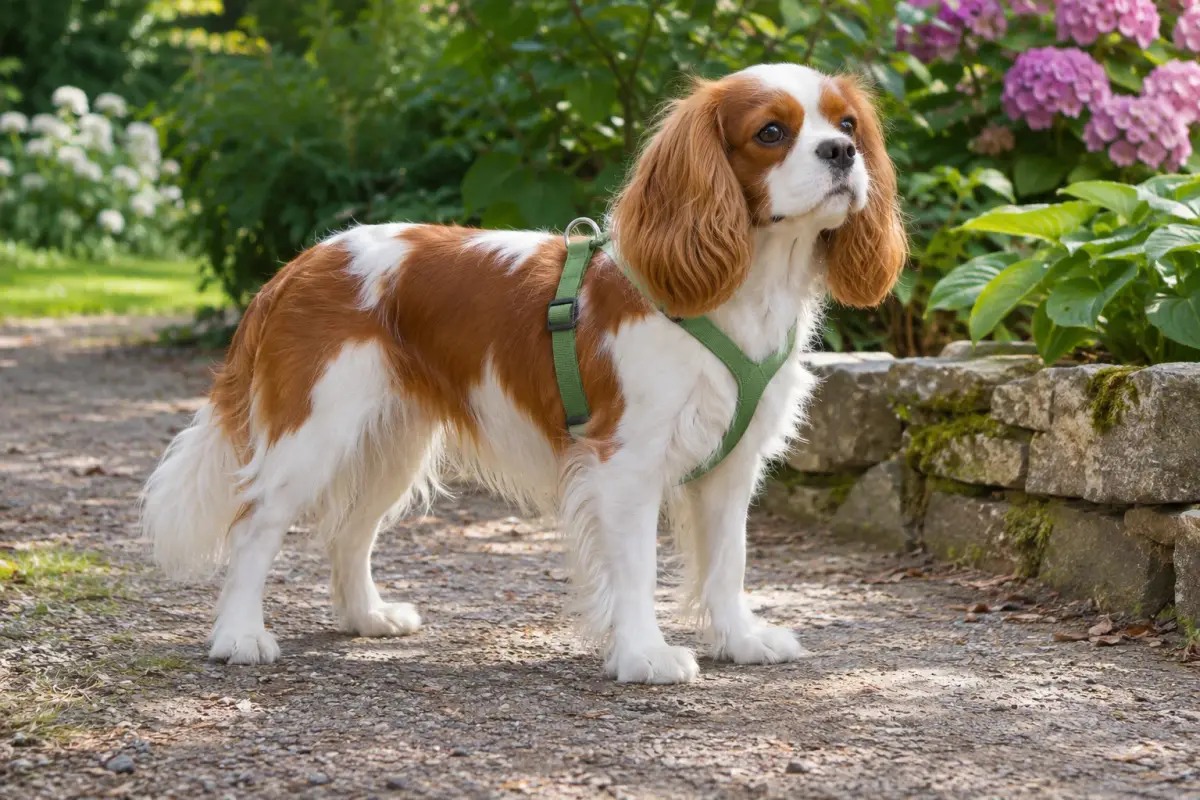
The best harness for a Cavalier King Charles Spaniel is soft, light and adjustable in every dimension, keeps pressure off the neck, and is sized from a chest measurement taken behind the front legs. Check how the straps sit through the coat. Browse our harnesses for Cavaliers with that in mind.
By Matt GarnettUpdated November 14, 20264 min read3 sources
Why a harness suits a Cavalier
The AKC describes the Cavalier as having the gentle attentiveness of a toy breed combined with the verve and athleticism of a sporting spaniel. That mix means a small dog that still wants to surge ahead on a walk. VCA Hospitals notes that a body harness puts minimal pressure on delicate tissue, which is why it is an excellent choice for any dog with neck pain or a tendency to pull.
A flat collar can injure delicate neck structures if a dog pulls hard, according to VCA. For a small, spirited spaniel, clipping the leash to a harness spreads that force over the chest and shoulders. Keep the collar for identification tags.
Harness types compared
Over-the-head harnesses are quick and suit dogs that accept them. Step-in styles, where the dog steps into the front openings and the harness fastens on the back, avoid pulling anything over the head and ears, which the AKC says suits dogs sensitive around those areas. A spaniel with long, feathered ears may find that more comfortable.
A back-clip design suits a dog that walks politely, while a front-clip or dual-clip design helps one that lunges at squirrels. Simple, small-dog options include the polka dot chest strap and leash, the harness and leash rope set and the pet harness. More in our small dog harnesses.
Measuring and fitting
The AKC says to measure the widest part of the rib cage, usually just behind the front legs, snug but not tight, and the neck at its base. If your dog falls between sizes, size up and use the adjustable straps. Brands size differently, so use each maker's chart rather than a weight guess.
For the fit check, you should just be able to squeeze two fingers under the strap without discomfort. VCA says a body harness should adjust in every dimension, not limit front-leg movement and not rub behind the elbow. Walk your dog, then back up a few steps to confirm it will not slide over the head.
Coat, straps and comfort
The AKC says thick or fluffy coats may need tighter adjustment to prevent slipping, but a tight strap can also drag and tangle longer hair under the legs and behind the elbows. Smooth, flat webbing glides better than rough edges, and padding on the chest panel helps if your dog is thin-skinned.
Hook-and-loop closures pick up hair, so remove trapped hair regularly or the grip weakens and the hairs pull. Check under the legs after every walk for rubbing or mats. Mesh is breathable but less padded, and nylon can trap heat, so favor light fabric in warm weather.
What to avoid
Avoid harnesses that sit across the front of the throat, that are too loose to prevent backing out, or that limit shoulder movement. Front-clip designs that sit over the shoulder joints can restrict movement, so choose a shape that leaves the legs free. Skip heavy hardware on a small dog.
Introduce a new harness gradually in a calm place with treats. Supervise your dog in any harness and take it off when you cannot watch, since entanglement can cause injury. Check buckles and stitching regularly. Our best harness for small dogs covers the wider small-breed picture.
Fit changes and when to ask your vet
Recheck the fit after grooming, weight changes or a coat change, and refit puppies often as they grow. Our dog harness and collar size guide walks through the measurements again.
If your dog yelps when handled around the neck or shoulders, resists the harness suddenly, coughs on the lead or shows rubbing and hair loss, check the fit and then ask your vet. A vet can also advise which style suits any neck or heart concern. For the wider range, see our best dog harness guide.
This page is general information, not veterinary advice, and it cannot replace an examination by the vet who knows your pet.
Harness entry and ring positions
| Feature | Physical arrangement | Measure or inspect |
|---|---|---|
| Over-the-head | Neck opening passes over the head | Neck opening and adjustment |
| Step-in | Legs enter openings before closure | Leg openings and fastenings |
| Back clip | A leash ring on the back | Ring placement and stitching |
| Front clip | A leash ring on the chest | Chest-ring position and strap path |
| Dual clip | Rings on chest and back | Permitted leash arrangement |
Common questions
Is a harness better than a collar for a Cavalier King Charles Spaniel?
For walks, usually. VCA says a body harness puts minimal pressure on delicate tissue, while a flat collar can injure the neck if a dog pulls hard. Keep the collar for ID tags.
What size harness does a Cavalier need?
Measure the widest part of the rib cage just behind the front legs and the base of the neck, then use the maker's size chart. If between sizes, size up and adjust the straps.
Are step-in harnesses good for Cavaliers?
They can be, because nothing goes over the head and ears, and they are harder to slip out of when fitted properly. Check that the back fastening is secure and snug.
How do I stop a harness tangling a Cavalier's coat?
Choose smooth, flat webbing, avoid straps that drag under the legs, and clear trapped hair from hook-and-loop closures. Check behind the elbows after each walk for rubbing or mats.
How tight should a harness be on a small spaniel?
You should just be able to squeeze two fingers under the strap without discomfort. It should not restrict the front legs or rub behind the elbows.
Sources we checked
This guide is general information, not veterinary advice. If your pet is unwell or injured, contact your veterinarian.


