






Buying guides
Best Harness for a Boston Terrier: What Actually Matters
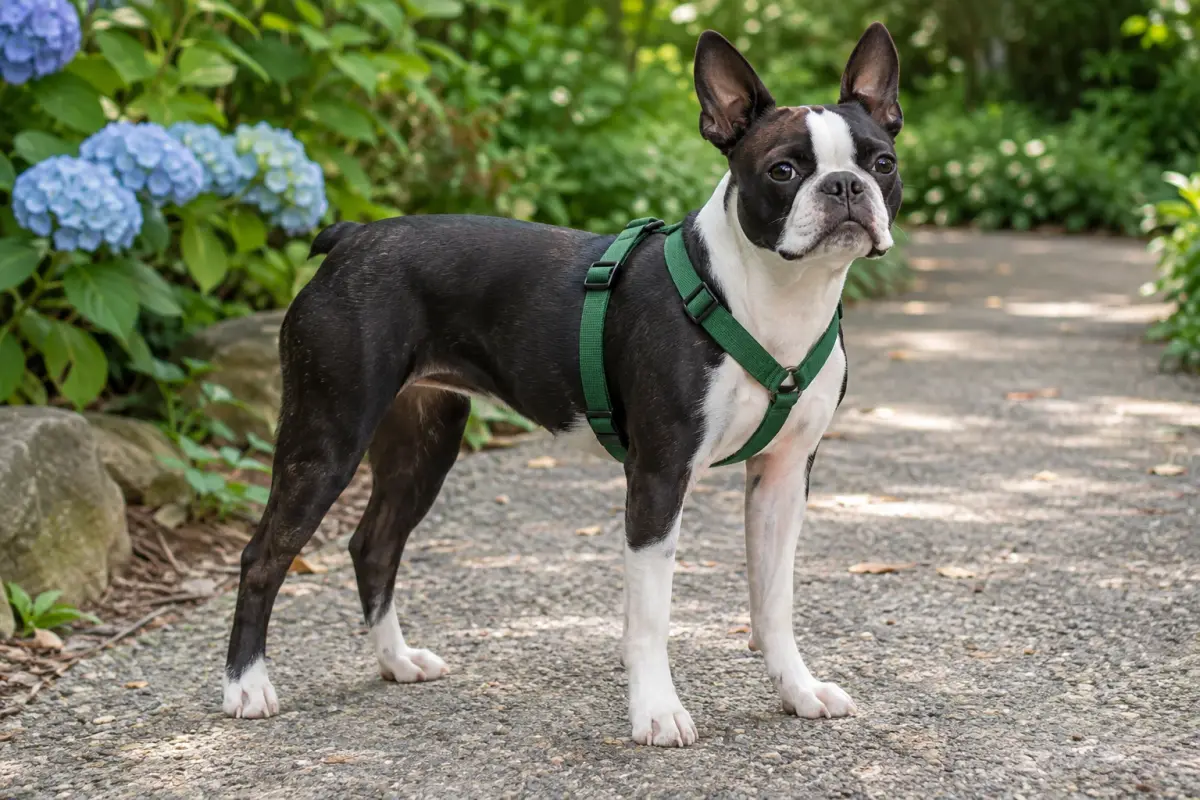
The best harness for a Boston Terrier keeps pressure off the neck, uses light, breathable padding, and fits snugly behind the front legs. Because the breed can have breathing trouble, a harness beats a collar for walks. Browse our harnesses for Boston Terriers with those checks in mind.
By Matt GarnettUpdated November 14, 20264 min read3 sources
Why a harness, not a collar
VCA Hospitals lists Boston terriers among the flat-faced breeds prone to brachycephalic airway syndrome, where narrow airways make breathing harder, especially in hot or humid weather. For these dogs VCA advises a harness that does not pull on the neck area, and avoiding a regular neck collar that can put undue pressure there.
The AKC describes the breed as sporty and compact, with big round eyes and lively, friendly manners. A lively dog that pulls toward every dog and scent is a good argument for a harness: the force goes across the chest and shoulders instead of the throat. Keep a flat collar for identification tags only.
Harness types compared
A step-in harness means nothing goes over the head. The AKC notes this suits dogs that are sensitive around the head, ears or neck, and that it is harder for escape artists to slip out of when fitted properly. An over-the-head design is fine for dogs that tolerate it. Many compact harnesses fasten on the back with a single buckle, which is quick for a small dog.
Back-clip designs suit a dog that walks nicely, while a front-clip or dual-clip design helps a puller. Simple options in this size range include the polka dot chest strap and leash for small and medium dogs, the pet harness and the harness with leash. For more range, see our small dog harnesses.
Breathing, heat and comfort
VCA says signs of airway trouble are often worse in hot or humid weather, because affected dogs cannot pant and cool down as well. That affects harness choice: a thick, heavily padded harness holds heat against the chest, so favor a light fabric with ventilation, and take it off when you are indoors.
Walk in the cooler parts of the day and watch for noisy breathing, heavy panting, snorting, tiring quickly or reluctance to continue. Mesh is breathable but less durable and less padded, so check for chafing. If your dog collapses, has blue or pale gums, or struggles to breathe, that is an emergency and needs a vet at once.
Measuring and fitting a compact chest
The AKC says to measure the widest part of the rib cage, usually just behind the front legs, keeping the tape snug but not tight, and the neck at its base. If your dog falls between sizes, size up and use the adjustable straps. Brands differ, so match your numbers to each chart.
For the fit check, you should just be able to squeeze two fingers under the strap without discomfort. VCA adds that a body harness should adjust in every dimension, should not limit front-leg movement and should not rub behind the elbow. Then watch your dog walk and back up a few steps to make sure the harness does not slide off over the head.
Common problems and what to avoid
Avoid harnesses with a wide strap right across the throat, since pressure on the front of the neck defeats the purpose for a flat-faced dog. Avoid anything so loose that your dog can back out, and anything that rubs under the legs. Check the buckles and stitching regularly, and remove trapped hair from hook-and-loop closures.
Introduce a new harness gradually in a calm place, with treats, before a real walk. Supervise your dog in any harness and take it off when you cannot watch, because entanglement can cause injury. Keep your dog lean, which VCA notes reduces the strain on breathing. See our best harness for French bulldogs for a related flat-faced breed.
When to talk to your vet
If your dog snores loudly, gags, snorts or tires quickly on short walks, ask your vet whether airway problems are involved before you decide on walking routines. A vet can also say whether a harness suits any neck or back concern.
If you see rubbing, hair loss or a sore spot where a harness sits, loosen or change it and have the area checked. For more on the choice, read our harness vs collar guide and the overall best dog harness guide.
This page is general information, not veterinary advice, and it cannot replace an examination by the vet who knows your pet.
Compact-harness entry and attachments
| Feature | Physical arrangement | Fit check |
|---|---|---|
| Step-in | Legs enter openings before fastening | Leg openings and back closure |
| Over-the-head | Neck opening passes over the head | Opening and neck adjustment |
| Back clip | A leash ring on the back | Ring location and stitching |
| Front clip | A leash ring at the chest | Chest-ring location and strap path |
| Dual clip | Front and back leash rings | Both attachments and permitted leash use |
Common questions
Is a harness better than a collar for a Boston Terrier?
Usually yes. VCA advises a harness that does not pull on the neck for flat-faced breeds that are prone to airway problems, and avoiding a regular neck collar for walks.
What size harness does a Boston Terrier need?
Measure the widest part of the rib cage behind the front legs and the base of the neck, then compare with the size chart. If between sizes, size up and adjust.
Should a Boston Terrier wear a harness in hot weather?
Pick a light, breathable one and walk in the cooler parts of the day, since flat-faced dogs overheat more easily. Stop and call your vet if breathing becomes labored.
Do step-in harnesses work for Boston Terriers?
They can. A step-in harness has nothing to pull over the head and is harder to slip out of when properly fitted, but check that the back fastening is secure.
How tight should a harness be on a small dog?
You should just be able to squeeze two fingers under the strap without discomfort. It should not limit front-leg movement or rub behind the elbow.
Sources we checked
This guide is general information, not veterinary advice. If your pet is unwell or injured, contact your veterinarian.


