






Buying guides
Best Harness for a Bernese Mountain Dog: Size, Coat and Fit
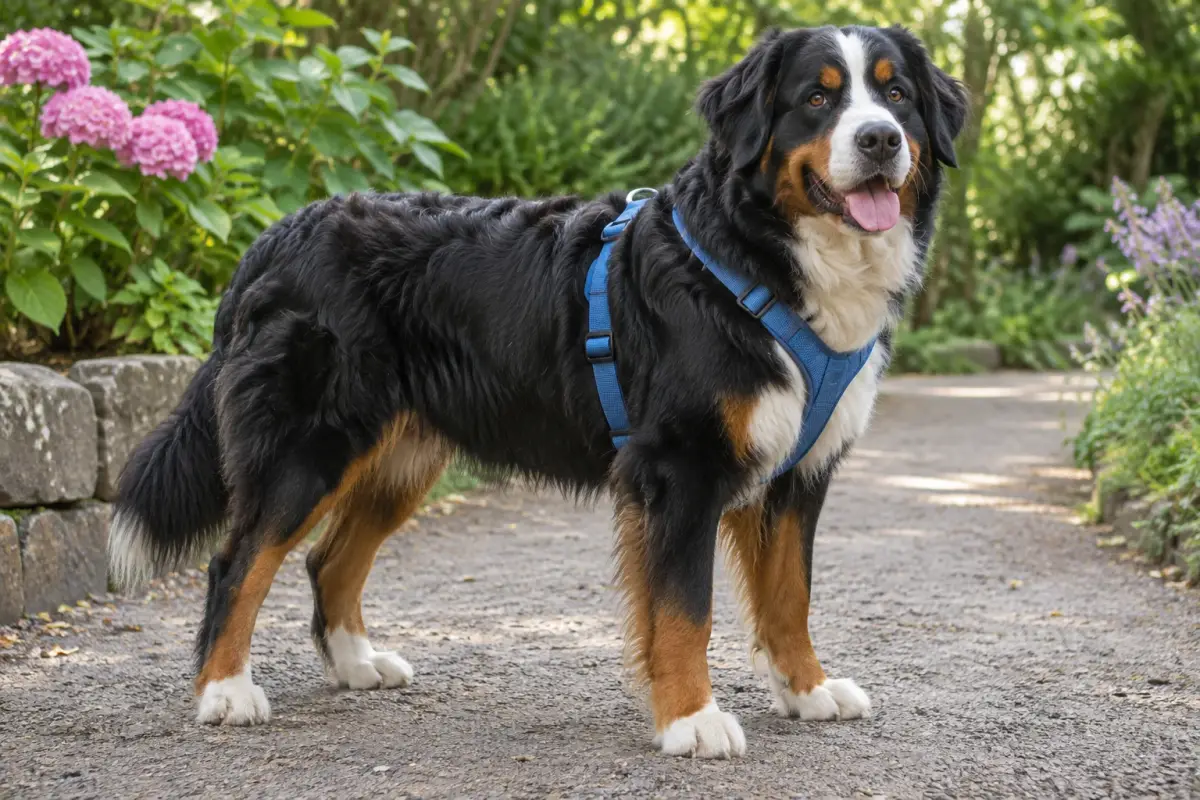
The best harness for a Bernese Mountain Dog is sized to the chest measurement rather than to weight, padded where the straps cross a thick double coat, strong enough for a big, heavy dog, and adjustable enough to stay put through coat changes. A front-clip option helps if your Berner pulls. Browse our harnesses for Bernese Mountain Dogs and check the size chart.
By Matt GarnettUpdated November 14, 20265 min read2 sources
What matters most: size, strength and an adjustable fit
The AKC breed standard puts Bernese Mountain Dogs at 25 to 27½ inches at the withers for males and 23 to 26 inches for females, with sturdy bone. That is a big, strong dog, so look for sturdy webbing, solid stitching and metal hardware rather than plastic buckles on the load-bearing parts. Weight is only a starting point for sizing, though. The American Kennel Club says to measure two places: the base of the neck where it meets the shoulders, and the widest part of the chest, usually behind the front legs.
Use a soft cloth tape and write the numbers down, then compare them with each size chart, because sizing differs from one maker to another. Choose a harness with adjustment points at the neck, chest and girth so you can fine-tune the fit. Our harnesses for Bernese Mountain Dogs are grouped for big, heavy dogs, but the measurements still decide.
Allowing for the double coat
The AKC breed standard describes the Berner's coat as thick and moderately long, so expect a lot of hair under any strap. The AKC notes that thick or fluffy coats may need a tighter adjustment to prevent a harness slipping, and that the fit should be snug but not too tight. Part the fur and check that the straps lie against the body, not on top of a pile of undercoat that will compress later.
Recheck the fit after grooming, weight changes or a seasonal coat blow, as the AKC advises. A harness that fits in a thick winter coat can be loose in summer. Padded straps help stop hair matting under the webbing, and brushing the chest and armpit areas regularly keeps the straps from dragging knots. Brush more often during a heavy coat change.
Materials, padding and heat
Berners overheat easily because of the dense double coat, so material matters. The AKC says nylon is lightweight and durable but less breathable, which can trap heat and moisture; mesh is breathable for warm weather but less durable and less padded, which can increase chafing; and neoprene is padded but can retain heat and moisture. For a big dog in warm weather, look for padding only where the straps press, with breathable fabric elsewhere.
Check that the harness does not restrict shoulder movement. The AKC suggests walking the dog around to confirm natural movement, pulling gently on the harness from several directions, and backing the dog up to confirm it does not slide over the head. Watch for rubbing and pressure points. In hot weather, shorten walks and carry water, and see our large dog harnesses for broader size ranges.
Clips, control and handles
The AKC describes front-clip and no-pull harnesses as options for dogs that pull, and says no-pull styles help when the dog is larger than the handler. A young Berner can be stronger than the person holding the lead, so a front attachment can make walks easier. A dog collar harness for large dog training is the sort of design to check for clip positions and adjustment points, and a dog harness and leash set can suit owners who want both pieces together.
A top handle is useful for a dog this size, for steadying them near traffic or helping them into a car. Large breeds can develop joint problems with age, and a handle can help an older dog on stairs. See our dog harnesses with handle for that style. For night walks, an LED luminous dog chest strap adds visibility, though you should still check its fit like any other harness.
Which type suits which Berner
For a puppy, buy small and expect to replace it; the AKC says puppies need regular adjustment or replacement as they grow, and a Berner puppy grows fast. For an adult that walks well, a back-clip harness is fine, while the AKC says dual-clip styles are useful when you are teaching a dog to wear a harness. For a strong puller, choose a front-clip or dual-clip design and combine it with training. For a hiking or active dog, browse dog hiking harnesses.
Senior Berners deserve extra thought. Older large dogs can develop mobility problems. If your dog is wobbly, slips on floors or struggles on stairs, a padded harness with a sturdy handle gives you something to hold, but ask your vet about mobility before relying on one. Our guide to harnesses for large dogs covers the wider size range.
What to avoid, and when to ask your vet
Avoid thin straps on a heavy dog, harnesses sized by weight alone, and designs that ride across the neck or restrict shoulder movement. Avoid fitting over a freshly groomed coat and forgetting to recheck later. Avoid walking a Berner in the heat of the day in any harness, because the breed overheats easily and straps add warmth across the chest.
If your dog limps, resists wearing the harness, or has sore patches under the straps, stop and ask your vet. Pain in the shoulders, hips or elbows can show up as harness resistance. When you are ready to choose, measure first, then browse our harnesses for Bernese Mountain Dogs. This page is general information, not veterinary advice, and it cannot replace an examination by the vet who knows your pet.
Harness fabric areas and fit checks
| Material or feature | Construction described | What to inspect |
|---|---|---|
| Nylon | Webbing or fabric body | Edges and where the straps contact the coat |
| Mesh | An open-textured fabric area | Placement and condition |
| Neoprene | A padded material layer | Where the lining sits and how it dries |
| Targeted padding | Padding at selected contact areas | Panel position and shoulder clearance |
| Adjustment points | Separate slides or straps | Fit during normal movement |
Common questions
What size harness does a Bernese Mountain Dog need?
Size by measurement, not weight. Measure the base of the neck and the widest part of the chest, then compare with each maker's chart. Berners are large dogs, so most need large or extra-large sizes.
Is a front-clip harness good for a Bernese Mountain Dog?
It can be, if your dog pulls. The AKC says front-clip and no-pull harnesses help redirect pulling and suit dogs larger than their handlers, though training still matters.
How tight should a harness be on a thick-coated dog?
Snug but not tight. The AKC says thick or fluffy coats may need a tighter adjustment to prevent slipping, so part the fur and check the straps against the body.
Can a Bernese Mountain Dog wear a harness in hot weather?
Yes, but Berners overheat easily, so choose breathable fabric, keep walks short and bring water. If your dog pants heavily or seems tired, stop and move somewhere cool.
Sources we checked
This guide is general information, not veterinary advice. If your pet is unwell or injured, contact your veterinarian.


