






Buying guides
Best Food for Pit Bulls: What to Look For
The best food for a pit bull is a complete and balanced AAFCO diet matched to life stage and activity, fed in portions that keep the dog lean and muscular rather than heavy. Puppies of the bigger pit bull types do well on a large-breed growth food. You do not need high-protein marketing or bulking products; you need measured meals and regular weigh-ins.
By Matt GarnettUpdated November 13, 20264 min read3 sources
What pit bull means for feeding
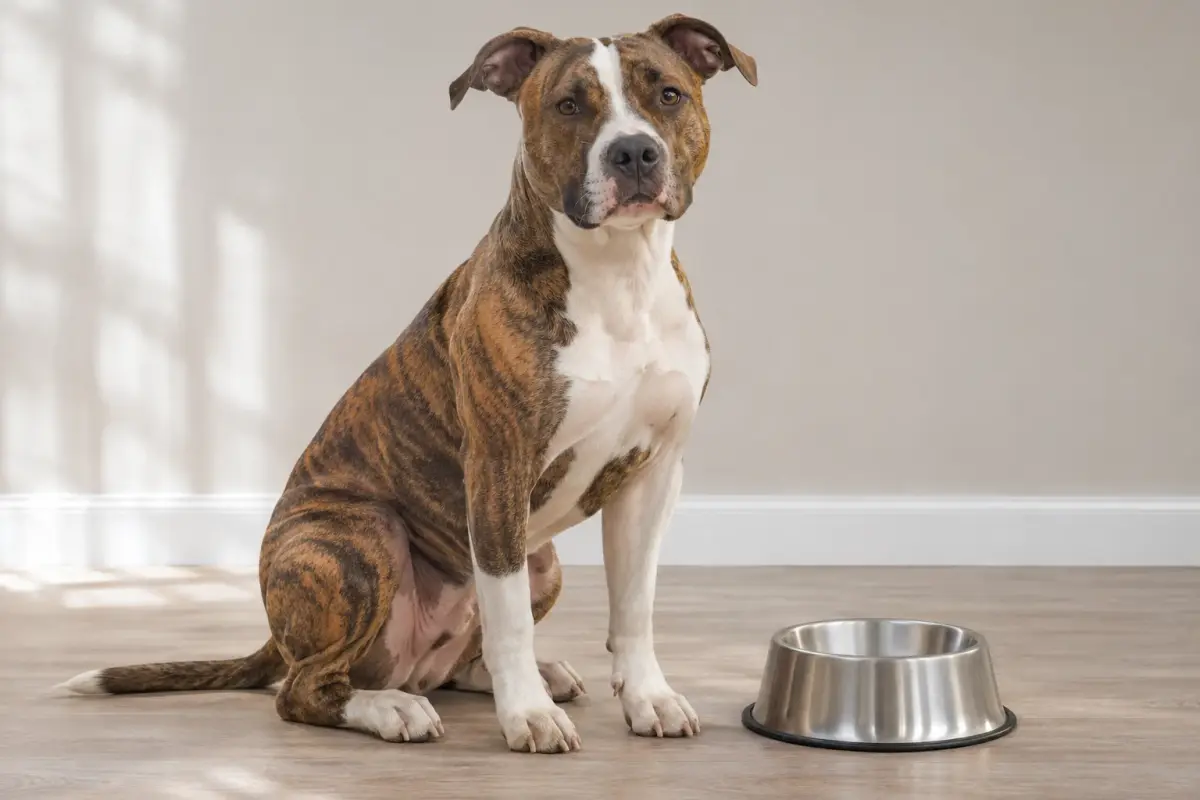
Pit bull is a loose label covering the American Staffordshire Terrier, the American Pit Bull Terrier, the Staffordshire Bull Terrier and many mixes. VCA Animal Hospitals lists the American Staffordshire Terrier at around 57 pounds and 17 to 19 inches tall, but individual dogs under the pit bull label range from about 30 pounds to well over 60. Feed the dog in front of you, not the label.
VCA notes these dogs tend to stay at a good weight or run slightly heavy, and recommends a balanced diet with calories restricted if weight climbs. A fit pit bull has a visible waist from above and ribs you can feel without pressing. Heavier is not stronger; extra weight loads the hips and knees.
What to look for on the label
Start with the AAFCO nutritional adequacy statement. It should say the food is complete and balanced for the dog's life stage: growth or all life stages for a puppy, adult maintenance for a grown dog. Protein percentages on the bag are not the deciding factor for a healthy adult; any complete diet meets minimum protein needs, and very high-calorie performance foods suit only genuinely hard-working dogs.
The WSAVA Global Nutrition Committee suggests asking the maker whether it employs a qualified nutritionist, who formulates its diets, and what quality control it runs on ingredients and finished food. Those answers tell you more than front-of-bag words such as ancestral, wild or premium, which are not standards.
Food for a pit bull puppy
For a puppy expected to reach 50 pounds or more, a large-breed puppy food is a sensible choice. VCA notes that feeding a large-breed growth food to American Staffordshire Terrier puppies slows growth rate without reducing adult size and may lower the incidence or severity of hip dysplasia. These foods control calcium and calories so bones grow at a steadier pace.
The AKC suggests three meals a day from about 3 to 6 months and two from 6 to 12 months. Larger dogs typically move to adult food at around 12 to 14 months. Keep the puppy lean, count training treats in the day's total, and skip any calcium or protein add-ins unless your vet prescribes them.
Skin and stomach sensitivities
Many owners look for a special food because their dog scratches or has loose stools. Diet is only one possible cause of itching; fleas and environmental allergies are common too. If your vet suspects a food allergy, an elimination trial with a carefully chosen diet for several weeks is the reliable test, and rotating bags every month makes the picture harder to read.
Change any food over about a week, mixing more of the new food into the old each day. If your dog vomits repeatedly, has diarrhea for more than a day or stops eating, call your vet rather than changing food again.
What to avoid
Avoid bulking powders, weight-gain products and raw meat piled on top of a complete diet in the name of muscle. Muscle in a dog comes from exercise and a balanced diet, and extra calories mostly become fat. Avoid free feeding a dog that eats fast, and use a slow feeder or puzzle toy if meals vanish in seconds; see also how to slow down a dog eating.
Avoid fatty table scraps, cooked bones and rich holiday leftovers, which can upset the stomach. If you are considering a grain-free or exotic-protein diet, talk to your vet first.
This page is general information, not veterinary advice, and it cannot replace an examination by the vet who knows your pet.
Common questions
What is the best food for a pit bull?
A complete and balanced AAFCO diet for your dog's life stage, fed in measured amounts that keep a visible waist. There is no special requirement for the breed beyond weight control and good quality control from the maker.
Do pit bulls need a high-protein food?
A healthy adult does not need a special high-protein formula. Any complete diet meets protein needs. Very active working dogs may need more calories, which your vet can help you plan.
Should a pit bull puppy eat large breed puppy food?
For a puppy expected to weigh 50 pounds or more, a large-breed growth food is a sensible choice. VCA notes it slows growth rate without reducing adult size and may lower hip dysplasia risk.
How much should I feed my pit bull?
Start with the guide on the bag for your dog's target weight, weigh the food, and adjust every few weeks so you can feel the ribs easily. Ask your vet for an ideal weight.
Sources we checked
This guide is general information, not veterinary advice. If your pet is unwell or injured, contact your veterinarian.


