






Buying guides
Best Food for Labradoodles: What to Look For
The best food for a Labradoodle is a complete and balanced diet chosen for the adult size your dog will reach, not for the breed name. A doodle heading for large-dog size should eat a large-breed puppy formula while it grows; a miniature one does better on small kibble. In both cases, measured meals and a lean body matter more than brand.
By Matt GarnettUpdated November 14, 20264 min read3 sources
Why size decides a Labradoodle's food
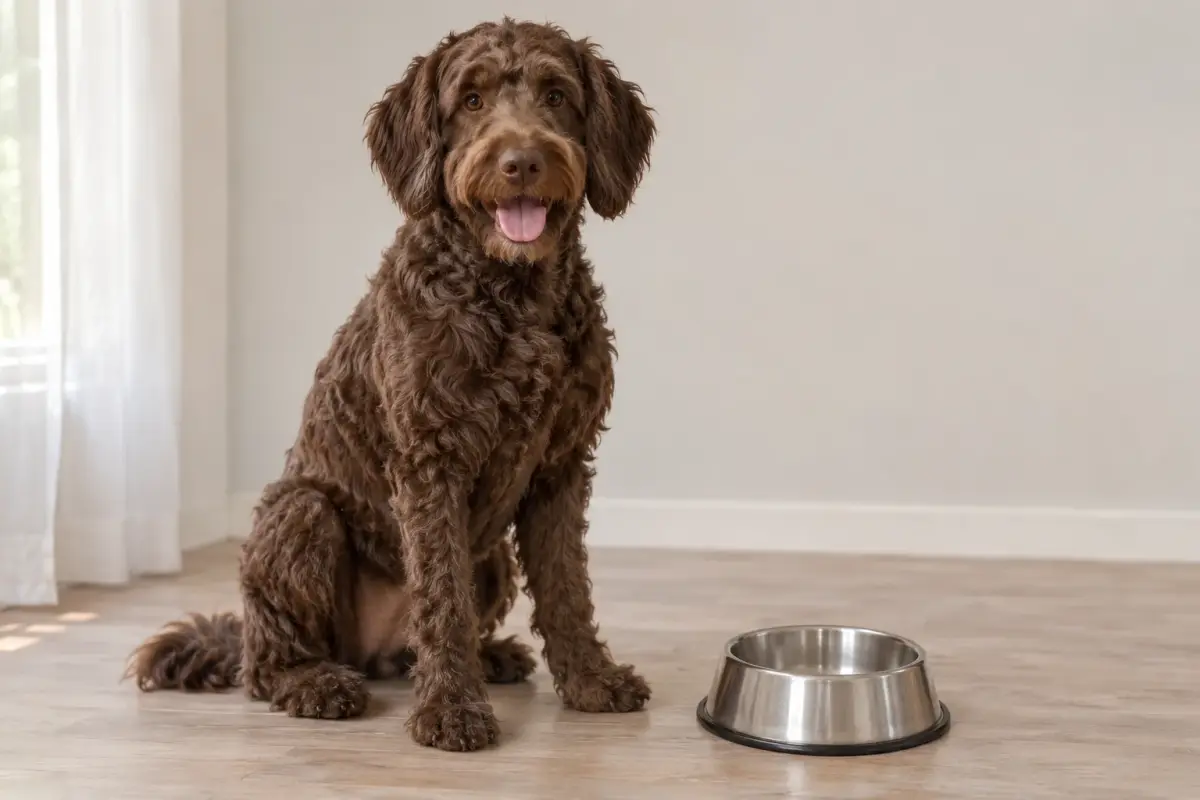
Labradoodles are a cross between the Labrador Retriever and a Poodle, and because the Poodle parent can be standard, miniature or toy, doodles range from small dogs to large ones. That single fact shapes feeding more than anything else. A doodle that will mature as a large dog shares large-breed needs; a miniature doodle has small-breed needs, with a faster metabolism and a smaller mouth.
Ask your breeder or your vet for the expected adult weight, based on the parents, and feed for that. Labradors are known for hearty appetites, and many doodles inherit them, so a doodle of any size benefits from measured portions and a close eye on weight, and a slow feeder bowl can help a doodle that gulps its meals.
Feeding a Labradoodle puppy
For a doodle expected to be large as an adult, the AKC explains that large-breed puppy formulas are lower in fat, calcium, phosphorus and vitamin D, because excess calories and calcium are linked to developmental orthopedic disease. Choose a food labeled complete and balanced for growth, including growth of large-size dogs, and skip supplements unless your vet prescribes them.
For a miniature or small doodle, the AKC notes that small puppies need more frequent meals and do better on small kibble, because their energy reserves are smaller. Whichever size you have, feed several measured meals a day while young and keep the puppy slim. Ask your vet when to switch to adult food.
How to judge any dog food label
The WSAVA Global Nutrition Committee advises looking past unregulated words such as holistic or premium and reading the nutritional adequacy statement. It should say the food is complete and balanced for a life stage, based on AAFCO feeding trials or AAFCO nutrient profiles. Foods marked for intermittent or supplemental feeding should be only a small part of the diet.
WSAVA also suggests asking whether the maker employs a qualified nutritionist, who formulates its recipes and what quality control it uses. Those answers tell you more than the ingredient list. Check calories per cup too, because energy density varies widely and decides how much you should feed.
Portions, treats and weight
Doodles are often trained heavily with food rewards, which is good for training and easy on the waistline to forget. Count treats as part of the day, use small ones, or set aside part of the daily kibble for training, perhaps in a puzzle feeder that turns it into a game. Measure meals with a cup or kitchen scale rather than estimating, and split food into two meals for adults. For a medium or large doodle that eats fast, a ceramic slow feeder bowl is one option.
Weigh your dog every month or two and check its body shape. Under a curly coat it is easy to miss weight gain, so feel for the ribs rather than relying on looks. If your doodle gains or loses weight without a change in food or exercise, ask your vet to check it.
Coats, sensitive skin and food types
Owners sometimes look to food for help with a doodle's coat or itchy skin. A complete and balanced diet usually supplies what a healthy coat needs, and regular brushing with a slicker brush matters at least as much; a self-cleaning slicker brush for mats and tangles is one way to keep a curly coat in check. Dry, wet and fresh commercial foods can all be complete and balanced. Grain-free diets are not necessary for most dogs; ask your vet before choosing one.
Persistent itching, ear problems, loose stools or vomiting deserve a vet visit before switching foods again. A vet-guided elimination trial is the reliable way to identify a food intolerance, and many itchy dogs turn out to have environmental allergies rather than a food problem.
This page is general information, not veterinary advice, and it cannot replace an examination by the vet who knows your pet.
Common questions
What is the best food for a Labradoodle puppy?
A complete and balanced puppy food matched to your doodle's expected adult size: a large-breed puppy formula for a doodle that will be large, and a small-kibble puppy food for a miniature.
How much should a Labradoodle eat?
It depends on the dog's size, age, activity and the food's calories. Use the bag's guide for your dog's ideal adult weight, split it into meals, and adjust after regular weigh-ins.
Do Labradoodles need special food for their coat?
Usually not. A complete and balanced diet supplies what a healthy coat needs, and regular brushing prevents matting. Ask your vet if the coat is dull or the skin is itchy.
Should a standard Labradoodle eat large-breed food?
As a puppy, a standard doodle expected to be large as an adult benefits from a large-breed puppy formula. As an adult, any complete food fed in the right amount can work well.
Sources we checked
This guide is general information, not veterinary advice. If your pet is unwell or injured, contact your veterinarian.


