






Buying guides
Best Dog Travel Bag: What to Look For and What to Pack
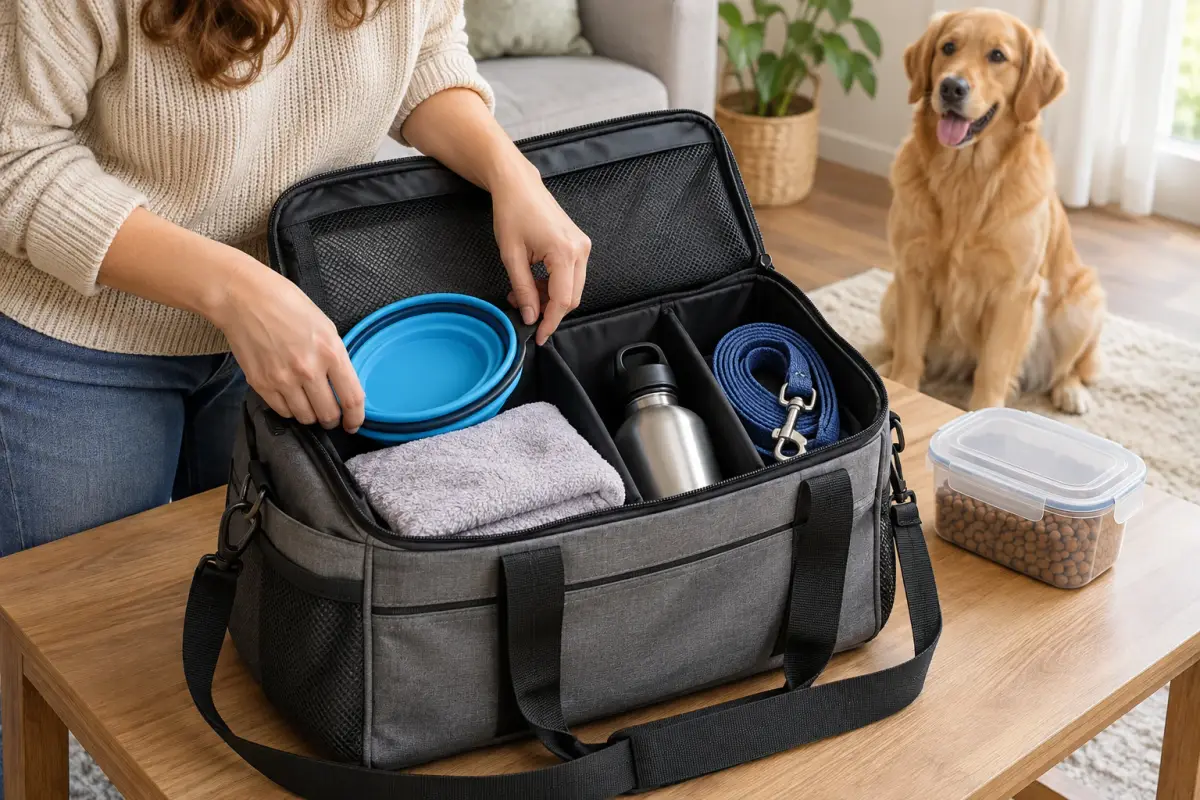
The best dog travel bag keeps everything your dog needs in one place: food, bowls, waste bags, records and a spare leash. Look for a washable lining, separate food storage and sturdy handles. Browse our dog travel bags, then use the packing checklist below to see what should go inside.
By Matt GarnettUpdated November 13, 20264 min read2 sources
What matters most in a dog travel bag
A travel bag is organization, not protection. The point is that you can find the leash, the waste bags or the vaccination papers in a rest-stop parking lot without unpacking the car. Look first at compartments: a separate section for food keeps kibble odor away from clean gear, and an outside pocket for waste bags and a leash saves time at every stop.
Then check the practical features: a wipe-clean or waterproof lining, because bowls and food leak; strong handles and a zipper that closes fully; a shape that fits under a seat or in the trunk; and a size that matches the trip. A weekend away needs far less than a week with a large dog, so decide on capacity before style.
What to pack: a checklist from veterinary sources
Both VCA Hospitals and the AKC publish packing guidance that agrees on the core items. VCA lists medical records, including vaccination certificates and a rabies tag, all medications, regular food portioned into individual meals, and your dog's own unbreakable bowls, plus water from home since unfamiliar water can upset the stomach. The AKC adds a first aid kit, a spare collar and leash, poop bags and a favorite chew toy.
A bag with zip pockets suits the paperwork, medications and spare leash, while a roomy main compartment handles bowls and meal portions. Keep medications in their original containers. Before a long trip, the AKC suggests asking your vet whether your dog is fit to travel.
The main types compared
A general-purpose weekender-style bag has several pockets and fits a full kit, and a basic pet travel bag shows the idea: one carryall for everything except the food. Food-focused bags, such as a dog food travel bag or a waterproof food bag with travel bowls, keep portioned meals dry and the bowls to hand.
A third type is the carrier bag, which carries a small dog. That is a different job: it holds the dog rather than the gear, so see our dog carriers and the guide to choosing a dog carrier rather than treating a supply bag as a way to carry a pet.
Best bag for each situation
For a car trip, a mid-sized bag with several pockets works best, since space is not the limit. For a flight or a hike, choose lighter, flatter bags and pack only a day's food portions. For a multi-dog family, a bigger carryall plus a separate food bag keeps each dog's meals clear.
For frequent short trips, keep one bag permanently stocked with a spare leash, waste bags, a collapsible bowl and a copy of records, so you only add food and medication on the day. That habit alone prevents most forgotten-item stops.
Travel safety the bag cannot replace
A bag does not protect a dog in a crash. The AKC advises using equipment tested for canine safety, and VCA suggests a canine seat belt for larger dogs, or a crate or cage secured in the back seat or cargo area. VCA also says never to leave a dog alone in a car, because the interior can overheat quickly and cause heat stroke.
Offer water at every rest stop, clip the leash on before opening the door, and keep a snug collar with ID on your dog. Skip breakfast on travel day to reduce nausea, as VCA suggests, and ask your vet about carsickness. Our guide to a travel dog crate for car trips covers restraint in more detail.
What to avoid and how long it lasts
Avoid bags with thin, unlined fabric that soaks up spills, zippers that split under load and straps that dig into your shoulder when full. Avoid storing opened food loose in a bag; keep it in a sealed container or bag liner so it stays fresh and does not attract pests.
Wash the lining after every trip, empty the bag fully and let it air-dry before storing. A decent bag lasts several years of regular use; replace it when seams split or the lining cracks, because a failing lining will let moisture reach your other gear. Browse our dog travel bags when it is time.
Supply bags and pet carriers are different jobs
| Bag type | What it holds | What to verify |
|---|---|---|
| General carryall | Travel supplies in several pockets | Pocket access and usable storage |
| Food-focused organizer | Food containers and bowls | Exact containers,capacity and included bowls |
| Bottle or bowl storage bag | Serving pieces kept with supplies | Component sizes and clean-up access |
| Pet carrier | The animal rather than just its equipment | Interior fit,ventilation and carrying rating |
Common questions
What should I pack in a dog travel bag?
Pack medical records and vaccination proof, medications, portioned food, unbreakable bowls, water from home, a spare collar and leash, waste bags, a first aid kit and a favorite chew toy, following VCA and AKC lists.
Can a dog travel bag carry my dog?
No. A supply bag carries gear. A carrier is a separate product designed to hold a small dog, with ventilation and a secure closure. Choose a carrier for that job and check your vet's advice on size and weight.
How do I keep dog food fresh while traveling?
Portion each meal ahead of time and keep it in a sealed container or lined food bag, away from heat. Use the same food your dog eats at home, since a sudden change can upset the stomach.
Is it safe to leave my dog in the car while I get my bag?
No. VCA warns that a car's interior can overheat quickly and cause heat stroke, so never leave your dog alone in a parked car, even briefly. Pack the bag before you load your dog.
Sources we checked
This guide is general information, not veterinary advice. If your pet is unwell or injured, contact your veterinarian.


