






Buying guides
Best Travel Dog Crate: How to Choose a Safe Crate for the Car
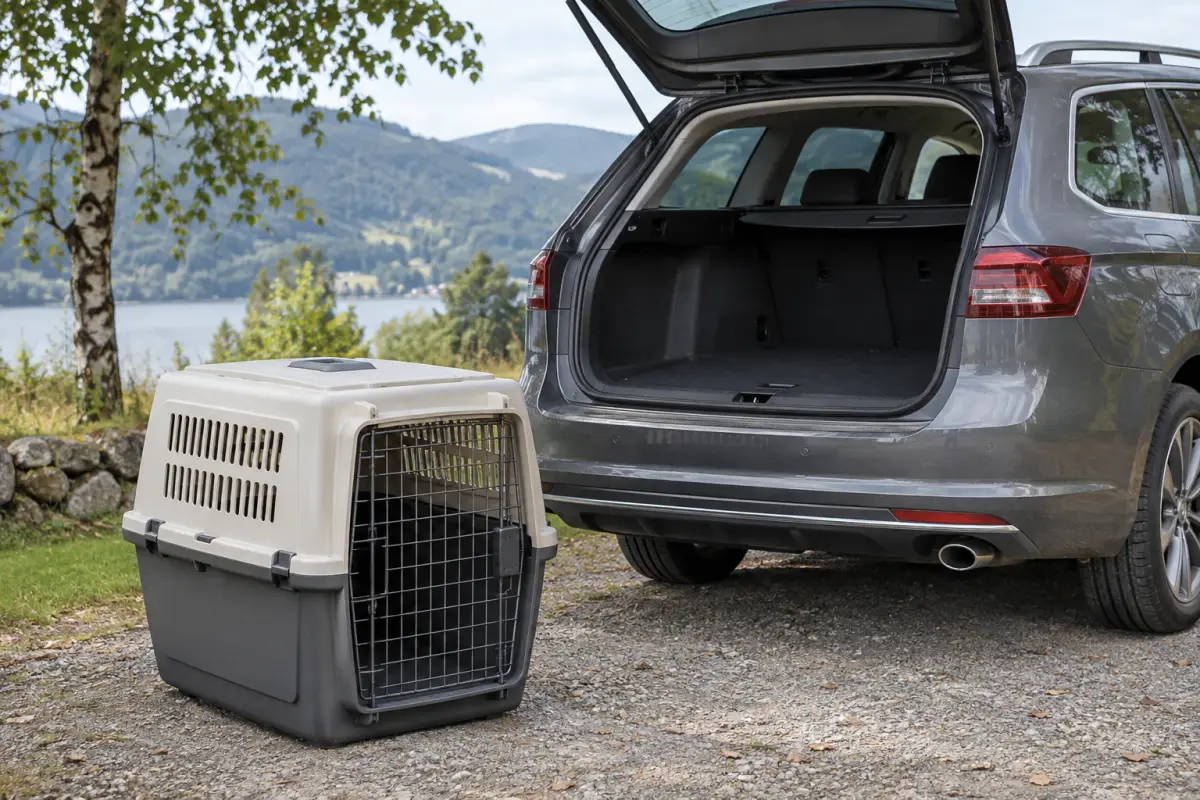
The safest travel crate is one that fits your dog snugly, fits your vehicle, and is tied down so it cannot move in a crash. The AKC says dogs should ride in a crate or a crash-tested seat belt. Hard-sided crates secured with strength-rated anchor straps are the usual choice; soft and collapsible crates are convenient but offer little impact protection. Be skeptical of crash-tested labels you cannot verify.
By Matt GarnettUpdated November 10, 20264 min read3 sources
Why restraint matters
An unrestrained dog can distract the driver, be thrown forward in a sudden stop and get loose after an accident. The AKC recommends that dogs ride in a crate or be secured with a seat belt, and suggests a crash-tested seat belt where a vehicle is too small for an appropriately sized crate.
A crate that slides or tips in a crash protects no one. There is no required federal crash standard that pet crates must meet before sale, so a crash-tested label is only as good as the independent test behind it, and secure mounting matters as much as the crate itself. You can compare sizes and styles in our dog travel crates.
What matters most: fit and tie-down
For travel, a snug crate is safer than a roomy one: your dog should be able to stand, turn and lie down, but not slide around. The AKC's crate size rule, just large enough to stand up, turn around and lie down comfortably, applies doubly in a car.
Tie-down matters next. Use strength-rated cargo straps attached to the vehicle's anchor points, not elastic bungee cords. Place the crate in the cargo area against the back of the rear seats, or on the floor behind the front seats for small crates, and never on a front seat with an airbag.
Crate types compared
Heavy-duty hard crates in rotomolded plastic or aluminum, with tie-down points, offer the most protection and some are marketed with independent crash test results. Standard plastic crates are a reasonable middle ground when strapped down. Wire crates are strong at home but can collapse or bend in an impact.
Soft collapsible crates are light, fold flat and suit calm dogs at hotels or campsites, but offer little protection in a crash and can be torn open. Collapsible crates fold for storage; check they lock rigidly when open. For small dogs, a hard carrier belted in on the back seat is often the practical choice. Our guide to dog crates for small dogs covers that case.
Best type for each situation
For road trips with a medium or large dog in an SUV, a hard crate in the cargo area with rated anchor straps. For a small dog, a hard carrier secured with the seat belt through its handle or anchor points. For hotel stays, a soft crate as a familiar den at the destination, used in the car only alongside a proper restraint. Whether to cover a dog crate is a separate question.
For a dog that is anxious in the car, start with short trips that end somewhere fun, as the AKC recommends introducing the crate outside the car first with treats and praise. Ask your vet if motion sickness is the issue; do not give any medicine unless your vet prescribes it.
What to avoid
Avoid crates that are much bigger than your dog, bungee cords as tie-downs, and crates placed loose on a seat. Avoid crash-tested claims that name no independent test or that apply to only one size in a range.
Never leave a dog in a parked car, even with a crate and the windows cracked; the AKC warns against leaving a dog alone in a car in hot or cold weather. Watch for heavy panting, drooling and bright red gums on hot drives, which are heatstroke warning signs, and cool the dog and call a vet if they appear.
Care and lifespan
Measure your cargo area before buying, including the slope of the rear seats and the tailgate opening. Clean the crate after trips and check latches, welds or plastic for cracks.
Replace a crate that has been in an accident, even if it looks fine, and replace straps that fray. A good hard crate lasts many years. For the rest of the car, see our guides to dog car seat covers and dog ramps; when you are ready, browse dog travel crates and travel crates for large dogs.
This page is general information, not veterinary advice, and it cannot replace an examination by the vet who knows your pet.
Vehicle crate structures and securing points
| Construction | Body arrangement | Verification needed |
|---|---|---|
| Heavy rigid crate | Rigid plastic or aluminum body | Exact tie-down points and test evidence |
| Standard plastic | Rigid shell with a door | Approved securing route and vehicle fit |
| Wire | Bar panels around the floor tray | Model-specific vehicle-use evidence |
| Soft collapsible | Fabric with a folding support frame | Do not infer crash protection from portability |
| Folding rigid design | A structure that locks open | Each lock and the actual deployed configuration |
Common questions
What is the safest dog crate for car travel?
A snug, hard-sided crate secured with strength-rated anchor straps in the cargo area. Look for independent crash test results you can verify. Wire and soft crates offer less protection in a collision.
Are soft dog crates safe in the car?
They keep a calm dog contained but give little protection in a crash and can be torn. They are better as a portable den at your destination, with a crate or crash-tested harness used in the car.
Are collapsible dog crates good for travel?
They are convenient to store and carry. Choose one that locks rigidly when open and can be strapped down. Hard collapsible designs are sturdier than fabric ones.
Where should a dog crate go in the car?
In the cargo area against the back of the rear seats for larger crates, or on the floor behind the front seats for small ones, always strapped down. Never put a dog on a front seat with an airbag.
Sources we checked
This guide is general information, not veterinary advice. If your pet is unwell or injured, contact your veterinarian.


