






Buying guides
Best Dog Crates for Small Dogs: How to Choose One
A small dog's crate should be just big enough to stand, turn around and lie down, as the AKC advises, which for most small breeds means an 18 to 30 inch crate. Choose by measuring, not by weight. Check that bar spacing is narrow enough for a tiny dog's head and paws, and pick plastic or soft-sided if your dog likes a den or you travel often.
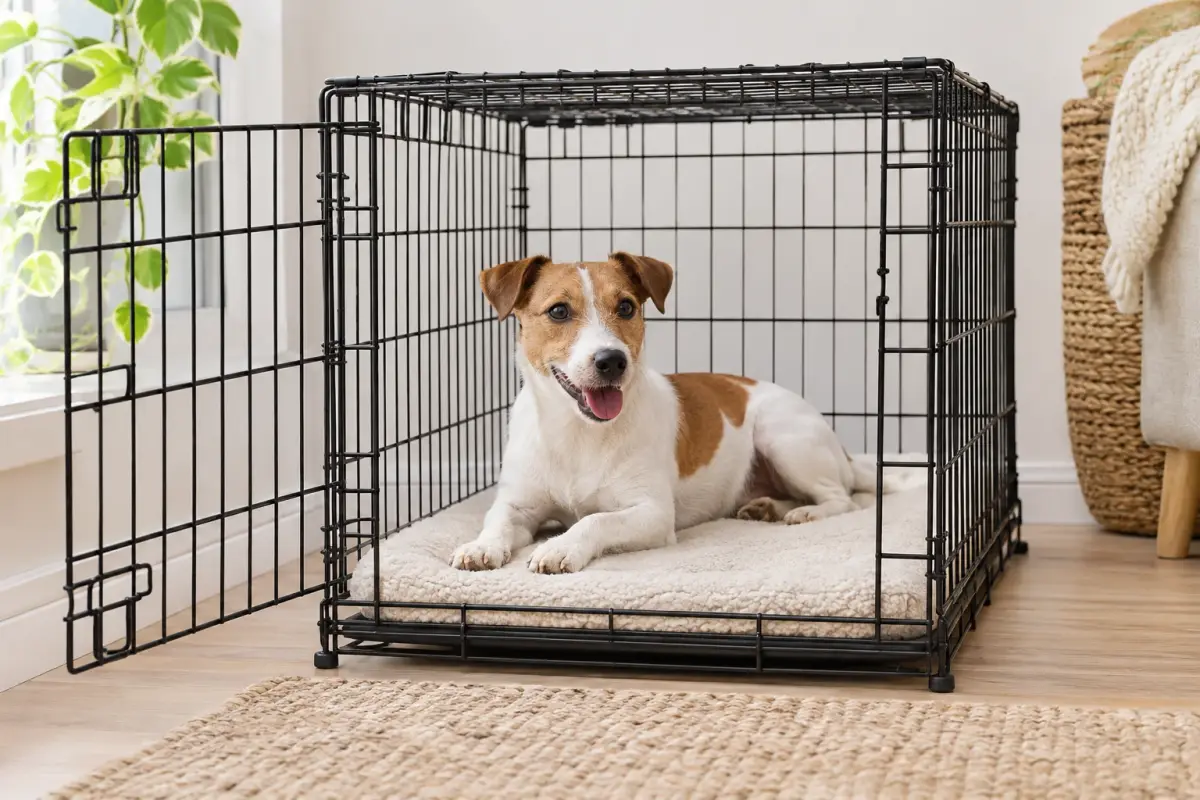
By Matt GarnettUpdated November 14, 20264 min read3 sources
What matters most: size and bar spacing
Measure your dog standing from nose to tail base and sitting from floor to top of head, and add 2 to 4 inches to each. Toy breeds such as Chihuahuas and Yorkies often fit an 18 to 22 inch crate; Shih Tzus, pugs and French bulldogs usually need 24 to 30 inches.
Too big is a problem too, even among dog crates for small dogs: the AKC warns that a crate that is too large lets a puppy use one end as a bathroom. For tiny dogs, check bar spacing on wire crates; gaps wide enough for a head or paw to slip through are a trapping risk. The AKC's gate guidance makes the same point about openings.
The main types compared
Wire crates give airflow and visibility, fold flat and often include a divider, though small wire crates can have wide bar spacing. Plastic crates are den-like and draft-free, which many small dogs prefer, and double as travel carriers. Soft-sided crates, like this collapsible soft dog crate with mesh windows, are light and portable but suit calm, crate-trained dogs only.
Furniture crates and end-table crates, such as this crate furniture end table with three doors, look good in living spaces and suit small, calm dogs. Playpens give more room for a small dog left for longer periods, with a bed and water inside.
Best type for each dog
For a toy-breed puppy, a small plastic crate or a wire crate with narrow spacing, plus a soft, washable pad. For a French bulldog, a well-ventilated crate, as flat-faced breeds overheat easily; VCA advises keeping these dogs out of hot, humid conditions. Avoid placing the crate in sun or near a heater.
For travel, a plastic crate or hard carrier that can be belted into the car, as the AKC recommends dogs ride in a crate or crash-tested restraint. For apartments, a furniture crate or compact plastic crate in the living area.
What to avoid
Avoid crates much larger than your dog, wide bar spacing for tiny breeds, and soft crates for chewers or escape artists. Avoid leaving tagged collars on in a wire crate, where tags can catch.
Avoid long stretches in the crate; small dogs, and especially puppies, need frequent potty breaks. A dog that cries, pants or tries to break out every time may be distressed, and your vet or a trainer can help.
Avoid placing the crate next to a radiator, air vent or sunny window, and avoid stairs or tables where a small dog could fall when the door opens.
How to measure and introduce the crate
Measure your dog standing, from the tip of the nose to the base of the tail, and sitting, from the floor to the top of the head or upright ears. Add 2 to 4 inches to each and compare with the crate's interior measurements, not the outside size printed on the box. For a growing puppy, buy for the expected adult size and use a divider.
Introduce the crate in short, pleasant steps: door open, a treat or meal inside, then a few minutes with the door closed while you sit nearby. The AKC suggests a special chew toy each time to build a good association. Never use the crate as punishment, and keep early sessions short for small puppies with small bladders.
Comfort, care and lifespan
Add a soft, washable crate pad or bed and a familiar blanket. Introduce the crate with meals and treats, as the AKC recommends, and keep it in a room where the family spends time.
Wipe the tray and wash bedding weekly. Replace plastic crates that crack and wire crates with bent bars or broken latches.
This page is general information, not veterinary advice, and it cannot replace an examination by the vet who knows your pet.
Small-dog enclosure bodies and access
| Construction | Physical arrangement | What to measure |
|---|---|---|
| Wire | Open panels,often folding | Bar gap,inside floor and locks |
| Plastic | Rigid enclosed body | Doorway,vents and usable interior |
| Soft-sided | Fabric over a frame | Zippers,frame and interior |
| Furniture-style | Enclosure with a furniture surface | Inside space and door clearance |
| Playpen | A larger open enclosure | Deployed footprint and panel connections |
Common questions
What size crate does a small dog need?
Usually 18 to 30 inches long. Measure nose to tail base and floor to top of head when sitting, add 2 to 4 inches, and choose a crate with interior dimensions to match.
What is the best crate for a French bulldog?
Most Frenchies fit a 24 to 30 inch crate. Choose one with good ventilation and keep it out of sun and heat, as flat-faced breeds overheat easily.
Are plastic or wire crates better for small dogs?
Plastic crates feel den-like and double as travel carriers; wire crates give more airflow and visibility. For tiny breeds, check wire crates have narrow bar spacing.
Can a small dog use a soft crate?
Yes, if the dog is calm, crate-trained and not a chewer. Soft crates are light and great for travel and visits, but a determined dog can scratch or chew through them.
Sources we checked
This guide is general information, not veterinary advice. If your pet is unwell or injured, contact your veterinarian.


