






Buying guides
Best Crate for a French Bulldog: What Actually Matters
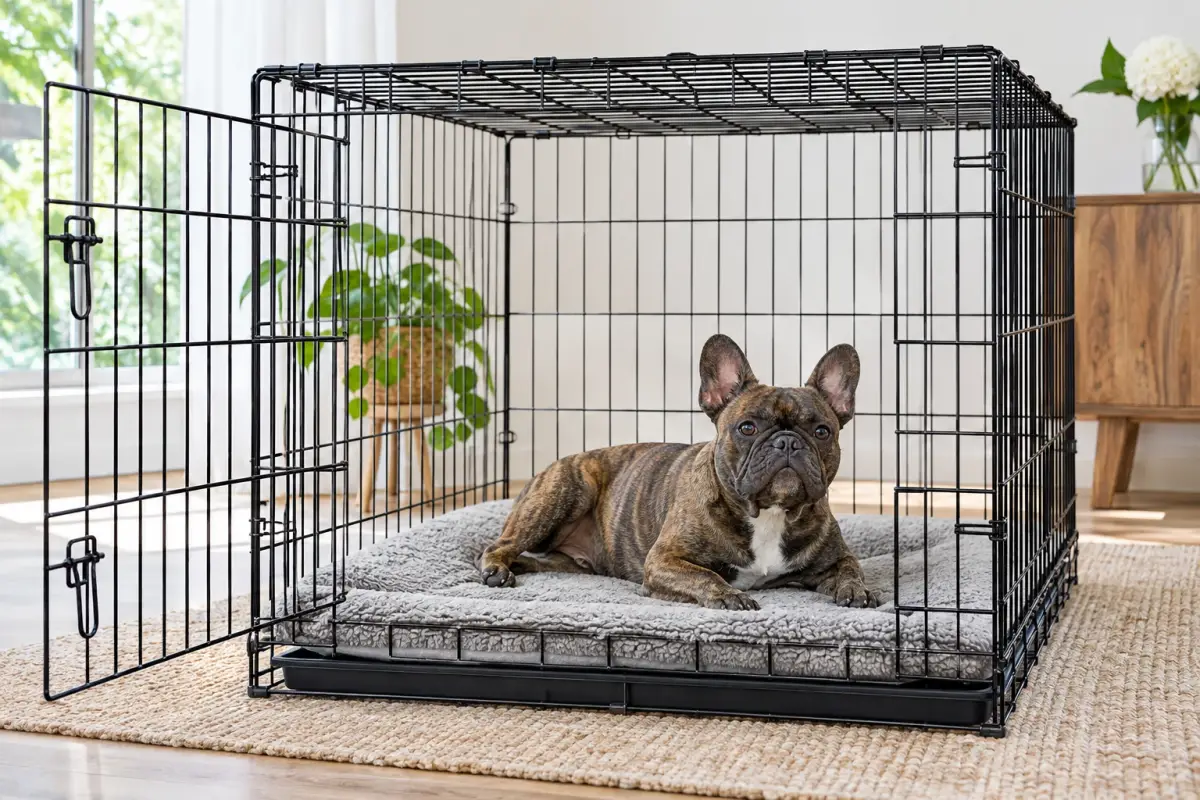
The best crate for a French bulldog is one sized to your own dog, with air moving through several sides and a spot in a cool room, because flat-faced breeds overheat more easily than most dogs. A well-ventilated wire or vented plastic crate usually fits the job. Skip solid-sided, closed-in designs and anything much larger than your dog needs.
By Matt GarnettUpdated November 14, 20265 min read2 sources
Why French bulldogs need their own crate checklist
French bulldogs are flat-faced dogs, and VCA Animal Hospitals lists them among the breeds prone to brachycephalic airway syndrome, where narrowed airways make breathing harder. VCA notes that signs are often worse in hot or humid weather and that these dogs overheat more easily because they cannot pant and cool down as well as other breeds. For crate shopping, that makes airflow and placement the first things to judge, ahead of looks.
The second rule applies to every dog. The AKC says a crate should be just large enough for the dog to stand up, turn around and lie down comfortably, and that a crate that is too large lets a puppy use one end as a bathroom. Together those two rules narrow the field fast: a well-ventilated crate, fitted to your dog, in a cool part of the house. You can browse dog crates for small dogs with both in mind, and our wider guide to choosing a crate for a small dog covers the basics that apply to every small breed.
How to size a crate for a French bulldog
Skip any size chart that goes by weight alone. Measure your own dog: standing, from the tip of the nose to the base of the tail, and sitting, from the floor to the top of the head or the tips of the ears. Compare those numbers with the crate's interior measurements, not the outside dimensions printed on the box, and allow only a modest margin so the dog can stand, turn and stretch out without a spare room at one end. Frenchies are compact but broad and heavily built, so a crate that looks long enough can still feel tight across the shoulders.
For a puppy, the AKC advises buying a crate sized for the adult dog and using a divider to shrink the space while the puppy is small. A French bulldog puppy grows quickly, and a divider means you are not buying twice while keeping the space snug enough to help with house training. Re-measure as your puppy grows instead of assuming the first setup still fits. Our guide to what size crate your dog needs walks through the measuring in more detail.
The main crate types compared
Wire crates are the usual choice for a Frenchie because air moves through every side and the dog can see out. Most fold flat and many include a divider. A single-door wire dog crate is a typical example of the style, and you can see the wider range of wire dog crates. Check the interior measurements and the latch before you decide. If your dog likes a den feel, cover only part of a wire crate and leave at least one side open so air can keep moving.
Plastic crates feel more den-like and block drafts, but ventilation is usually limited to slots or side vents, so look for plenty of openings and be cautious in warm rooms. Furniture crates look neat in a living room; designs with open sides, like this small kennel end table with two open sides and a lockable door, give better airflow than solid-sided ones, and you can compare more crate end tables. Soft-sided crates are light, but they suit calm, fully crate-trained dogs only, because a chewer can get through the fabric.
Best crate type for each situation
For a puppy, a wire crate with a divider and a thin, washable pad is the most flexible setup, because you can resize the space as the puppy grows. For an adult who sleeps in the crate at night, a wire crate or a well-vented plastic crate in a cool bedroom works well. For a small apartment, an open-sided furniture crate can double as a side table, as long as it sits away from sun and heaters and the room stays cool.
For car trips, choose a crate that can be secured so it cannot slide, and keep the car cool, since a flat-faced dog can overheat quickly. Ask your vet before any plane trip, because heat and breathing are real concerns for these dogs. Add a thin crate bed or pad for comfort, and keep it thin so the dog does not trap extra heat.
What to avoid
Avoid a crate much larger than your dog, solid-sided designs with little airflow, and a crate fully covered on every side. Avoid placing the crate in direct sun, next to a radiator or vent, or in a closed-up room on a warm day. VCA recommends keeping these dogs out of hot, humid conditions, and a crate that traps heat works against that.
Avoid long stretches of crating. The AKC says not to crate a dog longer than it is comfortable or can hold its bladder, and not to use the crate if it causes stress or panic. If your dog breathes noisily, tires quickly, or collapses after activity, call your vet promptly, since VCA describes these as signs of more severe airway trouble.
Placement, comfort and care
Put the crate in a quiet, cool area where the family spends time, as the AKC suggests, and introduce it with short sessions, treats and an open door. The AKC also advises holding off on thick bedding or blankets until your dog reliably avoids accidents and stops chewing fabric, which suits a heat-prone breed well.
Wipe the tray and wash bedding regularly, and replace a crate with bent bars, cracks or a loose latch. When you are ready to compare options, start with our dog crates for small dogs and measure twice before you order.
Crate constructions and access points
| Construction | Physical layout | Inspection point |
|---|---|---|
| Wire | Open bar panels;some models fold | Latch,bar condition and inside measurements |
| Plastic | Rigid shell with slots or vents | Vent openings and door access |
| Furniture-style | Cabinet-like body with a crate space | Open-sided areas and usable interior |
| Soft-sided | Fabric panels and zipper openings | Fabric condition and closure security |
Common questions
What size crate does a French bulldog need?
One that lets your dog stand up, turn around and lie down comfortably, based on your own dog's nose-to-tail and sitting-height measurements. Check the crate's interior dimensions and use a divider for a growing puppy.
Are wire or plastic crates better for French bulldogs?
Wire crates give the most airflow, which matters for a flat-faced breed. Plastic crates can work if they have many vents and sit in a cool room, but they hold heat more easily.
Is it safe to leave a French bulldog in a crate in summer?
Heat is a real concern, because VCA says flat-faced breeds overheat more easily and do worse in hot, humid weather. Keep the crate in a cool, ventilated room, never in a parked car, and ask your vet about your dog.
Can a French bulldog use a furniture crate?
Yes, if the design has open sides or good ventilation and sits in a cool spot away from sun and heaters. Solid-sided furniture crates with little airflow are a poor fit for this breed.
Sources we checked
This guide is general information, not veterinary advice. If your pet is unwell or injured, contact your veterinarian.


