






Buying guides
Should You Cover Your Dog's Crate?
Covering a dog's crate can help many dogs settle, because it blocks movement and light and makes the space feel like a den. It is a good idea for dogs that are easily stimulated, but only if the front stays open for airflow, the crate cannot overheat, and your dog does not chew fabric. Some dogs prefer to see out, and that is fine too.
By Matt GarnettUpdated November 9, 20263 min read3 sources
Why covering a crate can help
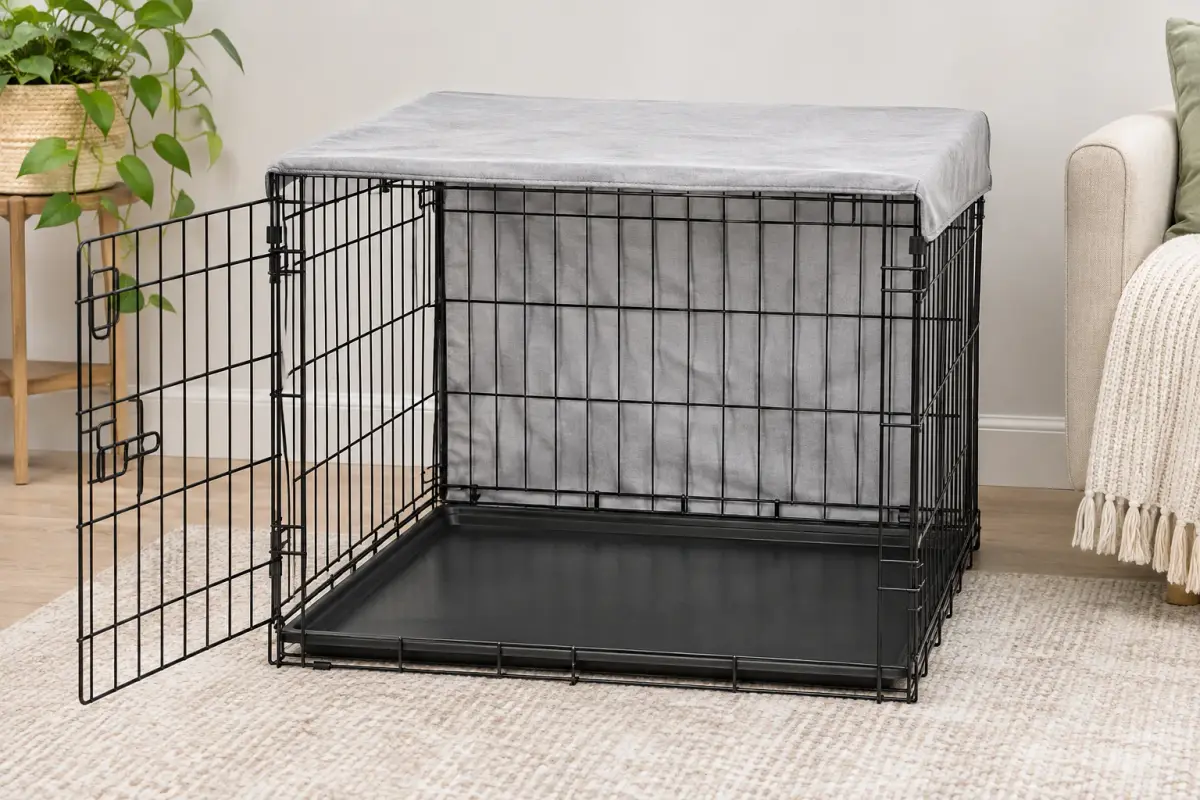
Dogs often rest better in a sheltered spot. A cover over the top and sides of a wire dog crate cuts down on what your dog can see, such as people walking past, other pets and car headlights through a window, so there is less to react to. Many puppies settle more quickly at night once the crate feels enclosed, and some dogs find it calming during storms or busy gatherings.
The AKC mentions crates with removable covers as an option for dogs that prefer a darker, den-like space, and fabric crate covers are sold for exactly this reason. A plain sheet or light blanket works as well as a fitted cover for most dogs, as long as it is used safely.
How to cover a crate safely
Cover the top, back and sides and leave most of the front open so air moves freely and your dog can see out if it wants to. Use a breathable cotton sheet or a purpose-made cover rather than a heavy quilt. Check the temperature inside on warm days; a covered crate in a sunny room or near a heat vent can get hot quickly, especially for flat-faced breeds that struggle in the heat.
Tuck or secure the fabric so it cannot be pulled inside. If your dog grabs, chews or shreds the cover, take it off straight away, because swallowed fabric can cause a dangerous blockage. A plastic travel crate is already enclosed and does not need a cover.
When not to cover the crate
Skip the cover for dogs that chew fabric, dogs that overheat easily, very hot rooms and dogs that become more anxious when they cannot see you. A dog that pants, paws at the cover or cries more when covered is telling you it would rather see out.
A cover is also not a fix for real distress. If your dog panics in the crate, drools, soils itself or injures itself trying to get out, covering it will not help and may make it harder to notice what is happening. Talk to your vet or a qualified trainer about separation anxiety or confinement fear instead.
Introducing a cover
Start by draping the cover over just the top while your dog is happily in the crate with a chew, and watch its reaction. If it stays relaxed, add one side, then the other, over a few sessions. Lift a corner if your dog seems uneasy. The goal is a crate your dog walks into readily, not one it tolerates.
For a new puppy, try a partial cover at night and leave it uncovered by day while you are working on crate training. Many dogs end up preferring a covered crate for sleep and an open one for daytime naps, and there is no harm in letting your dog choose.
What else helps a dog settle in its crate
A cover works best alongside the basics: the right dog crate size, a potty trip and some exercise before crate time, a safe chew or stuffed food toy, and a crate placed where the family is rather than shut away. White noise or a fan can mask sudden sounds for dogs that startle easily.
If your dog still struggles to settle, go back a step in crate training and build up again more slowly. Steady progress usually comes from short, positive sessions rather than longer stretches, and a crate that feels safe needs less help from a cover at all.
This page is general information, not veterinary advice, and it cannot replace an examination by the vet who knows your pet.
Common questions
Should I cover my puppy's crate at night?
Many puppies settle better with a light cover over the top and sides at night. Keep the front open, check the crate does not get too warm, and remove the cover if your puppy chews it.
Is it bad to cover a dog crate completely?
Covering it completely can reduce airflow and trap heat, so it is better to leave the front open. A fully covered crate is especially risky in warm rooms or for flat-faced breeds.
What can I use to cover my dog's crate?
A lightweight cotton sheet, a thin blanket or a fitted, breathable crate cover all work. Avoid heavy fabrics that trap heat, and anything your dog is likely to pull in and chew.
Sources we checked
This guide is general information, not veterinary advice. If your pet is unwell or injured, contact your veterinarian.


