Buying guides
Best Dog Bowls for Large Dogs: Size, Stability and Eating Speed
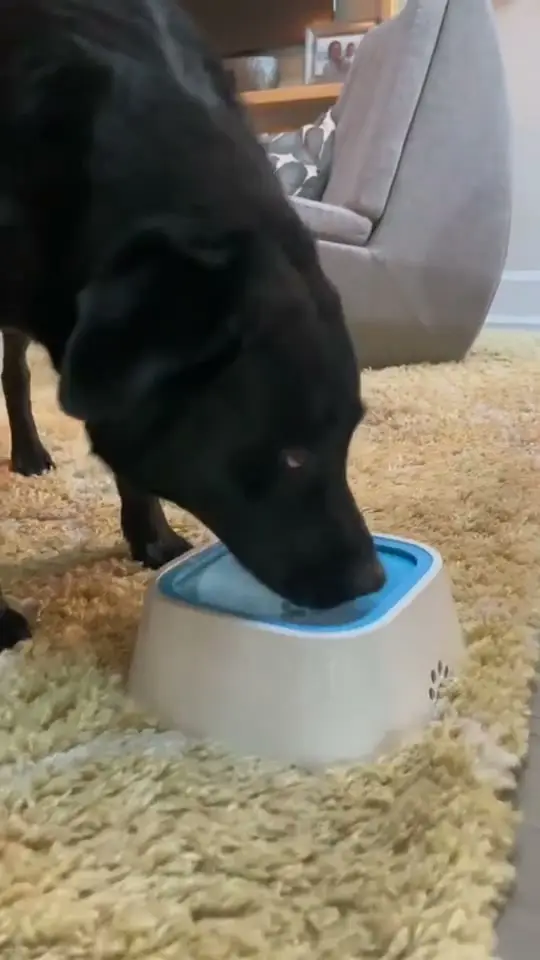
The best bowls for large dogs are wide, heavy and non-tip, with room for a full meal and enough weight that a big dog cannot push them across the floor. Material matters less than stability and shape. If your dog gulps, a slow-feed design helps, and because large, deep-chested breeds carry a higher bloat risk, eating speed is worth taking seriously.
By Matt GarnettUpdated November 13, 20265 min read2 sources
What matters most in a large-dog bowl
Three things decide whether a bowl works for a big dog: capacity, stability and shape. Capacity means the bowl holds a full meal with room to spare, so food does not spill over the rim as your dog pushes it around. A bowl that looks generous on a shelf can feel small once a 70 or 90 pound dog is eating from it, so size up rather than down.
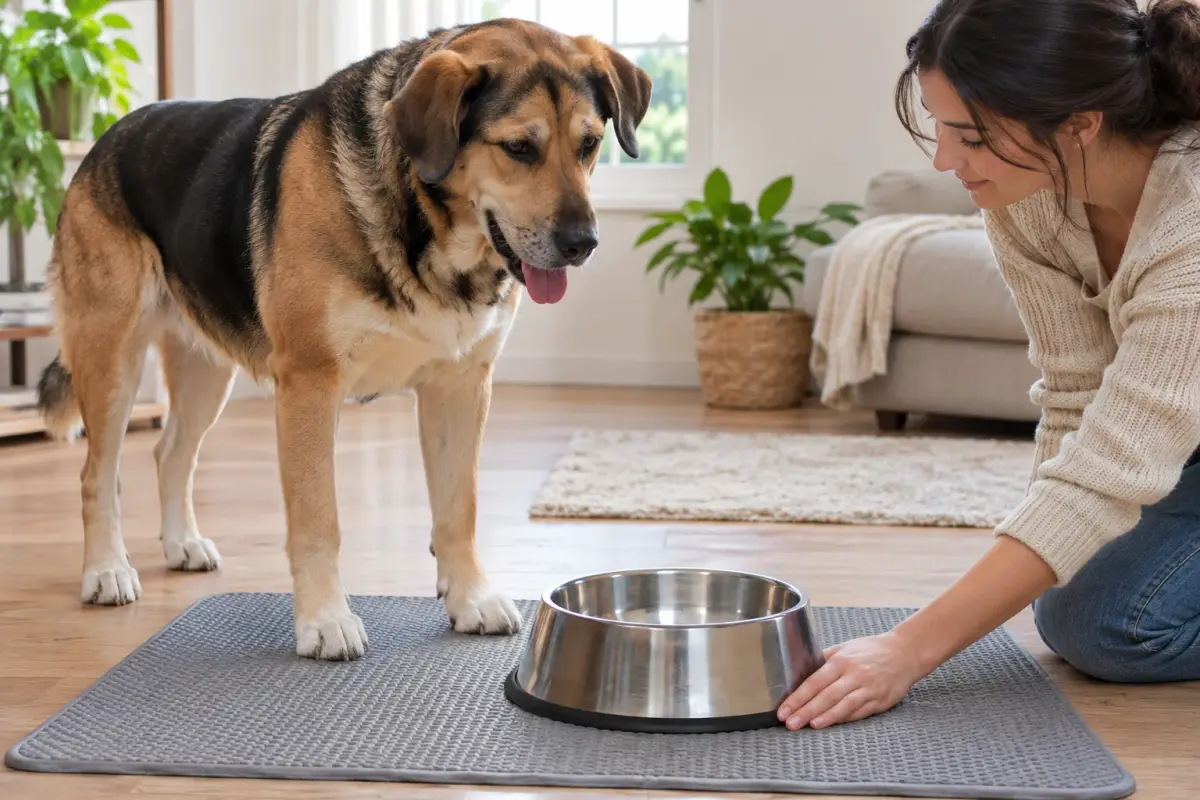
Stability is the next test. Large dogs eat with force, and a light bowl slides, tips and gets carried away. Look for a heavy base, a rubber ring or a non-slip foot, and a wide footprint. Shape comes last: a wide, fairly shallow bowl suits most big dogs, while a deep, narrow one makes a long-nosed dog work to reach the bottom.
Material: steel, ceramic or plastic
Stainless steel is the practical default for big dogs. It will not chip or crack when dropped, it goes in the dishwasher, and it does not hold odors the way scratched plastic can. A wide steel bowl with a rubber base is hard to damage and easy to keep clean. You can browse stainless steel dog bowls in a range of sizes.
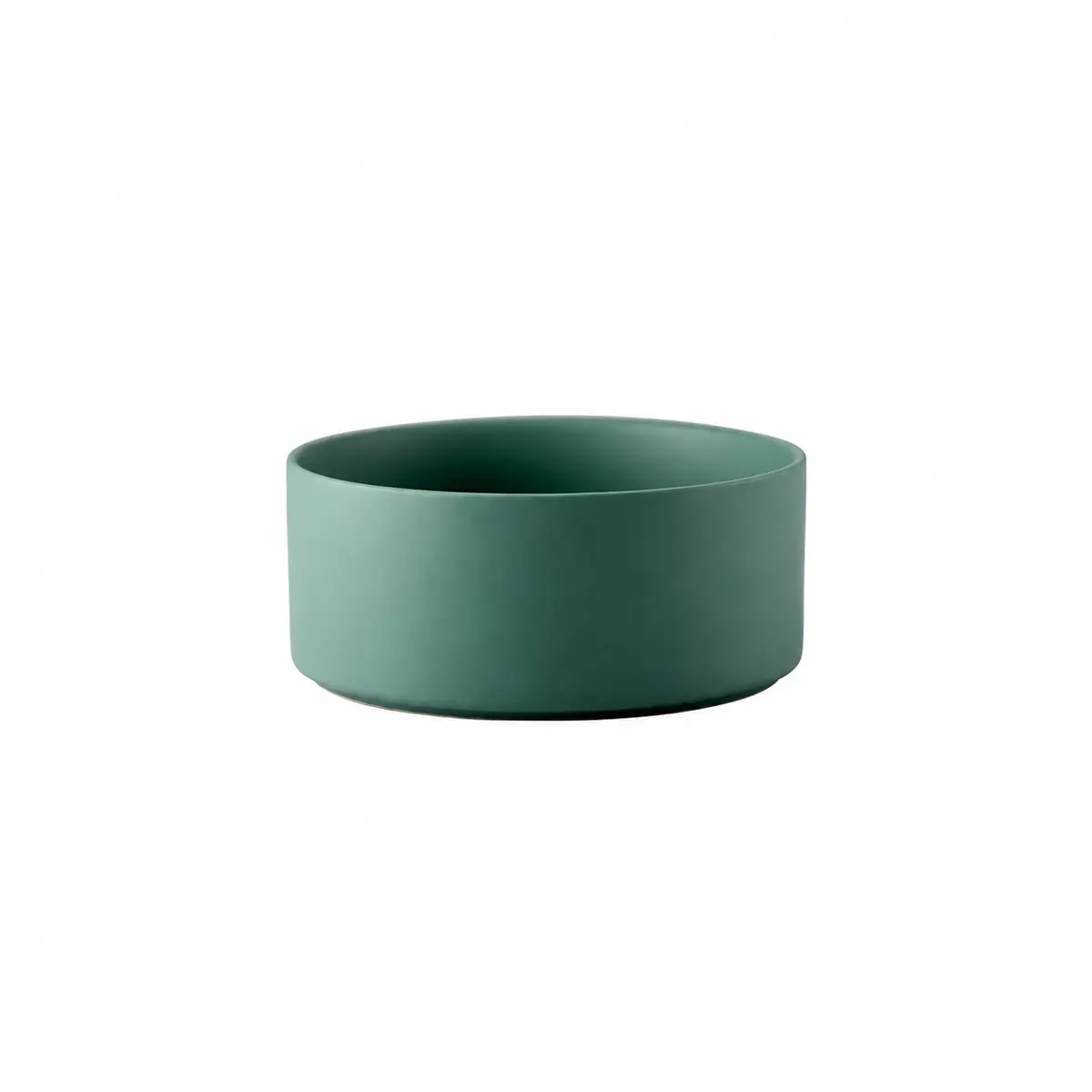
Heavy ceramic is the stable alternative. It stays put on a hard floor, but a chip can hide bacteria and sharp edges, so retire a bowl once the glaze is damaged. Plastic is light and cheap, which is exactly the problem for a large dog: it slides, scratches and gets chewed. If you do use plastic, choose a wide, weighted design and replace it when it shows scratches.
Why eating speed matters more in big dogs
Large, deep-chested dogs are the group most often affected by bloat, formally gastric dilatation and volvulus, where the stomach swells and can twist. VCA Hospitals notes that dogs over 100 pounds have roughly a 20% lifetime risk, and lists rapid eating and one large meal a day among the risk factors. Any dog can bloat, but the risk rises with size.
The AKC points out that a dog who gulps swallows extra air with the food and advises smaller meals two to three times a day instead of one big dinner. That is a feeding routine, not a bowl feature, and your vet can tell you how much your own dog should eat. A bowl cannot prevent bloat, but one that slows the meal removes one of the known risk factors.
Slow-feed bowls for large dogs
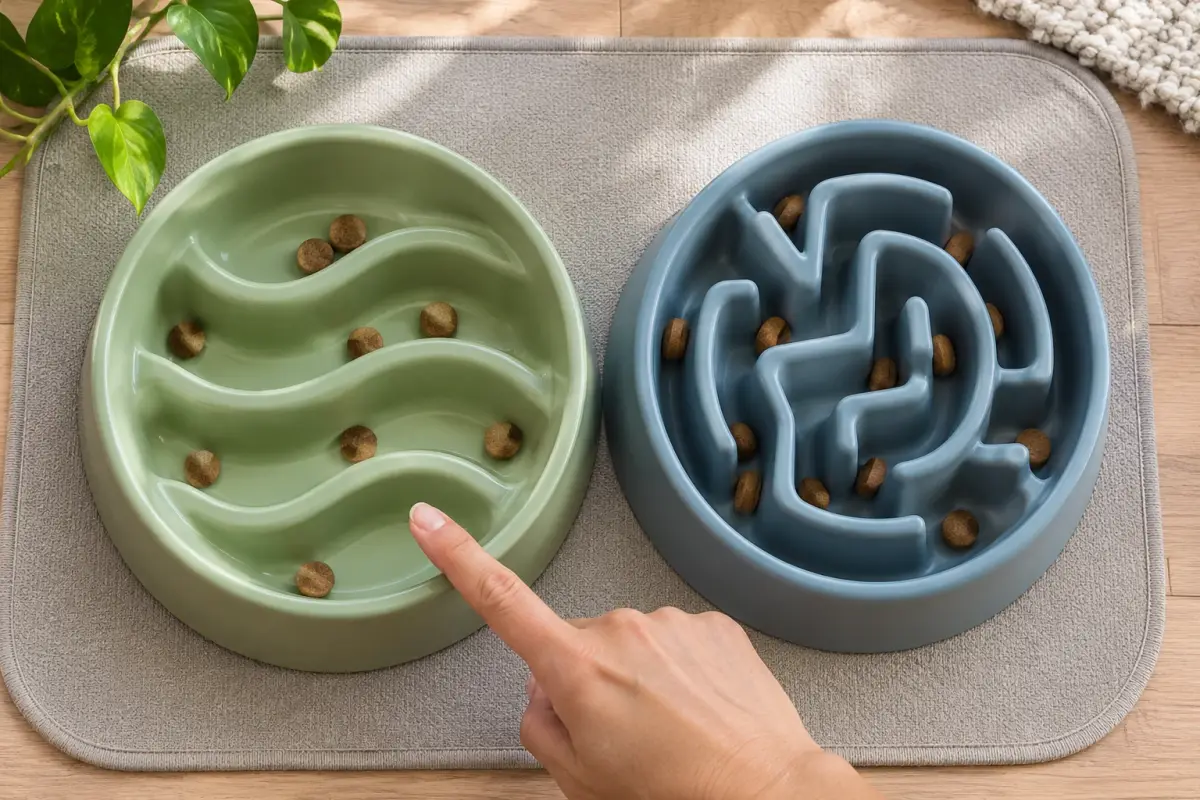
A slow-feed bowl uses ridges, mazes or raised nubs so food is reachable but cannot be swallowed in a few big mouthfuls. The AKC says the gaps should be large enough for your dog to reach the food and too small for big gulps. For a large dog, that means a bowl with a wide footprint and deep enough channels, because the maze takes up volume and a small slow feeder overflows quickly. A ceramic slow feeder bowl for medium and large dogs combines weight with a ridged interior.
Test the size by pouring in one normal meal: if the food stacks above the ridges or spills, the bowl is too small. You can also browse our wider range of slow feeder dog bowls. The AKC also describes a no-cost version: set a bowl one or two sizes larger than the regular dish and turn the regular dish upside down inside it, filling the gap with food.
Raised bowls: ask your vet first
Raised stands are popular for big dogs, but they are not automatically better. The AKC and VCA pages we read do not settle whether bowl height changes bloat risk, and veterinary opinion on raised feeders for large and giant breeds is mixed. Because the stakes are high in deep-chested dogs, ask your vet before raising the bowl, particularly if your dog is a breed prone to bloat.
Dogs with arthritis or neck and back pain are a different case, and a vet may well suggest a raised bowl for comfort. Our separate guide to elevated dog bowls for large dogs walks through that decision and how to measure height.
How to size and set up the bowl
Start from your dog's usual meal. Measure the food into any bowl you are considering and check it fills no more than about two thirds, leaving room to eat without spilling. Choose a footprint wide enough that your dog's muzzle fits without the ears or whiskers dragging in the food, then place the bowl on a washable mat to catch splashes and keep it from skating.
Water needs its own bowl, and large dogs drink a lot, so pick a big one and refill it daily. Our guide to the best dog food and water bowls covers pairing the two, and our full range of large dog bowls is a good place to compare sizes. Wash the food bowl daily and replace anything cracked, chipped or deeply scratched.
When to call your vet
Call your vet or an emergency clinic right away if your dog has a swollen, hard belly, retches without bringing anything up, drools heavily, paces or seems restless after eating. The AKC calls bloat immediately life-threatening and says to act if there is even a remote chance your dog is bloated. Do not wait to see whether it passes.
Also see your vet if your dog gags or chokes while eating, vomits often after meals, or suddenly eats much faster or slower than usual. A bowl can help with habits, but it cannot find the cause of a change in appetite.
This page is general information, not veterinary advice, and it cannot replace an examination by the vet who knows your pet.
Common questions
What size bowl does a large dog need?
Choose a bowl that holds a full meal with plenty of room above the food, with a wide, stable base. Measure one meal into it before buying; if food reaches the rim, it is too small for a big eater.
Are heavy bowls better for large dogs?
Usually yes. A heavy or weighted bowl with a non-slip base stays put while a big dog eats, so it does not slide across the floor or tip. Stainless steel with a rubber ring and heavy ceramic both work well.
Should a large dog use a slow feeder bowl?
If your dog gulps food, a slow feeder is worth trying, since fast eating is a listed bloat risk factor. Choose one large enough for a full meal, and ask your vet about any dog with a history of bloat.
Do raised bowls help big dogs?
Not automatically. Opinion is mixed on whether raised bowls affect bloat risk in large breeds, so check with your vet before raising one. They can help dogs with arthritis or neck pain.
How often should I feed a large dog?
The AKC suggests two to three smaller meals a day rather than one large evening meal, which may reduce bloat risk. Ask your vet how much your own dog should eat in total.
Sources we checked
This guide is general information, not veterinary advice. If your pet is unwell or injured, contact your veterinarian.