






Buying guides
Best Brush for Poodles: The Tools That Actually Prevent Mats
The best brush for most Poodles is a slicker brush with short, stiff wire bristles, used with a metal comb to check that you have reached the skin. A pin brush is gentler for puppies and long show coats. The tools matter less than the method: brushing in small sections down to the skin, several times a week, is what keeps a curly coat free of mats.
By Matt GarnettUpdated November 14, 20264 min read2 sources
What matters most: reaching the skin
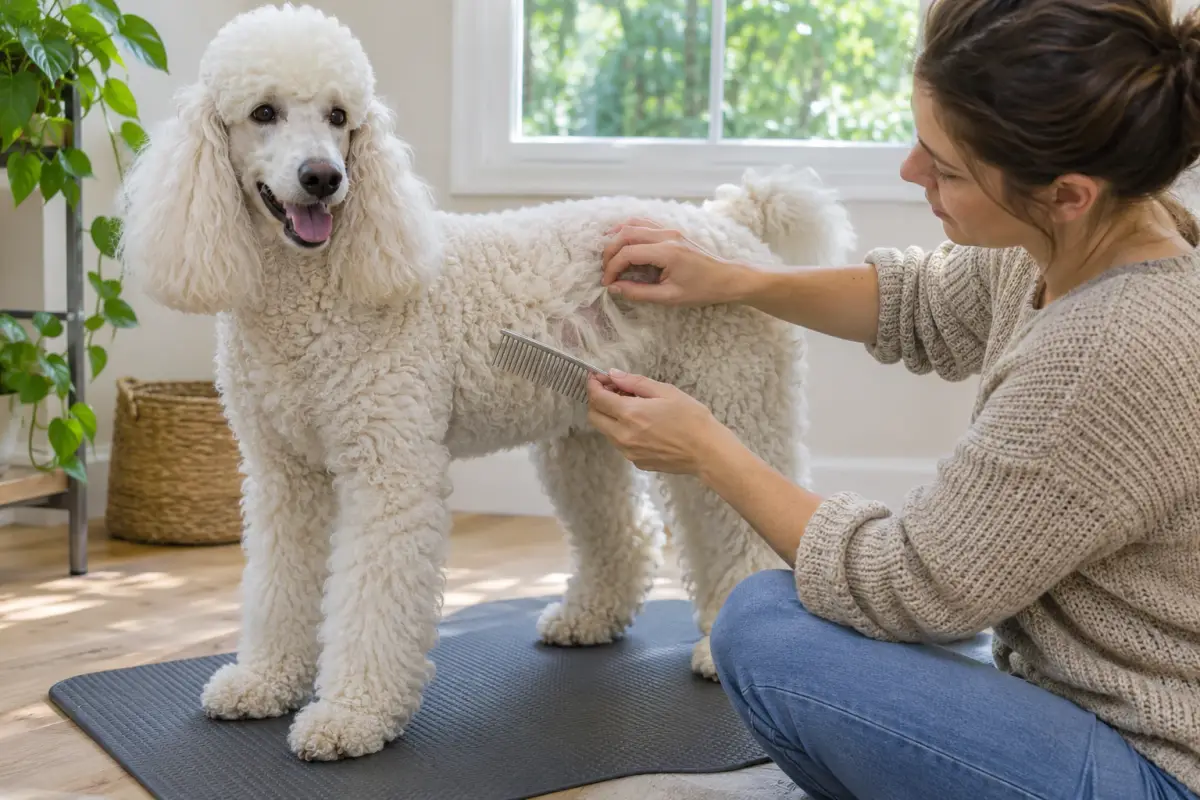
A Poodle's curly coat keeps growing and holds shed hair instead of dropping it, so loose hair tangles into the curls and forms mats close to the skin. The AKC's Standard Poodle grooming guide recommends a slicker brush with a square or rectangular head and short, stiff wire bristles, brushing all the way down to the skin without scraping it.
The comb is the test. After brushing a section, run a metal comb through from the skin outward. If it catches, the section is not finished. Brushing only the surface makes a Poodle look fluffy while mats build underneath, which is how many Poodles end up shaved at the groomer.
Slicker, pin brush and comb compared
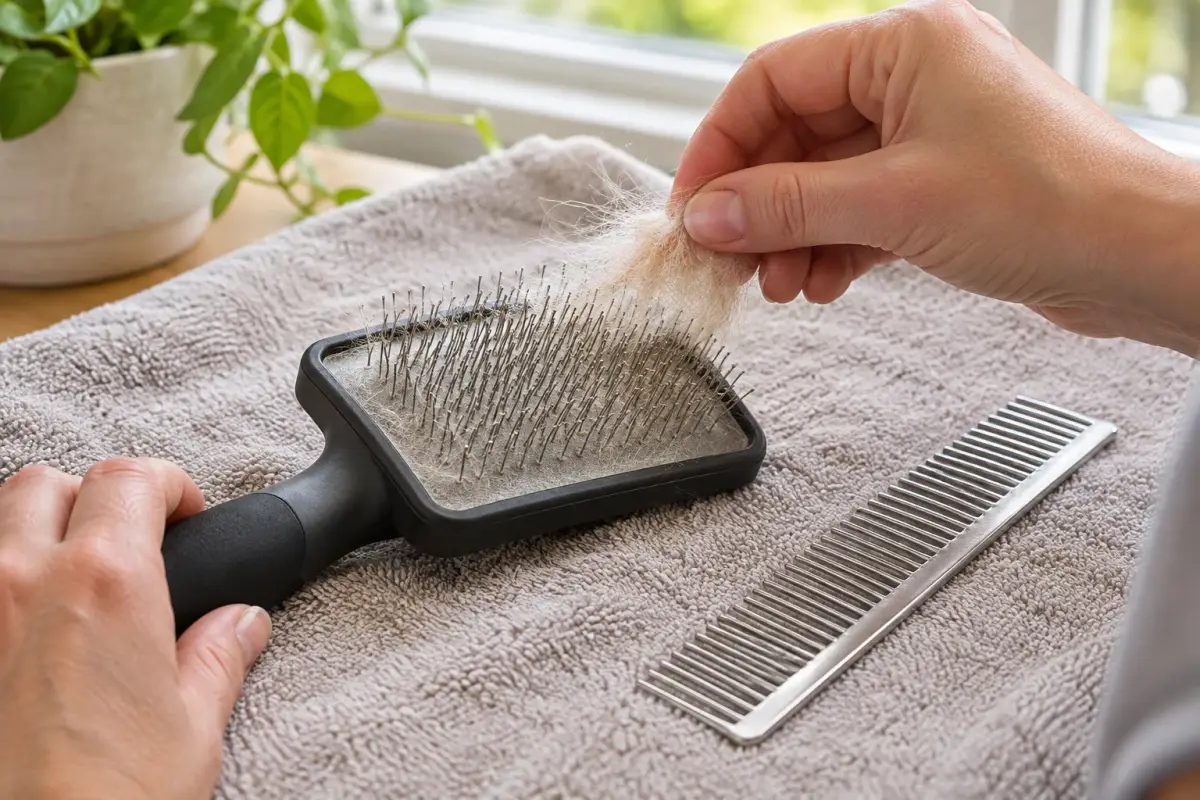
Slicker brushes have fine, bent wire pins on a flat or curved pad and are the main tool for curly coats. Firm slickers suit thick adult coats; soft slickers suit puppies, Toys and sensitive dogs. Larger heads, like the large self-cleaning slicker brush, cover a Standard quickly, while small heads reach legs, ears and armpits on any size.
Pin brushes have longer, rounded pins with no bend and are gentler; some breed clubs suggest them for puppies and long coats, where a slicker can pull out hair. Metal combs, ideally with wide and fine teeth, check for tangles and fluff the coat. A mat splitter or dematting comb helps with stubborn knots, used carefully.
Best tools for each Poodle
For a Standard Poodle in a longer clip, a large firm slicker plus a long-toothed metal comb. For a Miniature or Toy, a small soft slicker and a small comb, since big tools are clumsy on small legs. For a puppy, a soft slicker or pin brush and very short sessions, so it learns that grooming is pleasant.
For a Poodle kept in a short clip, a soft slicker and a comb once or twice a week usually suffice between grooming appointments. For long show coats, pin brushes and conditioning sprays reduce breakage. For Poodle mixes with similar coats, the same kit applies.
What to avoid
Avoid brushing a dry, dirty coat hard, which breaks hair; a light mist of detangling or conditioning spray helps. Avoid pressing a slicker into the skin, which causes brush burn, a red, sore rash. Avoid cutting mats out with scissors; the AKC's grooming advice warns that a sudden movement can cause a serious cut.
Avoid bathing a matted Poodle before brushing, since water tightens mats. If mats are close to the skin all over, ask a professional groomer to clip the coat short rather than forcing a brush through, and if the skin under mats is red, sore or smells, let your vet check it.
How to line brush a Poodle
Work in sections. Hold the coat up with one hand, part a line to see the skin, and brush the hair below the line down and out with short strokes. Move the part up half an inch and repeat. This line brushing reaches the skin across the whole body. Comb each section to check it.
Pay extra attention to areas that mat first: behind the ears, under the collar, the armpits, the chest, the belly and inside the back legs. Keep sessions short and reward calm behavior. A grooming table or a nonslip mat on a counter makes it easier for you and safer for your dog, as the AKC suggests.
How often to brush, and caring for tools
Most Poodles need thorough brushing several times a week in a longer clip, and at least weekly in a short clip, with a bath and professional grooming every four to eight weeks, the bathing range the AKC's Poodle guide suggests. Puppies changing to an adult coat, often between about 9 and 18 months, mat especially fast and may need daily brushing.
Clean hair from brushes after each use and wash them occasionally in warm soapy water. Replace a slicker when pins bend out of line or the pad tears, and a comb when teeth bend. Good tools last years and make grooming quicker and kinder; browse our dog brushes and dog combs, or read our guides to the best dog brushes and shampoo for poodles.
Brush and comb working surfaces
| Tool | Physical construction | Inspect before use |
|---|---|---|
| Slicker | Fine bent pins on a pad | Pin length,head size and condition |
| Pin brush | Longer separated pins | Pin ends and spacing |
| Metal comb | Wide or fine teeth | Tooth spacing and catching |
| Mat splitter | An edged working tool | Exact directions and professional demonstration |
Common questions
Is a slicker brush good for Poodles?
Yes. A slicker with short, stiff wire bristles is the main brush for Poodle coats. Use it with a metal comb to make sure you have reached the skin, and do not press hard.
What brush is best for a Poodle puppy?
A soft slicker or a pin brush with short, gentle sessions. Puppy coats are finer, and early positive grooming makes adult maintenance far easier. Reward calm behavior with small treats.
How often should I brush my Poodle?
Several times a week for longer clips and at least weekly for short clips, plus professional grooming every four to eight weeks. Brush daily during the change to an adult coat.
How do I stop my Poodle getting matted?
Line brush to the skin in sections, comb to check, focus on the ears, armpits and legs, and brush before every bath. Keep the coat shorter if mats keep returning.
Sources we checked
This guide is general information, not veterinary advice. If your pet is unwell or injured, contact your veterinarian.


