Buying guides
Are Tennis Balls Bad for Dogs?
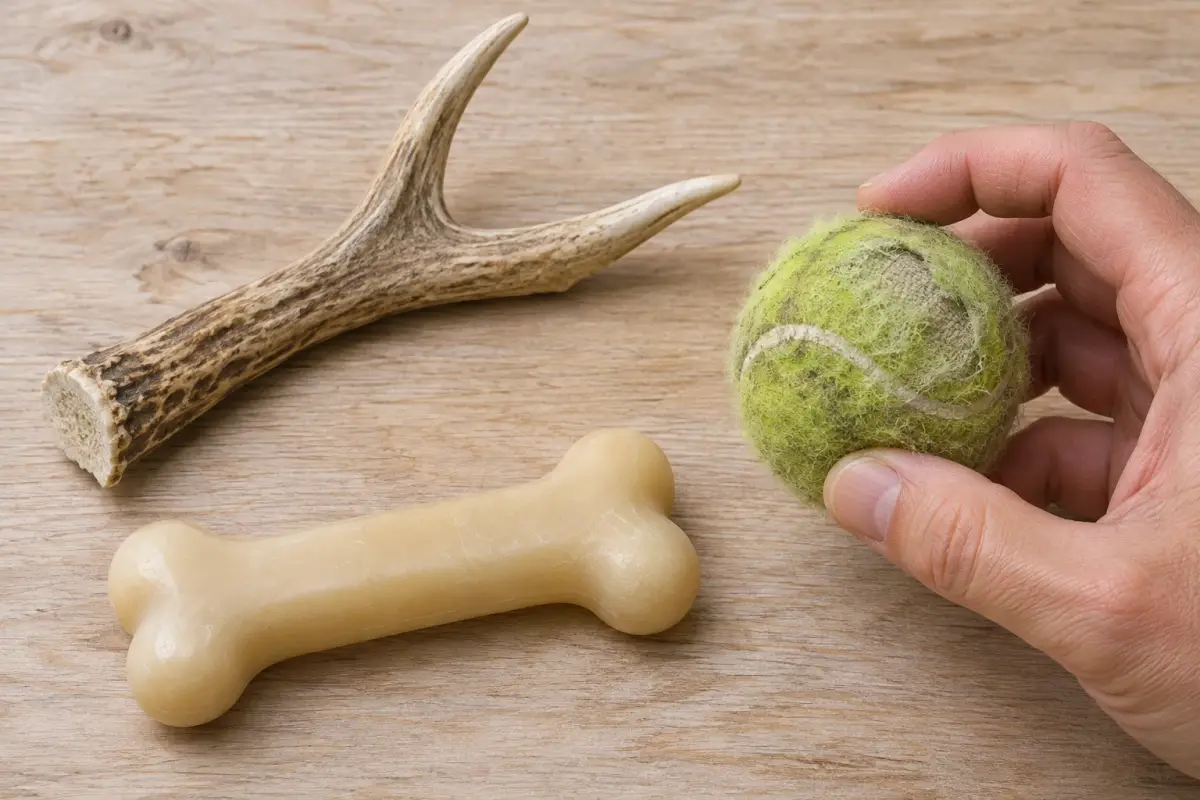
Tennis balls are fine for supervised games of fetch, but they are not a good chew toy. The AKC explains that the fuzzy coating is abrasive and works like sandpaper on teeth, wearing them down over time, a process called blunting. Strong chewers can also split a ball, and half a ball can lodge in the back of the throat and block the airway. Use them for fetch only, and pick them up afterward.
By Matt GarnettUpdated November 9, 20264 min read2 sources
Risk 1: Tooth wear from the fuzz
The felt on a tennis ball is tough nylon fiber, and it picks up dirt and sand. When a dog chews a ball for long periods, that grit grinds against the teeth. The AKC describes the fuzz acting like sandpaper and gradually wearing teeth down, which veterinary dentists call blunting. Over time it can expose the sensitive inner part of the tooth and make chewing painful.
VCA takes a balanced view: tennis balls are fine for occasional chewing, but constant chewing on their abrasive surface can wear teeth down. So the problem is the dog who carries a ball everywhere and chews it for hours, not the dog who chases one a few times a week.
Risk 2: Choking and swallowed pieces
Dogs with strong jaws can crack a tennis ball open. The AKC warns that half a ball can lodge in the back of the throat and block the airway, which is a true emergency. A whole ball can be a choking risk for a large dog with a big mouth, which is why the size of the ball matters as much as the material.
Shredded fuzz and rubber pieces are a second problem. The AKC notes that eating the fuzz can cause choking and intestinal blockages that may need surgery. If your dog likes to peel and eat the felt, tennis balls are not the right toy for them.
How to play fetch safely with a tennis ball
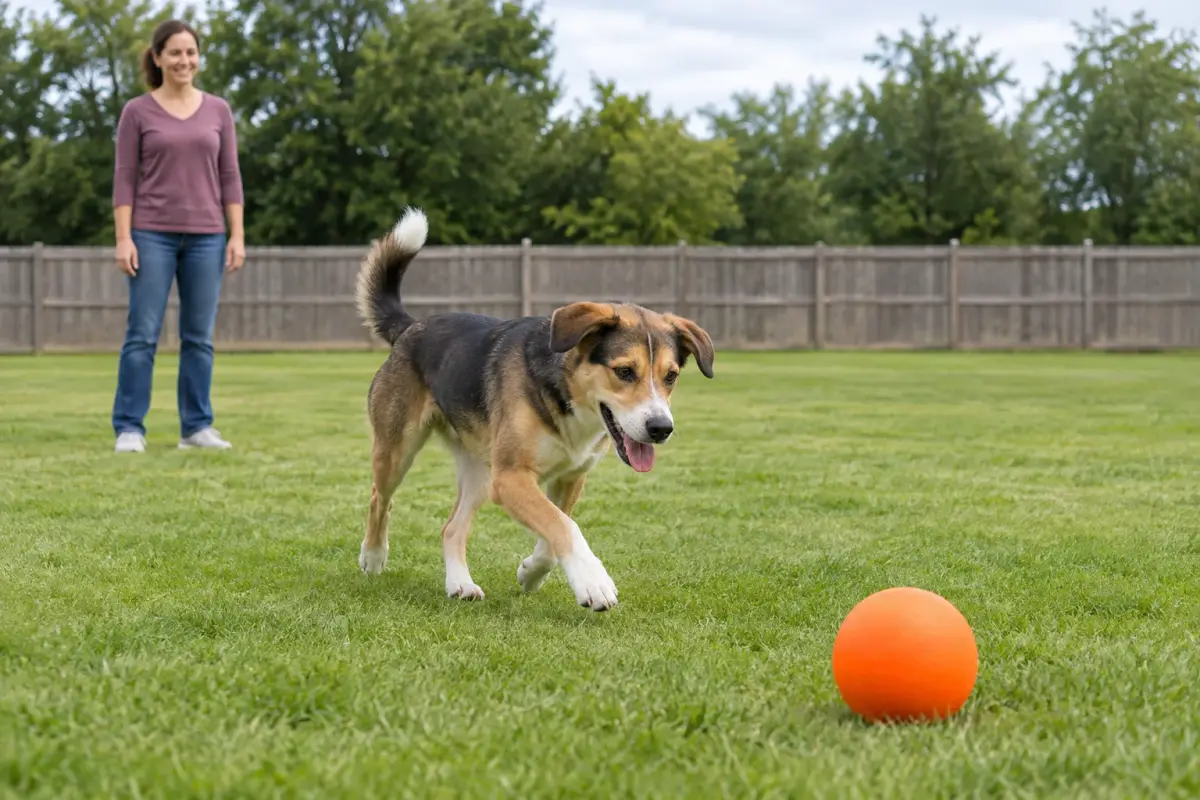
Use tennis balls only during supervised play, which the AKC recommends, especially for dogs who love to chew. Teach a solid drop it cue so you can take the ball quickly if needed, and avoid games of keep-away that encourage your dog to clamp down and run. When the game ends, put the ball away.
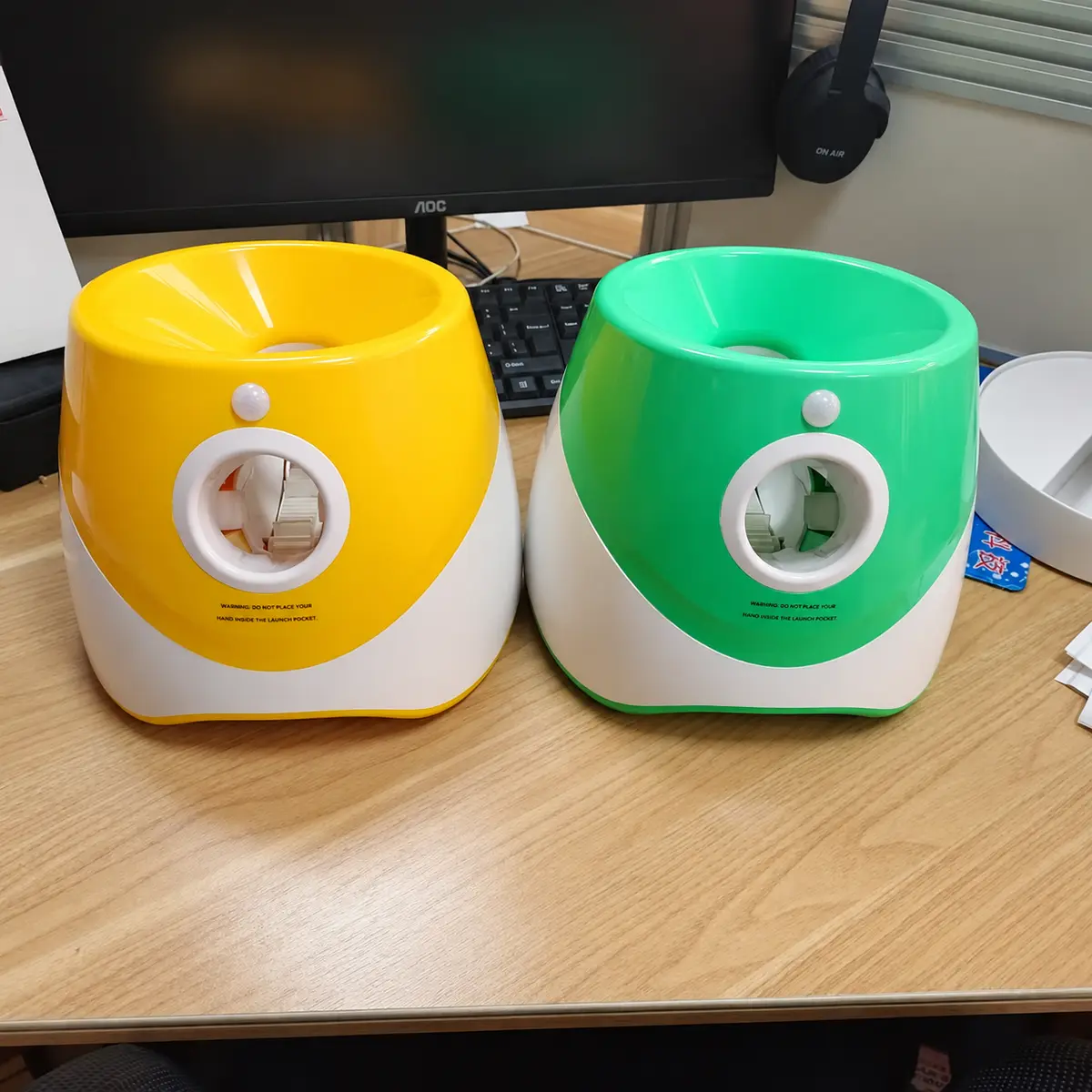
Keep several balls for fetch but let your dog hold only one at a time, because the AKC warns a dog trying to carry more than one can get a ball stuck in the back of the throat. Choose a ball big enough that it cannot slip down your dog's throat, and replace any ball that is split, punctured or bald. If you use an automatic launcher instead of throwing by hand, the same supervision applies. Our guide to automatic ball launchers covers the type, and an automatic dog ball launcher and an automatic tennis ball thrower are two examples from our automatic ball launchers.
Are dog tennis balls safer?
Balls sold for dogs are usually a better choice than secondhand sports balls, because they are made with dogs in mind, but they still wear teeth if chewed constantly and can still be punctured or broken. The size and your dog's habits matter more than the label.
For heavy chewers, the AKC suggests a solid rubber ball made for powerful chewers as an excellent substitute, without some of the risks. Look for a dog ball that is too big to swallow, firm but slightly flexible, and smooth rather than fuzzy. Retire any ball as soon as it starts to break up. Our guides to the best dog balls and to toys for aggressive chewers go into more detail.
Dogs who are obsessed with balls
Some dogs, especially retrievers and herding breeds, would fetch until they drop; our page on why dogs like balls explains the drive. Set limits so your dog does not overheat or overdo it on joints, end the game while your dog still wants more, and build in other activities such as sniff walks and scent games, such as a snuffle mat. The AKC suggests switching to a different toy if your dog chomps on balls obsessively.
A dog who guards a ball, cannot settle without one or chews it frantically may benefit from a trainer's help in building calmer habits.
When to call your vet
Call your vet or an emergency clinic straight away if your dog is coughing, gagging, pawing at the mouth or struggling to breathe after playing with a ball, or if you think they swallowed a piece. Vomiting, not eating or a painful belly after chewing a ball also need a vet's attention. At routine checkups, ask your vet to look for tooth wear if your dog is a keen ball chewer.
This page is general information, not veterinary advice, and it cannot replace an examination by the vet who knows your pet.
Common questions
Are tennis balls bad for dogs' teeth?
They can be if your dog chews them a lot. The abrasive fuzz wears teeth down over time, according to the AKC. Occasional fetch is fine, but do not let your dog use a tennis ball as an everyday chew toy.
Can a dog choke on a tennis ball?
Yes. A broken ball can lodge in the throat, and a whole ball can be a risk for large dogs. Supervise play, pick a ball big enough for your dog and replace any ball that is split.
What is a safer alternative to tennis balls?
A solid rubber ball made for strong chewers, large enough that it cannot be swallowed, is the AKC's suggestion. It is smooth, so it does not grind teeth the way felt does.
Sources we checked
This guide is general information, not veterinary advice. If your pet is unwell or injured, contact your veterinarian.