






Buying guides
Best Dog Balls: How to Choose a Safe Size and Material
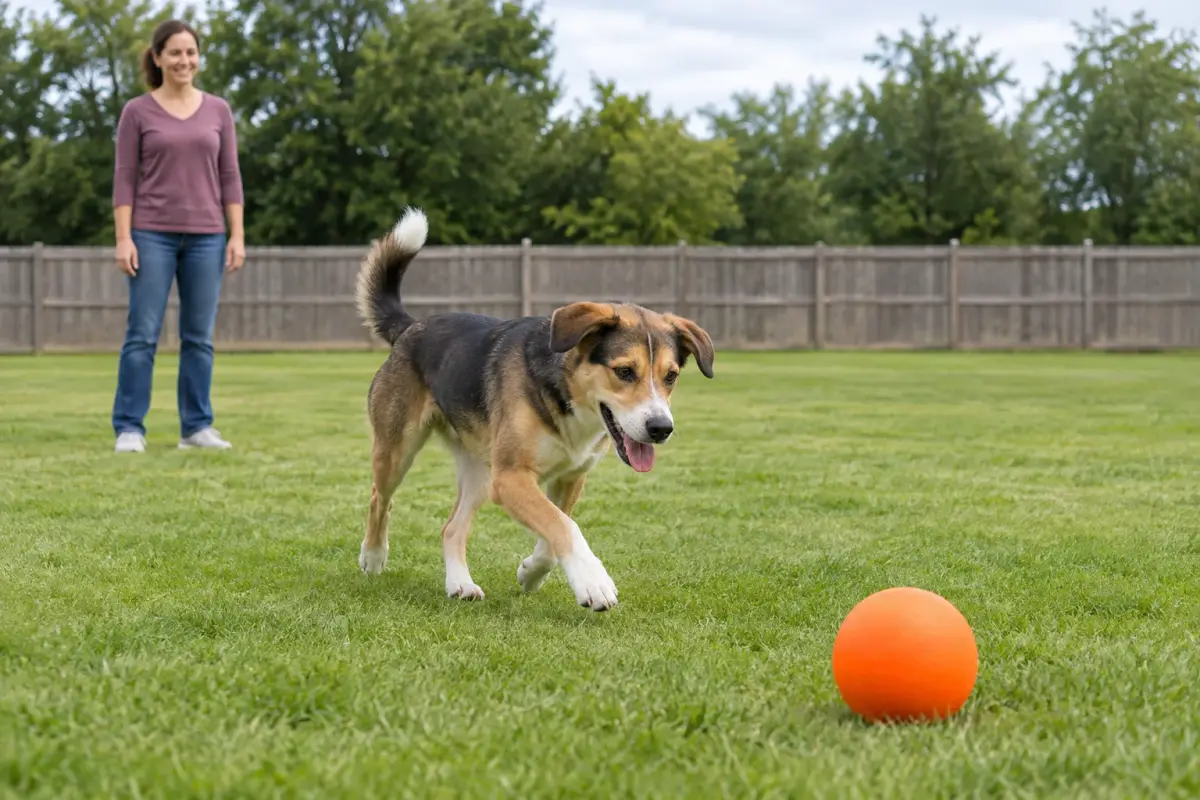
The best dog ball is one too large to fit into your dog's throat, made of durable rubber rather than a tennis-ball felt that wears down teeth, and matched to how your dog plays: fetch, chew or puzzle. Treat-dispensing balls add a mental challenge. Size is the safety decision; everything else is preference.
By Matt GarnettUpdated November 13, 20263 min read2 sources
Size is the safety decision
A ball that is too small can lodge at the back of the throat and block the airway. AKC guidance is to choose a ball sized to your dog so it cannot be swallowed, wider than the dog's jaw, and to make sure large breeds have balls big enough that they cannot choke on or swallow them by accident. Small dogs need a ball they can carry comfortably that is still not small enough to swallow.
The AKC also cautions against letting a dog hold more than one ball at a time, because a ball pushed to the back of the mouth can lodge dangerously. When in doubt, size up. A ball your dog can fit entirely behind its back teeth is too small.
Materials compared
Solid or thick-walled natural rubber balls are the toughest and safest all-rounders: they bounce, float in some cases, and resist chewing. Hollow rubber balls are lighter and bouncier but can be punctured by strong chewers. Foam balls float and are soft on the mouth but tear easily.
Tennis balls are a favorite, but the AKC notes that even dog-specific tennis balls can wear down tooth enamel, can be popped and swallowed in pieces, and the fuzz can be swallowed, which risks choking or intestinal blockage. Use them for supervised fetch only, and take them away when the game ends.
Interactive and treat-dispensing balls
Treat-dispensing balls release kibble as the dog rolls them, turning a meal into a puzzle and slowing a fast eater. Choose one with an adjustable opening so you can start easy. Interactive or automatic balls that roll on their own or make noises can entertain a dog, but check they are robust and have no reachable batteries.
Herding or jumbo balls, too big to pick up, are pushed with the nose and suit high-energy dogs. Glow or LED balls help with fetch at dusk. Ball launchers save your arm but follow the same size rules.
The best type for each dog
For a fetch-loving dog, a solid rubber ball sized for its jaw. For a strong chewer, a thick, solid rubber ball, and supervision, because no ball is indestructible. For a puppy, a softer rubber ball sized for its adult mouth. For a fast eater, a treat-dispensing ball for part of meals. For a water dog, a floating rubber or foam ball.
For seniors, gentle rolling games with a soft, easy-to-grip ball. For multiple dogs, one ball each, sized for the largest, to avoid guarding and to avoid a small dog trying to carry an oversized ball. Rope-style and plain ball designs, such as the Pet Toy Cotton Rope Ball and the Pet dog toy ball, are worth comparing against the sizing rules above, and our dog balls cover more shapes. If you are curious why they love them, read why dogs like balls.
Safety, care and when to replace
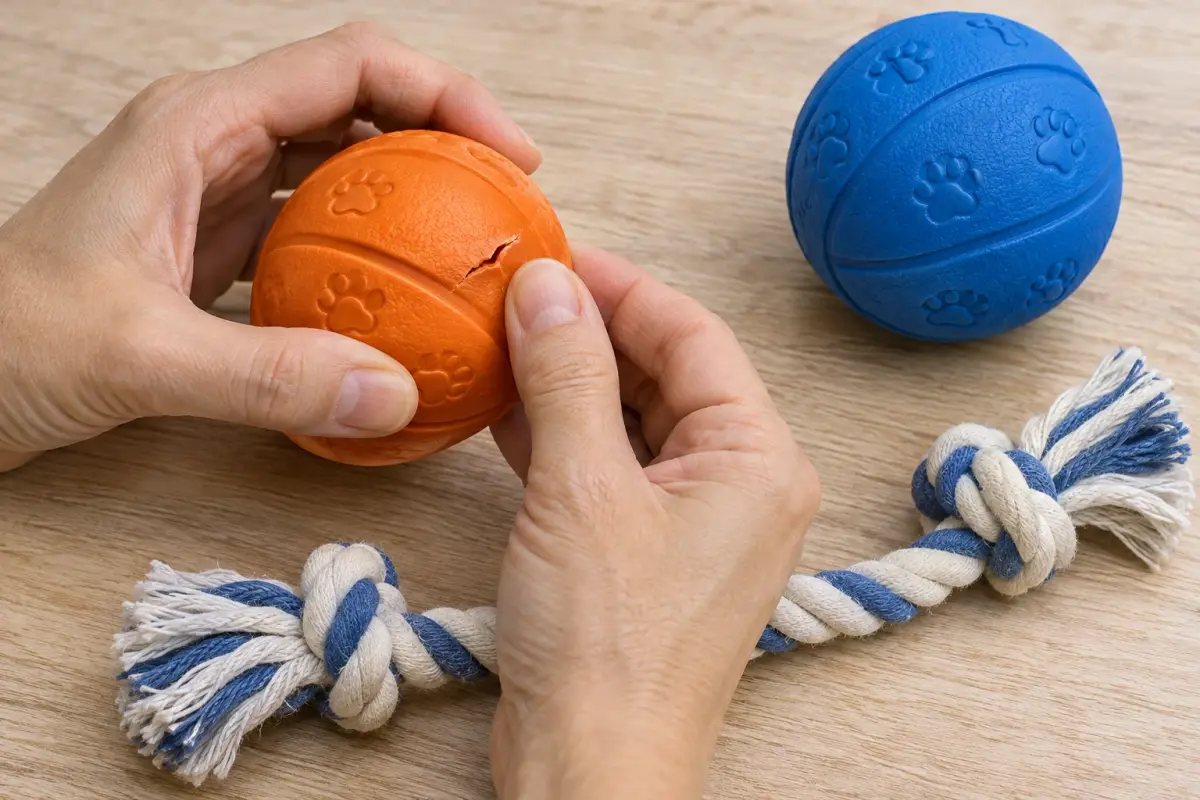
Supervise play, especially with new balls and strong chewers, and put balls away after games. Inspect balls regularly and throw away any that are cracked, torn, punctured or worn small. Wash rubber balls in warm soapy water.
If your dog chokes, gags repeatedly, struggles to breathe, vomits or stops eating after playing with a ball, call your vet or an emergency vet immediately. Worn teeth or a dog that stops chewing on one side is worth mentioning at a checkup.
Ball bodies and the play they allow
| Body | Physical difference | Inspect before another game |
|---|---|---|
| Solid or thick-walled rubber | Dense body with a bouncing surface | Cuts,missing pieces and diameter |
| Hollow rubber | Lighter body with an internal void | Punctures and collapsed walls |
| Foam | Lightweight compressible body | Torn edges and loose pieces |
| Tennis-style | A covered hollow ball | Split shell and loose outer fuzz |
Common questions
What size ball is safe for my dog?
A ball wider than your dog's jaw that cannot fit fully into the back of its mouth. For large breeds, choose big balls, and never let a dog hold two balls at once.
Are tennis balls bad for dogs?
They can wear down tooth enamel, and pieces or fuzz can be swallowed. Use them only for supervised fetch, and choose solid rubber balls for chewing and unsupervised play.
What is the best ball for a dog that chews?
A thick-walled or solid natural rubber ball, sized generously for your dog's jaw. Supervise, inspect it often and replace it as soon as it is damaged.
Are treat-dispensing balls good for dogs?
Yes. They turn kibble into a puzzle, add mental exercise and slow fast eaters. Start with an easy setting and count the food as part of the daily ration.
Sources we checked
This guide is general information, not veterinary advice. If your pet is unwell or injured, contact your veterinarian.


