Buying guides
Best Automatic Ball Launcher for Dogs: How to Choose One
The best automatic ball launcher for your dog takes a ball size your dog cannot swallow, has adjustable distance so you can use it indoors or out, and includes a rest timer so play does not turn into an obsessive marathon. Small launchers suit small dogs and mini balls; larger models throw standard tennis balls for medium and big dogs.
By Matt GarnettUpdated November 10, 20263 min read2 sources
What matters most: ball size
A ball must be too big to swallow. VCA Animal Hospitals advises going big with toys, because one that fits entirely in the mouth is a choking risk. Many launchers use mini balls about 1.5 to 2 inches across, which suit toy and small breeds but are dangerous for a Lab or shepherd that could inhale one.
Match the launcher to the ball your dog can safely carry. Standard-size launchers take regular tennis balls of about 2.5 inches. VCA also notes obsessive chewing on abrasive surfaces like a tennis ball's felt can wear teeth over time, so a dog that chews balls rather than fetching them may do better with smooth rubber balls designed for the launcher.
Launcher types compared
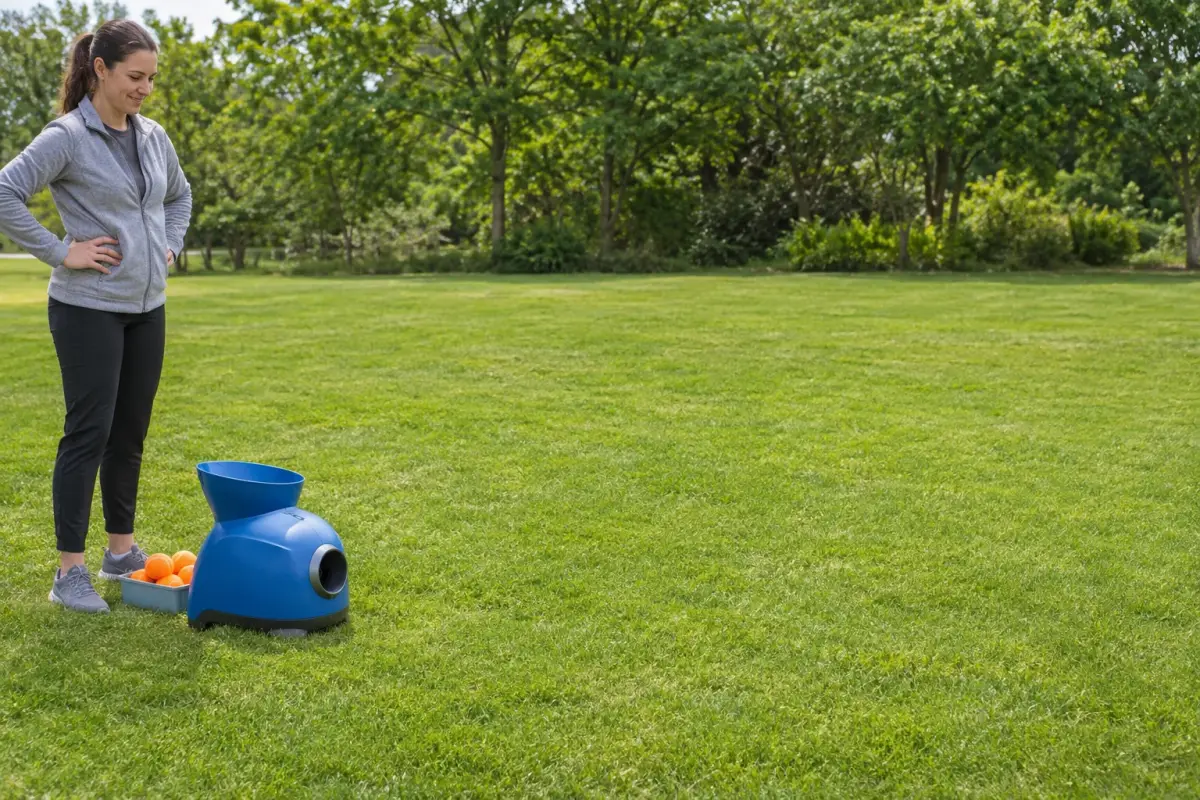
Compact indoor ball launchers throw a few feet to about 10 feet and use mini balls; they suit apartments and small dogs. Mid-size and outdoor launchers throw tennis balls up to around 30 feet or more with several distance settings. Some have adjustable launch angles.
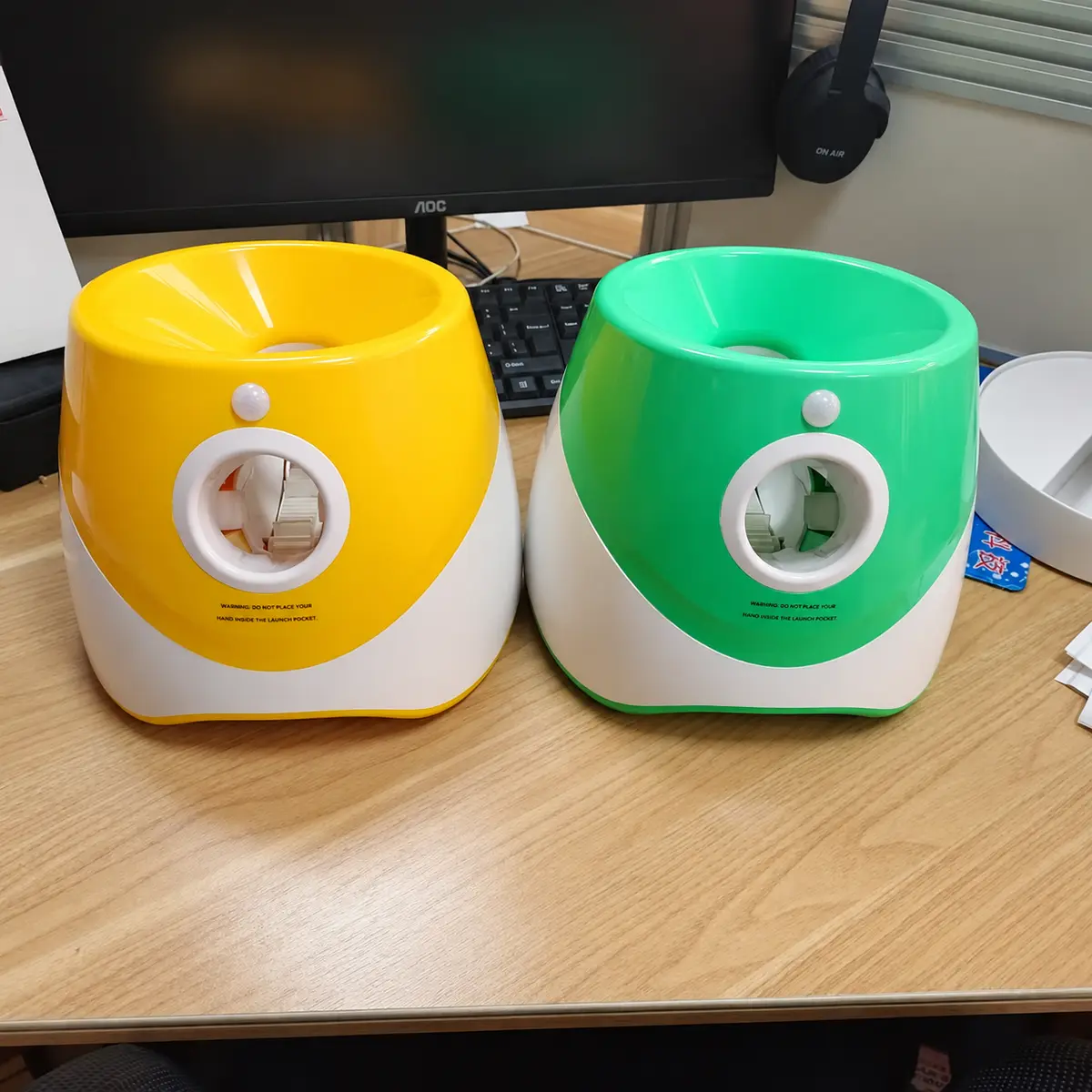
Power options include plug-in, rechargeable and battery models. Rechargeable units are convenient outdoors; plug-in units suit indoor use. Look for a motion sensor that stops the launcher if a dog or child stands in front of the barrel, and a sturdy, chew-resistant body. Our range includes an automatic dog ball launcher and a tennis ball thrower to hold up against that checklist.
Best launcher for each dog
For toy and small breeds, an indoor launcher with mini balls and short distance settings. For medium and large dogs that love fetch, an outdoor model that takes standard balls and throws far enough for a real run. For puppies, wait until they reliably drop and return a ball, and keep sessions very short to protect growing joints.
For dogs with short noses, keep sessions brief and shaded, because flat-faced breeds overheat quickly. For senior dogs, short distances and low launch angles. The AKC notes that fetch with a ball is a good way to add vigorous activity to a bored dog's day, but variety matters too.
Safe play: rest timers and obsession
Some dogs will fetch until they collapse. A launcher with a rest timer or a set number of throws per session helps. Watch for heavy panting, lagging behind or limping, and stop for water and shade. In hot weather, play early or late.
Fetch should be one part of enrichment, not all of it. The AKC suggests mixing exercise with sniffing, puzzle toys and training. If your dog stares at the launcher for hours or becomes frantic when it stops, limit access and ask your vet or a trainer about compulsive behavior.
What to avoid and care
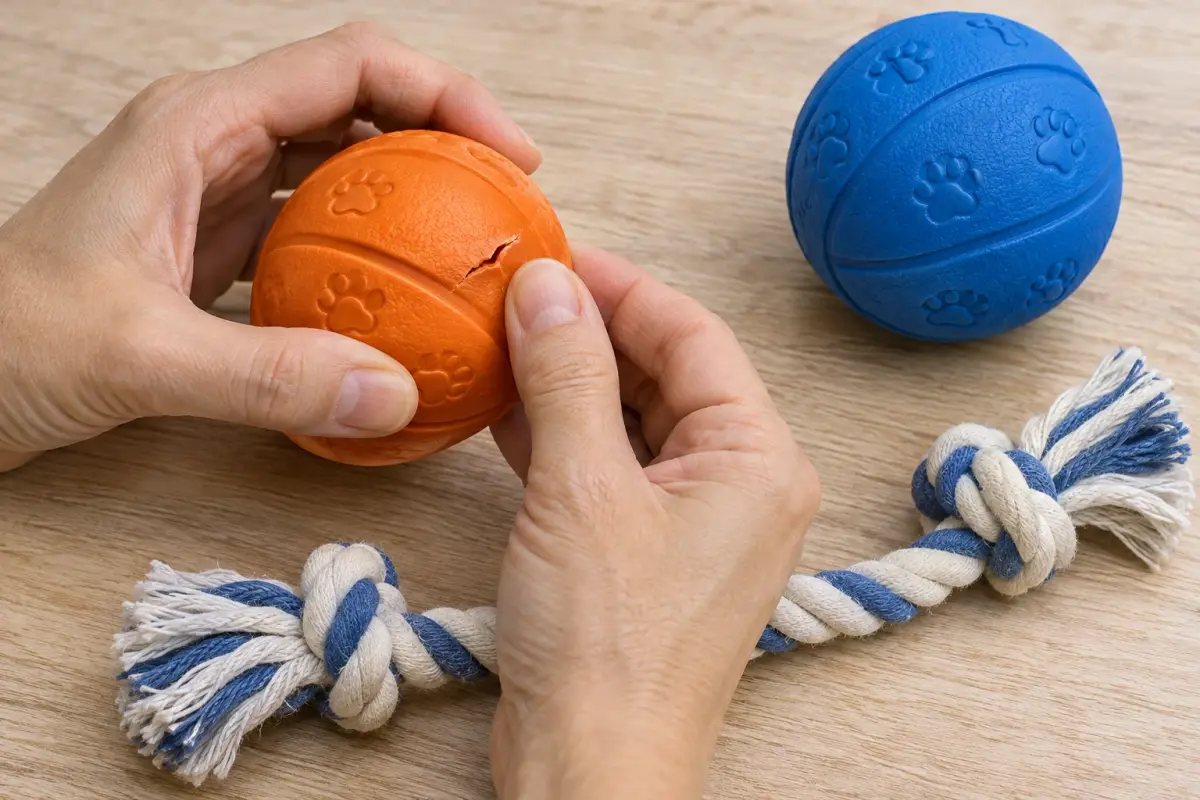
Avoid balls small enough to swallow, damaged balls with splits, and launching on hard surfaces near walls or furniture where a dog could crash. Avoid leaving a launcher running for a dog unsupervised. Remove balls with torn felt or cracks, because pieces can be swallowed.
Wipe the barrel and balls regularly, since slobber builds up and can jam the mechanism. Keep the launcher out of rain unless rated for it, and compare any automatic ball launchers you are considering on those points. If your dog limps after fetch sessions, rest it and call your vet if the limp lasts more than a day.
Launcher controls and power arrangements
| Feature | Physical or control difference | Verify on the exact launcher |
|---|---|---|
| Ball size | An opening accepts a stated ball diameter | Compatible balls and included quantity |
| Distance selection | Controls change the launch setting | Actual settings and required clear space |
| Angle adjustment | A listed mechanism changes direction | Permitted positions |
| Plug-in power | Power enters through a cable | US input and supplied adapter |
| Rechargeable or battery power | A stored power source runs the unit | Battery type,charging and stated runtime |
| Sensor | A listed detection mechanism affects operation | Actual behavior and operating instructions |
Common questions
Are automatic ball launchers safe for dogs?
Yes, with the right ball size, supervision and rest breaks. Never use balls small enough for your dog to swallow, and stop play if your dog overheats or limps.
What is the best ball launcher for a large dog?
An outdoor model that throws standard-size tennis balls at adjustable distances. Mini-ball launchers are a choking risk for big dogs. Check that the launcher has a front motion sensor and a sturdy body that a big dog cannot knock over.
Can I use a ball launcher indoors?
Yes, with a compact model on a short distance setting and a clear throwing lane away from furniture and stairs. Small dogs suit indoor launchers best.
How long should my dog play with a ball launcher?
Short sessions with breaks for water and rest. Use a rest timer, and mix fetch with other activities like sniffing walks and puzzle toys. Stop at once if your dog limps or pants hard.
Sources we checked
This guide is general information, not veterinary advice. If your pet is unwell or injured, contact your veterinarian.