






Breeds
American Bulldog vs Pit Bull: Size, Temperament and Care
The American Bulldog is the bigger of the two: the United Kennel Club wants males of 22 to 27 inches, while its American Pit Bull Terrier standard calls for 18 to 21 inches and 35 to 60 pounds. Both were bred in America as farm catch dogs for hogs and cattle, and both are affectionate with family. The American Bulldog leans more toward guarding and wariness of strangers; the pit bull is friendlier with people but often less tolerant of other dogs.
By Matt GarnettUpdated November 10, 20264 min read3 sources
Side by side
Size: the UKC standard gives American Bulldog males 22 to 27 inches and females 20 to 25, with weight in proportion to height. It gives American Pit Bull Terrier males 18 to 21 inches and 35 to 60 pounds, females 17 to 20 inches and 30 to 50. Recognition: the UKC registered its first APBT in 1898 and recognized the American Bulldog in 1999. Coat: both short and smooth, needing weekly brushing.
Energy: VCA rates American Bulldogs moderate to high (see pit bull toys); the UKC describes the APBT as an athletic performance dog. Strangers: American Bulldogs may be cautious or protective, while the UKC says APBTs are extremely friendly with people. Other dogs: both can be selective, and the UKC says most APBTs show some dog aggression. Best for: confident, experienced owners with a fenced yard.
Build and appearance
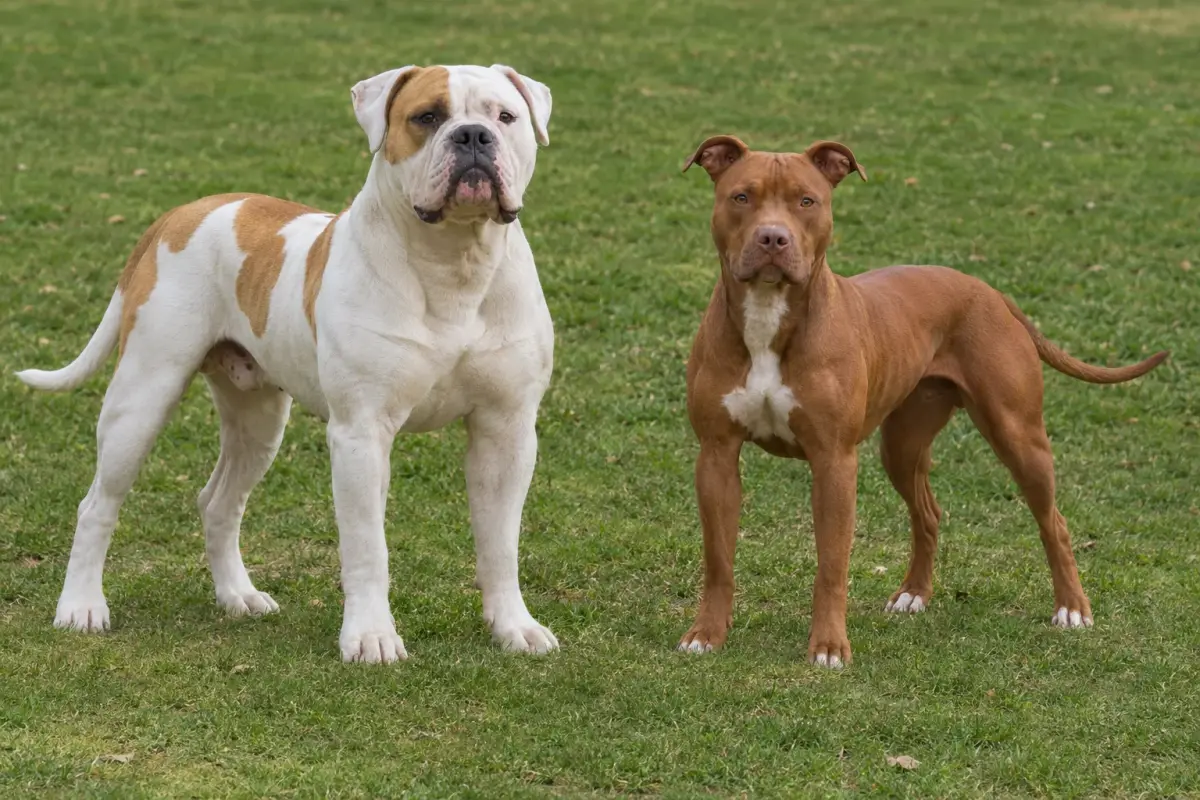
An American Bulldog is a big, heavily muscled dog with a large, broad head, a wide muzzle and heavy bone, and the UKC notes males are typically noticeably larger and more muscular than females. Colors are solid, white with colored patches, or brindle. VCA lists brachycephalic airway disease among its health concerns, a reminder that the broader-headed lines can struggle in heat.
The APBT is medium-sized and athletic, with smooth, well-defined muscle and front legs about half its height at the shoulder. The UKC says it must never look bulky or muscle-bound and accepts every color except merle. Side by side, the American Bulldog looks taller and more massive, the pit bull leaner and more agile.
Temperament and training
VCA describes American Bulldogs as loyal and strongly bonded to family, possibly cautious or protective with unfamiliar people, and prone to dominant or territorial behavior without consistent training. The UKC notes young American Bulldogs are often standoffish with strangers until about 18 months, when their confidence matures. VCA rates the breed best for confident or experienced owners.
The UKC describes APBTs as eager to please, enthusiastic, noted for their love of children and too friendly with strangers to make good guard dogs. Because most show some dog aggression and they are strong, it says they need careful socialization and obedience training. For both breeds, use reward-based methods, start socialization early and introduce other dogs slowly and on leash.
Exercise, health and daily care
VCA recommends daily walks, play and structured activity for American Bulldogs to prevent boredom, and a fenced outdoor space. APBTs need at least as much, and the UKC warns they are capable climbers, so fences must be tall and secure. Both are strong chewers and pullers, so invest in durable toys and a well-fitted harness.
VCA lists hip and elbow dysplasia, brachycephalic airway disease, ichthyosis, a scaly skin condition, and neuronal ceroid lipofuscinosis, a neurologic storage disease, among American Bulldog concerns, and notes the breed matures slowly, so controlled growth and weight matter. VCA also notes the breed is sensitive to extreme heat. Ask breeders about hip, elbow and genetic testing, and ask your vet how to exercise a growing large-breed puppy safely.
Which to choose
Choose an American Bulldog if you want a large, loyal, protective family dog and have experience handling a strong, confident breed, plus space and a fenced yard. Choose an American Pit Bull Terrier if you want a medium-sized, people-loving athlete for sports and long outings and can manage it carefully around other dogs.
With either, check local ordinances, rental leases and homeowner's insurance first, because bully breeds face restrictions in many places. If you are adopting, ask the shelter how the dog has behaved with people, children and other dogs; that history is a better guide than any breed label. Comparing other bully breeds? See Bulldog vs Pit Bull, Bull Terrier vs Pit Bull and Pit Bull vs Rottweiler, or browse dog toys for pit bulls.
This page is general information, not veterinary advice, and it cannot replace an examination by the vet who knows your pet.
Common questions
Is an American Bulldog a pit bull?
No. They are separate breeds with separate UKC standards. Both were used as catch dogs on American farms, and some people loosely call any muscular bully-type dog a pit bull, but the American Bulldog is larger.
Which is bigger, an American Bulldog or a pit bull?
The American Bulldog. The UKC standard calls for American Bulldog males of 22 to 27 inches, while American Pit Bull Terrier males should be 18 to 21 inches and 35 to 60 pounds.
Are American Bulldogs good family dogs?
Often, with an experienced owner. VCA says they bond strongly with family and are generally good with children under supervision, and the UKC calls them gentle, loving companions. They can be protective with strangers.
Are American Bulldogs aggressive?
They should not be. The UKC disqualifies viciousness, and describes the breed as gentle with family. VCA notes they can be protective and territorial without training, so early socialization is essential.
Sources we checked
This guide is general information, not veterinary advice. If your pet is unwell or injured, contact your veterinarian.


