






Breeds
Pit Bull vs Bulldog: Shared History, Different Dogs
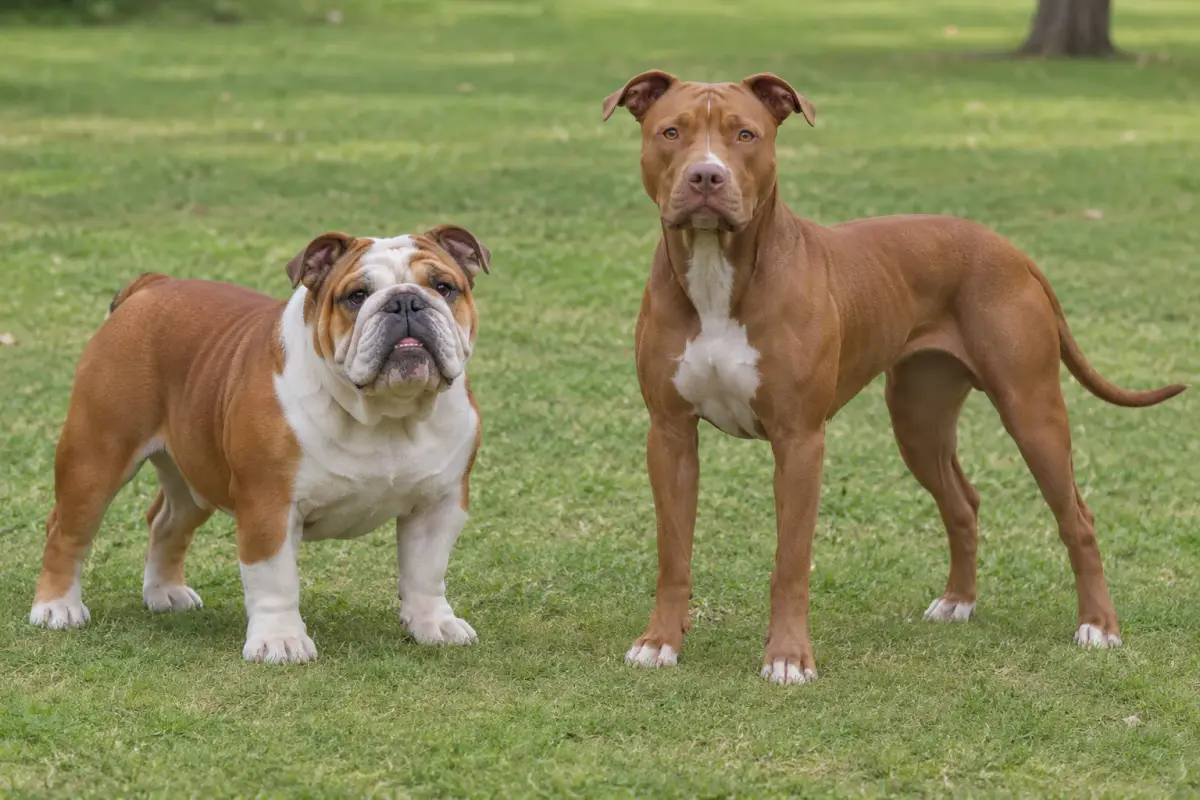
The Bulldog and the American Pit Bull Terrier share bull-and-terrier history but live very different lives. The Bulldog is a short, heavy, flat-faced companion of 40 to 50 pounds that needs only gentle walks and overheats easily. The pit bull is a taller, leaner athlete of 30 to 60 pounds under the United Kennel Club standard, with far more energy and stamina. Both are affectionate with people; both can be wary of strange dogs.
By Matt GarnettUpdated November 13, 20264 min read3 sources
Side by side
Size: the AKC lists Bulldogs at 14 to 15 inches, about 50 pounds for males and 40 for females. The UKC standard gives American Pit Bull Terrier males 18 to 21 inches and 35 to 60 pounds, females 17 to 20 inches and 30 to 50. Lifespan: AKC gives the Bulldog 8 to 10 years. Registry: the Bulldog is AKC-recognized and ranked 10th; the APBT is a UKC breed. Coat: both short, smooth and easy to groom.
Energy: VCA rates the Bulldog 1 out of 5 as a jogging partner; the UKC describes the APBT as an athletic dog that excels in agility, weight pulls and dock jumping. Heat: Bulldogs are extremely prone to overheating, per VCA. People: both are friendly. Other dogs: VCA says Bulldogs are not friendly toward strange dogs, and the UKC says most APBTs show some dog aggression. Best for: Bulldogs suit relaxed homes; pit bulls suit active owners.
Build and movement
The Bulldog is low and wide, with a short face and facial wrinkles, bred for companionship rather than work. VCA notes its flat face makes it prone to overheating and that most Bulldogs cannot swim. Its short coat gives little protection from cold, so it is an indoor dog in every season.
The APBT is medium-sized, solidly built and athletic, with a body slightly longer than tall, front legs about half its height and a broad, flat skull. The UKC says it must be able to breathe easily while working and should never look bulky or muscle-bound. It comes in all colors except merle.
Temperament and training
VCA describes Bulldogs as loyal, fun-loving and playful with children, friendly with strangers and other household pets, but not with strange dogs. They are willing to please but stubborn and may rebel against forceful training, so short, reward-based sessions with good control work best. The AKC calls them docile and adaptable to town or country.
The UKC describes APBTs as eager to please, enthusiastic, known for loving children and so friendly with strangers that they make poor guard dogs, with aggression toward humans uncharacteristic. Because most show some dog aggression and they are strong, they need an owner who socializes them carefully and trains obedience. Both breeds do better with positive methods than harsh corrections.
Exercise, care and health
A Bulldog needs only a leisurely walk or backyard games each day, ideally in the cool of morning or evening, plus daily cleaning and drying of facial and tail wrinkles, according to VCA. A pit bull needs much more: daily walks, play and a sport or job, plus tall, secure fencing, since the UKC calls it one of the most capable canine climbers.
For Bulldog puppies, VCA suggests a large-breed growth food, which it says may reduce the incidence or severity of hip dysplasia, and it notes the breed tends to run slightly overweight. Ask your vet to check breathing and weight regularly in a Bulldog, and ask a pit bull breeder or shelter about hip health and temperament history.
Which to choose
Choose a Bulldog if you want a calm, friendly companion for a quieter home, are happy with short walks and air conditioning, and can manage wrinkle care and a breed prone to heat and breathing problems. Choose an American Pit Bull Terrier if you want an energetic, people-loving athlete for hikes, sports and play, and can manage it carefully around other dogs.
Check local ordinances, leases and insurance before adopting a pit bull, because bully breeds face restrictions in many places. Shelter dogs labeled pit bull are often mixes, so ask staff how each dog behaves with people, children and other dogs before you decide.
This page is general information, not veterinary advice, and it cannot replace an examination by the vet who knows your pet.
Common questions
Are pit bulls related to bulldogs?
Yes. The UKC says the American Pit Bull Terrier came from crosses between bulldogs and terriers in the 19th century, and VCA notes that Bulldogs mixed with terriers produced new fighting breeds after bull baiting was banned.
Which is bigger, a pit bull or a Bulldog?
Pit bulls are taller, at 17 to 21 inches under the UKC standard, against 14 to 15 inches for the Bulldog. Weights overlap, since Bulldogs are heavy for their height at 40 to 50 pounds.
Which is better for an apartment, a Bulldog or a pit bull?
The Bulldog, usually. VCA calls it a calm housedog needing only a leisurely walk, while pit bulls need much more daily exercise. Check building rules, since some ban bully breeds.
Are Bulldogs good with other dogs?
Not always. VCA describes Bulldogs as friendly toward other household pets but not toward strange dogs. Socialize puppies early and introduce new dogs slowly and on leash.
Sources we checked
This guide is general information, not veterinary advice. If your pet is unwell or injured, contact your veterinarian.


