






Breeds
Bull Terrier vs Pit Bull: Cousins With Very Different Looks
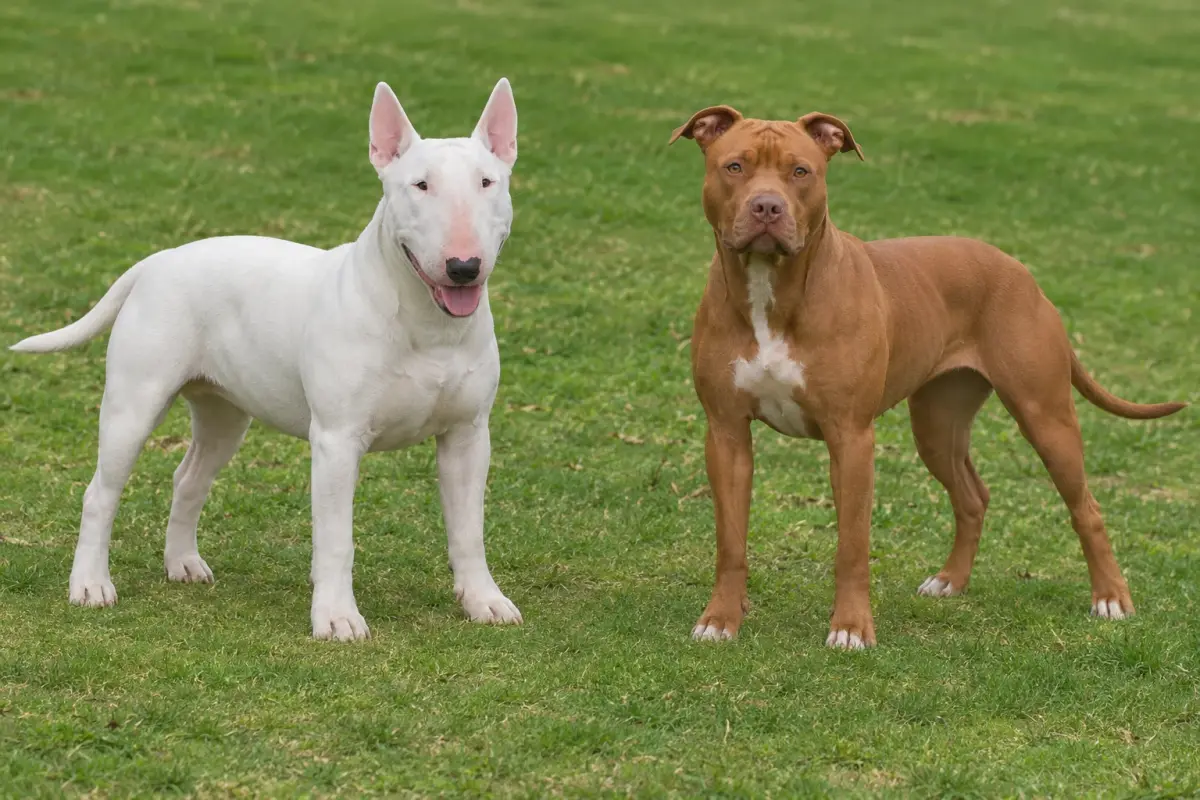
The Bull Terrier and the American Pit Bull Terrier share bull-and-terrier ancestry but look nothing alike. The Bull Terrier has the famous egg-shaped head and stands 21 to 22 inches at 50 to 70 pounds per the AKC; the pit bull is a leaner, broad-headed athlete of 30 to 60 pounds under the United Kennel Club standard. Both are playful, people-loving and strong, and both can be intolerant of strange dogs, so they need experienced, consistent owners. Both are strong chewers, so durable toys for pit bulls are worth planning for.
By Matt GarnettUpdated November 10, 20264 min read3 sources
Side by side
Size: the AKC lists Bull Terriers at 21 to 22 inches and 50 to 70 pounds. The UKC gives American Pit Bull Terrier males 18 to 21 inches and 35 to 60 pounds, females 17 to 20 inches and 30 to 50. Lifespan: AKC gives Bull Terriers 12 to 13 years. Registry: the Bull Terrier is AKC-recognized and ranks 72nd; the APBT is a UKC breed. Coat: both short; VCA calls the Bull Terrier coat short, flat and harsh.
Energy: VCA says Bull Terriers need a long walk, short jog or energetic games daily; the UKC describes APBTs as athletes that excel at sports. People: both are friendly. Other dogs: VCA says Bull Terriers are not very friendly toward strange dogs, and the UKC says most APBTs show some dog aggression. Training: both learn quickly but can be stubborn. Best for: experienced, active owners who enjoy a comical, strong-willed dog.
How to tell them apart
The head settles it. The AKC calls Bull Terriers unique eggheads, and that long, egg-shaped head is unlike any other breed's. The APBT has a broad, flat skull and a wide, deep muzzle, per the UKC, with small to medium ears that may be natural or cropped.
Bodies differ too. The Bull Terrier is muscular and solid, and the AKC calls it an exuberant, muscular companion. The UKC describes the APBT as medium-sized and athletic, slightly longer than tall, never bulky, in every color except merle. Side by side, the Bull Terrier's head is the giveaway every time.
Temperament and training
VCA describes Bull Terriers as loyal and fun-loving, exuberantly comical and often mischievous, playful and good with children, fairly friendly with strangers and usually good with other pets, but not very friendly toward strange dogs. They learn quickly but can be stubborn and rebel against force. VCA also notes they can sometimes show compulsive behavior, which is worth discussing with your vet early.
The UKC describes APBTs as eager to please, enthusiastic, noted for loving children and too friendly with strangers to make guard dogs. Because most show some dog aggression and they are powerful, they need careful socialization and obedience training. For both breeds, reward-based training with firm, consistent rules works best.
Exercise and care
VCA calls the Bull Terrier a calm, alert housedog as long as it gets regular exercise, and says it enjoys cold-weather outings but its short coat is not suited to living outside. The APBT needs at least as much daily activity, and the UKC notes it is a capable climber, so fencing must be secure. Both are strong chewers; choose durable toys, such as a bite-resistant molar stick ball or rubber training toys.
Grooming is simple for both: a weekly brush, nail trims and ear checks. VCA says Bull Terriers tend to stay at a good weight or run slightly heavy, so measure meals. Ask breeders of either breed about health screening, and see your vet if you notice repetitive behaviors, itching skin or changes in movement.
Which to choose
Choose a Bull Terrier if you love a clownish, distinctive-looking companion, have time for daily exercise and training, and are prepared to manage it around strange dogs. Choose an American Pit Bull Terrier if you want a leaner, more athletic dog for sports and long outings that adores people, and you can manage it carefully with other dogs.
Both breeds can face local restrictions, so check ordinances, leases and insurance first. If adopting, ask the shelter how the dog has behaved with people, children and other dogs, since that history tells you more than a label. Browse our dog toys for pit bulls once the dog is home. More comparisons: American Bulldog vs pit bull, pit bull vs Staffordshire Bull Terrier and pit bull vs Rottweiler. For feeding, see the best food for pit bulls.
This page is general information, not veterinary advice, and it cannot replace an examination by the vet who knows your pet.
Common questions
Is a Bull Terrier a pit bull?
No. The Bull Terrier is a separate AKC breed with an egg-shaped head, developed in England around 1860. It shares bull-and-terrier ancestry with the American Pit Bull Terrier, which the UKC recognizes.
Which is bigger, a Bull Terrier or a pit bull?
Usually the Bull Terrier. The AKC lists it at 21 to 22 inches and 50 to 70 pounds, while the UKC calls for pit bull males of 18 to 21 inches and 35 to 60 pounds.
Are Bull Terriers good family dogs?
Often, yes. VCA describes them as loyal, fun-loving, playful and good with children, though not very friendly toward strange dogs. They need daily exercise and consistent training.
Do Bull Terriers have compulsive behaviors?
VCA notes the breed can sometimes show compulsive behavior. Any repetitive behavior that is hard to interrupt should be checked by your vet, who can rule out medical causes and suggest a behavior plan.
Sources we checked
This guide is general information, not veterinary advice. If your pet is unwell or injured, contact your veterinarian.


