Buying guides
What Is Whisker Fatigue in Cats?
Whisker fatigue, also called whisker stress, is the idea that a cat's sensitive whiskers get overstimulated when they brush the sides of a deep or narrow bowl, putting the cat off eating. It is a popular theory but not a proven condition. A small study found no difference in how cats ate, although most preferred a wider dish. A shallow cat bowl is a cheap, harmless thing to try.
By Matt GarnettUpdated November 9, 20264 min read3 sources
Why whiskers are so sensitive
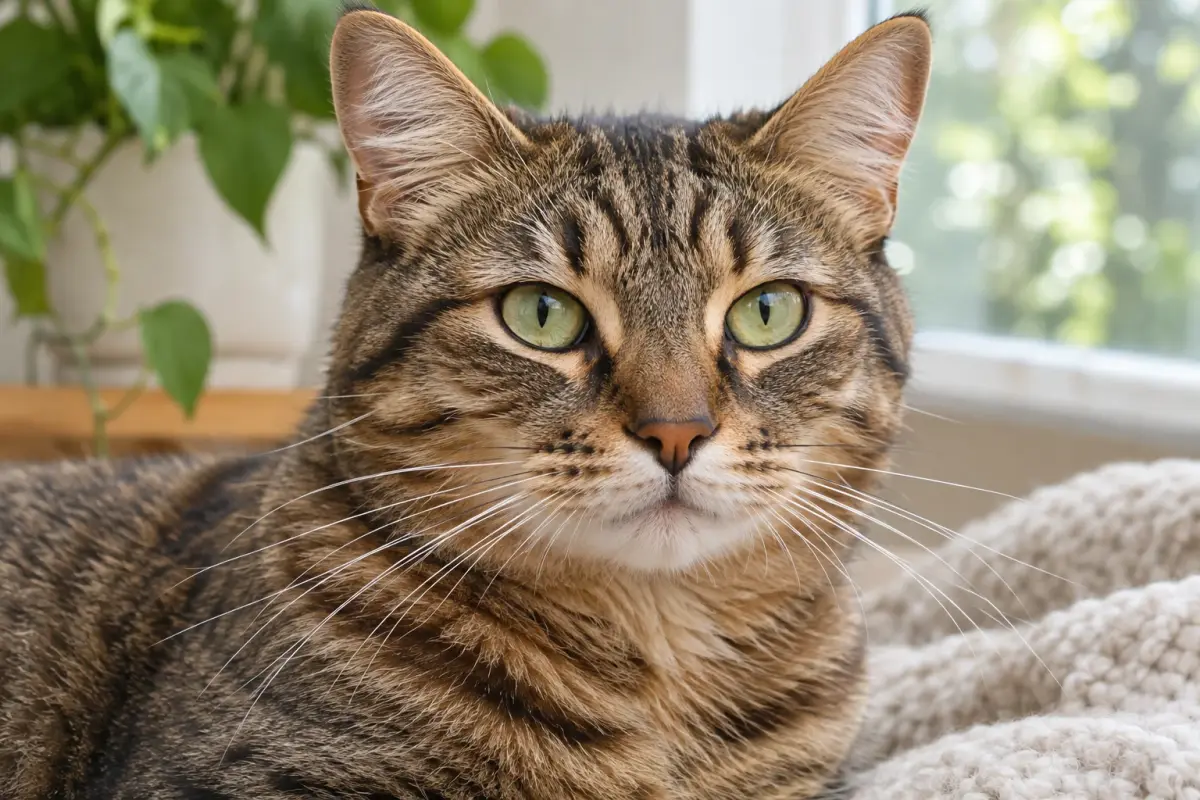
Whiskers, or vibrissae, are thick, stiff hairs rooted about three times deeper than ordinary fur, in follicles packed with nerves and blood vessels. VCA explains that the whisker itself feels nothing; when it is moved by air or touch, it vibrates and stimulates those nerves, telling the cat about the size, shape and movement of things close by.
Cats see poorly at very short range, so whiskers act like close-up radar, helping them judge gaps, hunt and avoid obstacles in the dark. VCA advises never trimming or plucking them, because that reduces a cat's awareness of its surroundings. Our page on why cats have whiskers goes deeper.
What whisker fatigue is supposed to be
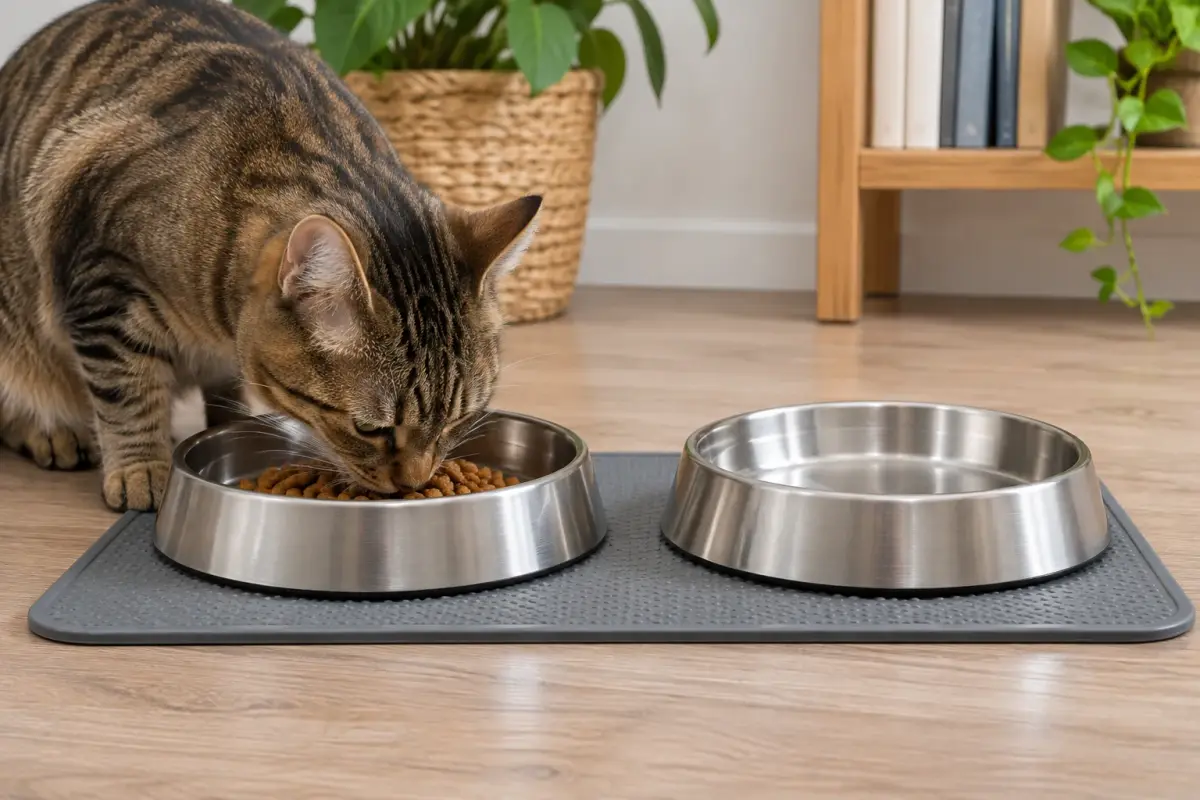
The theory is that when a cat eats from a deep, narrow bowl, its whiskers press against the rim over and over, sending a stream of signals that becomes uncomfortable or stressful. VCA notes that this repeated contact can be overwhelming and suggests flatter food and water dishes so whiskers do not keep brushing the sides.
Many dish makers now market whisker-friendly bowls on this basis. Tufts University's Petfoodology points out, though, that whether whisker stress actually exists, and how it would affect cats, has not been proven, and veterinarians and behaviorists disagree about it.
What the research found
Petfoodology summarizes a 2021 study of 38 pet cats tested at home. After a 12-hour fast, each cat ate dry food from its usual bowl and from a whisker-friendly dish of the same material, while owners recorded how long the cat ate, how much it ate and how much it spilled.
The type of dish made no difference to any of those measures. In a final side-by-side test, though, 63% of cats chose the whisker-friendly dish. So the evidence does not show that ordinary bowls stop cats eating properly, but it does suggest many cats like a wider, shallower dish when given the choice.
Signs people link to whisker fatigue
Owners often describe a cat that scoops food out of the bowl with a paw and eats it off the floor, eats only from the middle and leaves food around the edges, hesitates or paces near the bowl, or seems hungry but walks away after a few bites.
These behaviors can have many causes, including dental pain, nausea, a noisy or busy feeding spot, a dirty bowl or another cat nearby. Cornell Feline Health Center notes that cats can be picky about feeding location and bowl cleanliness. Picking out food with a paw is also simply a habit for some cats.
Should you switch to a shallow bowl?
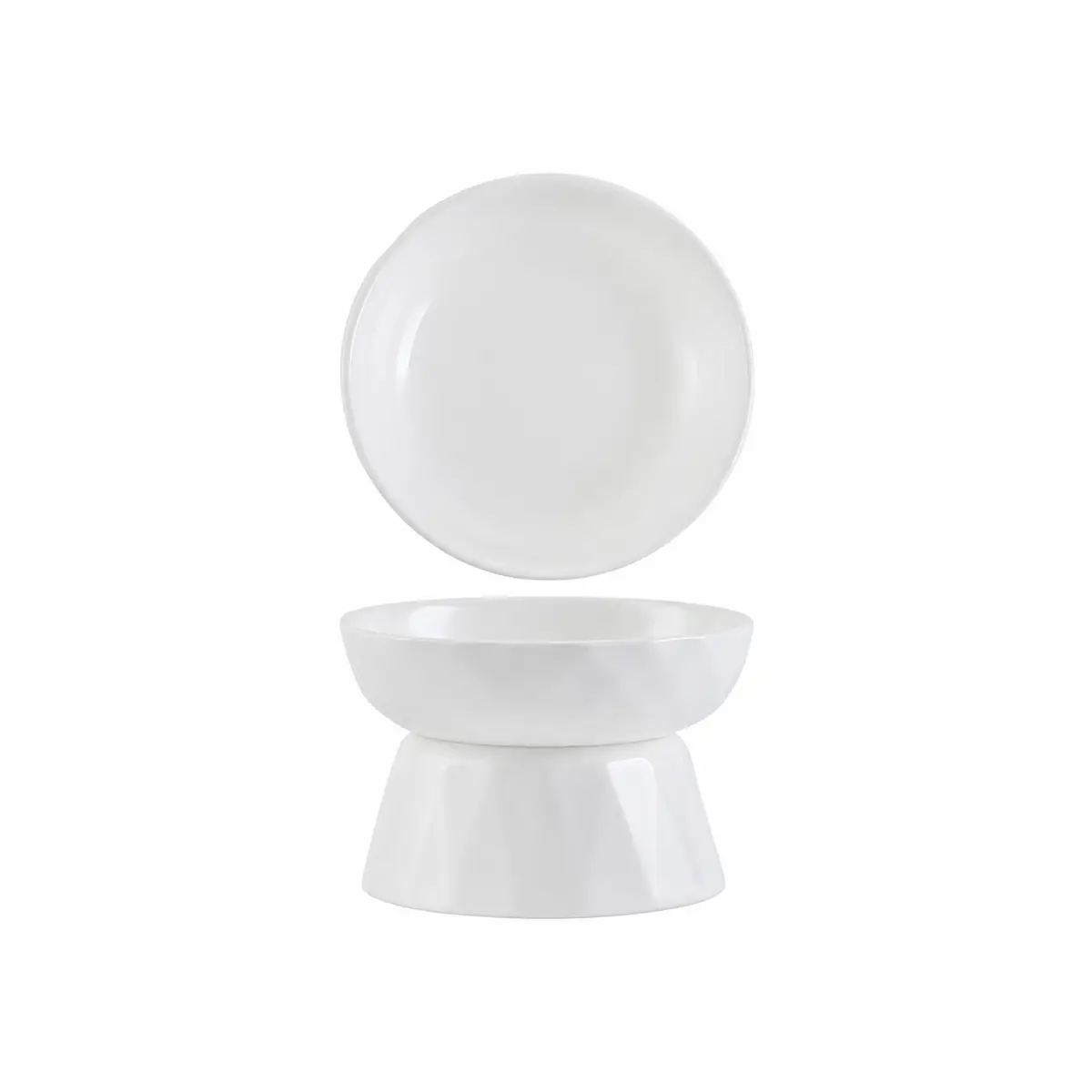
It is a low-cost, low-risk experiment. Offer a wide, shallow dish, such as a saucer, a flat ceramic plate or a wide-mouth ceramic bowl, next to your cat's usual bowl for a week and see which it uses; a double cat bowl lets you try food and water side by side. Keep cat water bowls filled to the brim; VCA notes some cats dislike their whiskers touching the edge while they drink.
Choose glass, ceramic or stainless steel, wash dishes daily and keep the feeding spot quiet and away from the litter box. If your cat eats better from the new dish, great; if not, look for other causes. Our guide to the best cat bowls lays out the shapes and materials.
When to call your vet
Call your vet if your cat is eating noticeably less, dropping food from its mouth, chewing on one side, drooling, pawing at its mouth or losing weight. These are more often signs of dental or other medical problems than of whisker discomfort. Petfoodology also advises talking to your vet about any change in eating.
A cat that has not eaten for a day or more needs prompt attention, since cats can become seriously ill when they stop eating.
This page is general information, not veterinary advice, and it cannot replace an examination by the vet who knows your pet.
Common questions
Is whisker fatigue real?
It has not been proven. A study of 38 cats found whisker-friendly dishes made no difference to how much or how long cats ate, although 63% preferred them. Some cats seem more comfortable with a wider bowl.
What kind of bowl is best for whisker fatigue?
A wide, shallow dish such as a flat ceramic plate or a shallow stainless steel saucer lets your cat eat without its whiskers brushing the rim. Fill water bowls to the top for the same reason.
Why does my cat take food out of the bowl to eat it?
Some cats simply prefer eating from a flat surface or do it out of habit. It can also reflect a deep bowl, a dirty dish or mouth pain. Try a shallow dish, and see your vet if eating changes.
Sources we checked
This guide is general information, not veterinary advice. If your pet is unwell or injured, contact your veterinarian.