






Care & how-to
Vent Gleet in Chickens: Signs and Why It Needs a Vet
The name vent gleet does not by itself establish that a chicken has a yeast infection. Merck uses it as another name for diuresis syndrome or urate vent scalding, a poorly understood problem. Persistent soiling, irritation, or changes around the vent need poultry veterinary assessment. Seek urgent advice if the bird is weak, bleeding, struggling to pass waste, or being injured by other hens.
By Matt GarnettUpdated November 11, 20264 min read3 sources
Treat the name as a starting point for assessment
Merck describes diuresis syndrome as poorly understood and difficult to solve, and includes vent gleet among its alternative names. An Ask Extension response likewise emphasizes investigating possible underlying problems. Those sources do not support choosing an antifungal medicine simply because an online photograph resembles your bird.
Describe the material, skin appearance, and behavior you actually observe. Record when the change began and whether more than one hen is affected. A veterinarian may need to examine the bird and assess several possible contributors; the label alone does not settle what is happening.
Look at the whole hen and flock
Note appetite, drinking, activity, laying, feather condition, and the appearance of droppings as well as the vent area. Report whether a bird is straining, repeatedly pecking at herself, or being targeted by other hens. Photos can help document change without requiring repeated stressful handling.
Merck’s discussion involves metabolic and management factors rather than a simple visual test an owner can perform. Do not infer a kidney, reproductive, or dietary diagnosis from one photograph. Keep uncertain details marked as uncertain so the professional assessment is based on what you know rather than a guessed explanation.
Know when the situation needs urgent advice
Call a poultry veterinarian promptly about persistent wet soiling, irritated skin, a new discharge, or an otherwise unwell bird. Get urgent advice for marked weakness, collapse, breathing difficulty, significant bleeding, inability to pass waste, or tissue protruding from the vent. Do not assume those signs are all one minor condition.
Protect an injured bird from further pecking while arranging care, using a secure appropriate area with essential resources. Merck notes that the syndrome it discusses can be associated with serious complications and cannibalism. A bird actively being attacked needs immediate protection, rather than another period of observation in the same group.
Avoid repeated home treatment experiments
An Ask Extension question describes unsuccessful home remedies before the owner sought further advice. The response highlights conditions that should be investigated, which is a reason to involve a veterinarian rather than move through a series of antifungal, antibiotic, or household products on your own.
Do not begin medicine, add vinegar or a supplement mixture to drinking water, or try to push protruding tissue back inside without veterinary direction. Ask the clinic whether and how to clean the affected area while waiting. Avoid pulling adhered material from damaged skin or soaking a weak bird without guidance.
Review diet and conditions without guessing a correction
Keep feed labels, records of extras, and any recent changes available for the consultation. Merck describes dietary and environmental management in its discussion of diuresis syndrome, but those professional considerations are not a home electrolyte recipe. An appropriate complete ration and clean water remain the starting point while advice is obtained.
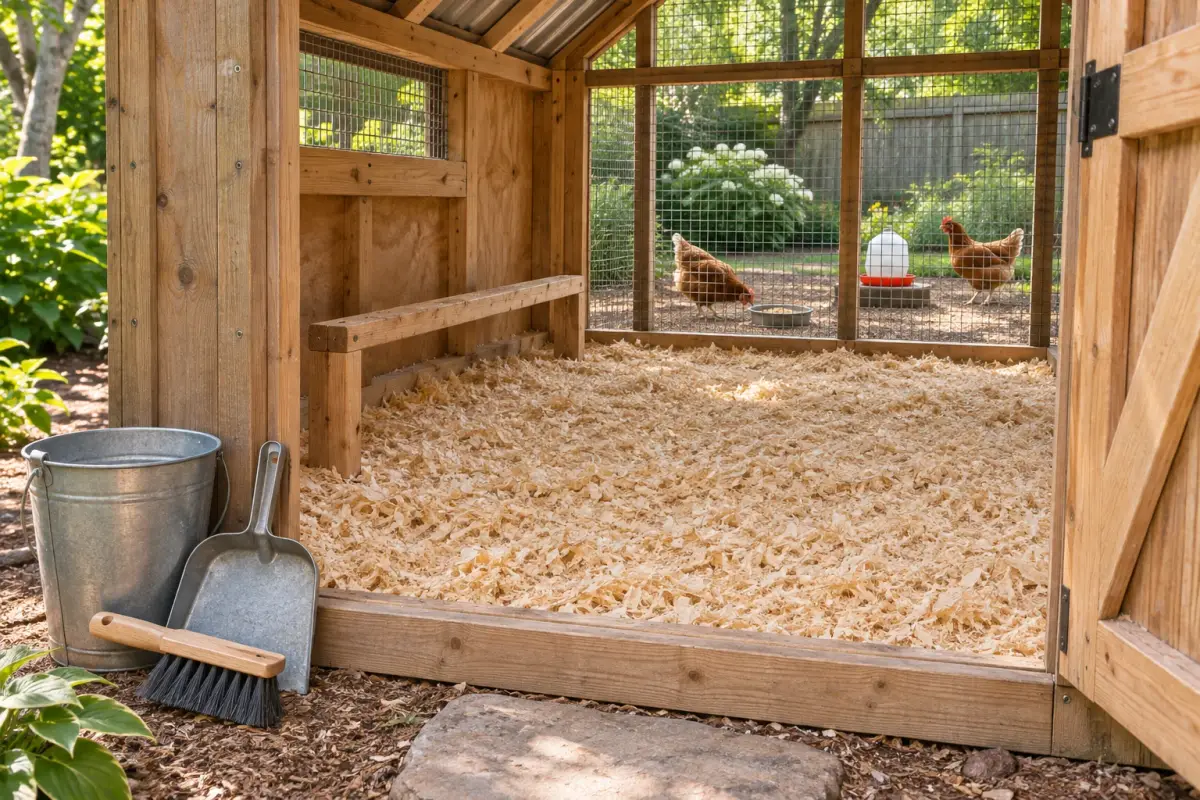
Inspect bedding, water spills, heat, and ventilation. Merck’s general poultry management guidance explains why persistent wet litter and poor air quality matter to welfare. Correct obvious maintenance problems, but do not treat a housing improvement as proof that the bird no longer needs an examination.
Plan follow-up and a manageable environment
Record any treatment instructions from the veterinarian and when the bird should be rechecked. Tell the clinic if the problem returns or another hen develops similar signs. Keep observation focused on the bird’s overall recovery and access to food, water, and rest, rather than the appearance of feathers alone.
When reviewing the longer-term setup, compare the Chicken Coops and Chicken Runs collections against cleaning access, drainage, resting space, and protection from injurious pecking. A practical environment supports daily care while the veterinarian addresses the actual health problem.
This page is general information, not veterinary advice, and it cannot replace advice from a veterinarian who treats poultry.
Common questions
Does vent gleet mean a chicken has a yeast infection?
The name alone does not establish that diagnosis. Merck uses it among names for diuresis syndrome, while extension advice emphasizes investigating underlying problems. A poultry veterinarian should assess persistent changes.
When should I call a vet about vent soiling?
Call promptly when soiling persists, skin is irritated, discharge appears, or the hen seems unwell. Weakness, collapse, significant bleeding, difficulty passing waste, or protruding tissue warrants urgent advice.
Can I choose an antifungal cream from an online photo?
Do not select treatment that way. Similar-looking changes can require different assessment, and the term does not identify a cause. Ask a poultry veterinarian about the bird and any immediate cleaning needed.
What information helps a poultry veterinarian?
Provide timing, photographs, the number of birds affected, appetite and laying changes, feed labels, extras, and housing conditions. Describe previous products used and their effects without assuming a diagnosis from the response.
Sources we checked
This guide is general information, not veterinary advice. If your pet is unwell or injured, contact your veterinarian.


