






Care & how-to
Taking Your Dog to the Beach: A Safe, Fun Day Out
A beach day with your dog is safe and a lot of fun if you plan for four things: salt water, sand, sun and waves. Bring plenty of fresh water and shade, go early or late in the day, keep your dog from drinking seawater or eating sand, and rinse them off before you leave. Check the beach allows dogs before you go.
By Matt GarnettUpdated November 14, 20265 min read3 sources
Check the beach rules before you load the car
Plenty of public beaches ban dogs outright in summer, allow them only before or after certain hours, or require a leash at all times. Rules can change from one stretch of sand to the next, and state parks, city beaches and national seashores often set their own. Look up the specific beach on its official website or call the park office the day before, because a ticket or a long walk back to the car is a poor start to the day.
When you arrive, ask a lifeguard about rip currents, jellyfish and anything else that has washed up recently. Dogs are easy targets for jellyfish and sea lice because they run straight into the shallows. If your dog will swim, sort out a dog life jacket before the trip. Early weekday mornings tend to be quieter, which matters if your dog is nervous around crowds, children with food, or other dogs off leash.
What to pack for a dog beach day
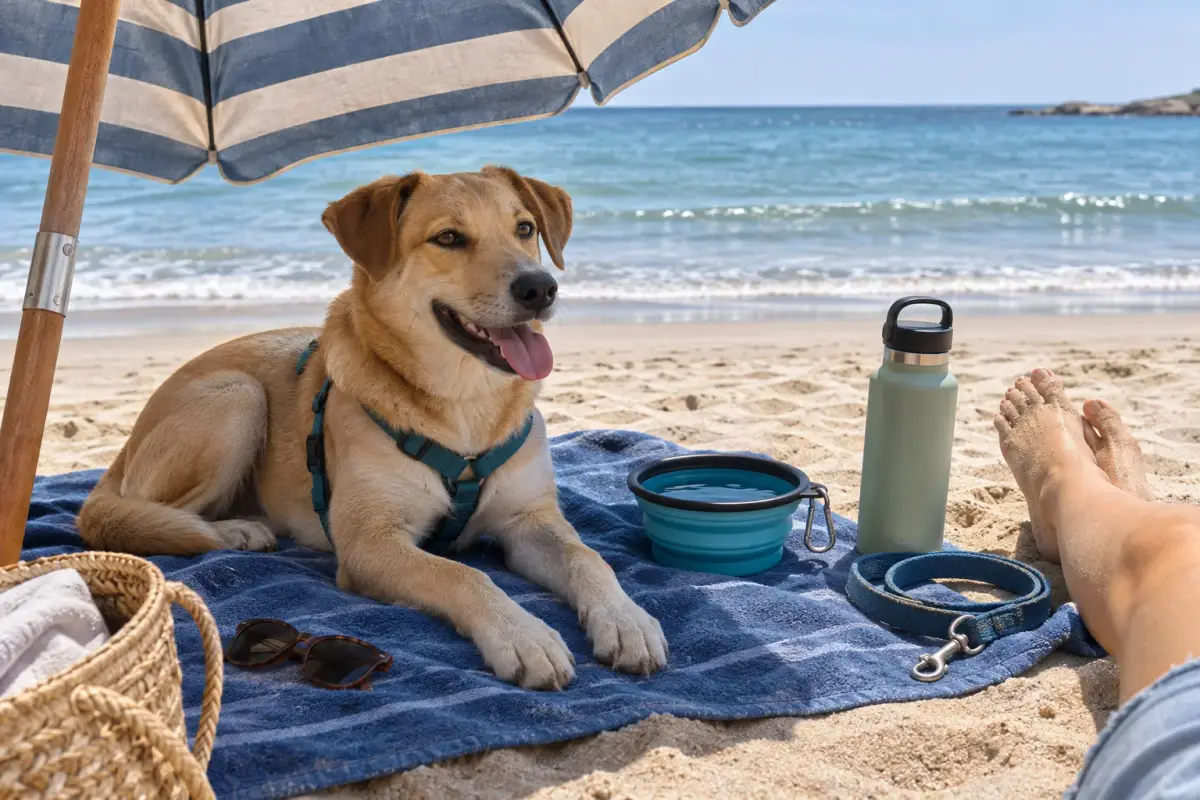
Fresh water is the single most important item. Bring more than you think you need, plus a travel bowl, and offer it often, especially after swimming or a game of fetch. Pack shade too: a beach umbrella or a small pop-up tent gives your dog somewhere cool to lie down between swims. Add a towel, poop bags, a long leash or a well-fitted harness, and their usual meal if you will be out past feeding time.
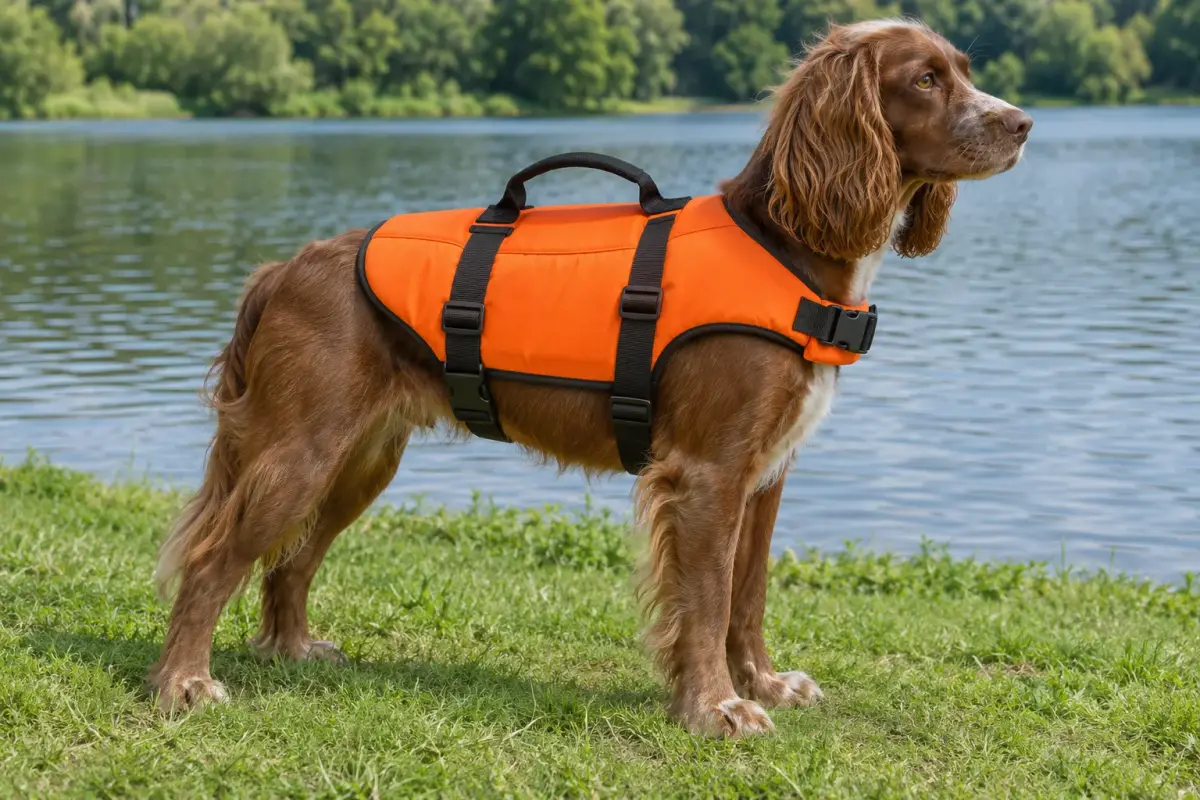
A dog life jacket is worth packing for any dog that is new to the water, any short-legged or heavy-chested breed, and any beach with waves or currents. The AKC notes that even strong swimmers benefit from one in open water. Choose a jacket with a top handle so you can lift your dog out of the surf quickly. Finally, bring a sunscreen made for pets, not one from your own bag.
Salt water: why drinking it is the main risk
Most dogs will gulp seawater while they swim, retrieve or play in the waves. A small amount usually causes nothing worse than thirst, but a lot can make a dog genuinely ill. Salt pulls water into the gut, which leads to vomiting, usually within a few hours, and diarrhea. In severe cases it upsets the balance of sodium in the blood and can cause weakness, muscle tremors, confusion or seizures.
The AKC suggests taking a break away from the water about every 15 minutes and offering fresh water during each one. If your dog keeps heading to the surf to drink, stop the game, move up the beach, and redirect them with a toy. Call your vet or an emergency vet if your dog vomits repeatedly, has diarrhea, seems wobbly or confused, or trembles after a day in the ocean.
Sand, hot sand and things that wash up
Sand gets swallowed when dogs dig, chew wet toys or carry a ball that has rolled through it. A little passes through, but a lot can pack into the intestines and cause a blockage, which is serious. A flying disc picks up less sand than a tennis ball, and a solid "leave it" cue helps when your dog starts to dig and eat. Rinse toys in fresh water during the day.
Midday sand can get hot enough to burn paw pads, so walk along the wet sand at the water's edge or use dog boots. Keep your dog away from dead fish, crabs and seaweed piles, which can cause vomiting and diarrhea, and from jellyfish, even ones that look dead, because they can still sting. A sting causes pain, redness and pawing at the face; a dog that eats one can get sick and should be seen.
Sun and heat on the sand
There is little shade on a beach and the sand reflects heat back up at your dog. Go in the morning or late afternoon, when the sun is lower and the sand is cooler, and keep sessions short for flat-faced breeds such as Bulldogs, Pugs and French Bulldogs, which overheat quickly. Puppies, senior dogs and heavy-coated breeds also need more breaks in the shade than you might expect.
Dogs with pink noses, thin coats or white fur can sunburn on the nose, ear tips and belly. The ASPCA warns that human sunscreens can cause vomiting and diarrhea if licked off, and some contain xylitol, which is dangerous to dogs. Use a product made for dogs and ask your vet which one suits your dog. Heavy panting, drooling, bright red gums, stumbling or vomiting can mean heat stroke, which is an emergency: move into shade, wet your dog with cool (not ice-cold) water and drive to a vet.
Before you head home
Rinse your dog thoroughly with fresh water before they get back in the car. Salt and sand left in the coat can dry and irritate the skin, collect between the toes and in the ears, and leave hot spots after a long day. Pay attention to the armpits, the base of the tail and the spaces between the paw pads, then towel off and check each foot for cuts from shells or rocks. Rinse the dog life jacket too.
Watch your dog closely for the rest of the day. Some tiredness is normal after a big outing, but repeated vomiting, diarrhea, a bloated or painful belly, weakness or a refusal to eat are signs to call your vet the same day, and seizures or collapse mean the nearest emergency vet straight away.
This page is general information, not veterinary advice, and it cannot replace an examination by the vet who knows your pet.
| Before you leave | What to check or pack |
|---|---|
| Choose an entrance | Check the official beach map for the dog-friendly stretch, permitted hours and leash rules. |
| Pack for breaks | Put fresh water and a travel bowl where you can reach them. Bring shade if the beach has none. |
| Prepare for the return trip | Keep a towel, waste bags and a spare leash together so you can find them when it is time to leave. |
Common questions
Is it OK for my dog to swim in the ocean?
Most healthy dogs can swim in calm ocean water with supervision. Use a life jacket for beginners and in waves, keep sessions short, take regular breaks for fresh water, and never let your dog swim where rip currents are reported.
How do I stop my dog drinking salt water at the beach?
Offer fresh water before your dog gets thirsty, take a break up the beach about every 15 minutes, and switch to a game on the sand if they keep drinking from the waves. Thirst after swimming is the cue to offer your own water.
Should I wash my dog after the beach?
Yes. Rinse with fresh water to remove salt and sand, which can dry and irritate the skin and lodge between the toes and in the ears. A full bath is not always needed, but a thorough rinse and a paw check are.
What should I do if my dog eats sand?
Watch closely for vomiting, a swollen or painful belly, straining to poop, lethargy or loss of appetite. A small amount often passes, but those signs can point to a blockage, so call your vet promptly if you see any of them.
Sources we checked
This guide is general information, not veterinary advice. If your pet is unwell or injured, contact your veterinarian.


