






Buying guides
Can All Dogs Swim? Do Dogs Need Life Jackets?
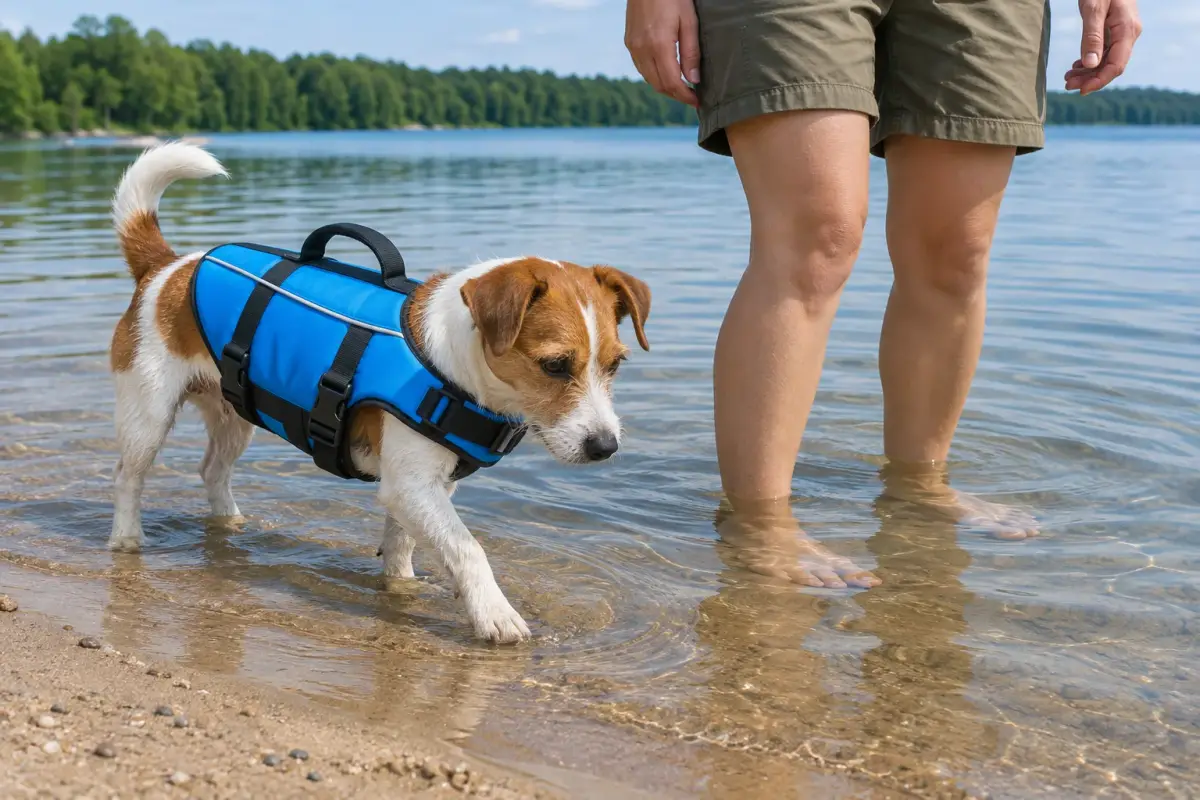
No, not all dogs can swim, and even good swimmers tire. Breeds built for water, such as Labradors, usually take to it, while short-legged, long-bodied, stocky and flat-faced dogs often struggle to stay level. The AKC recommends a properly fitted life jacket for any dog learning to swim, any dog on a boat and any dog likely to tire, and says dogs should never be left unsupervised in or near water.
By Matt GarnettUpdated November 14, 20264 min read3 sources
Which dogs struggle to swim
Some breeds were developed to work in water, and the AKC names Labradors and Nova Scotia Duck Tolling Retrievers among them. Others carry their weight in a way that makes floating hard. The AKC notes that short-legged and long-bodied breeds can struggle, and that dogs with stocky bodies or short muzzles may tire quickly in the water.
Flat-faced dogs such as Bulldogs and Pugs have to tilt their heads up to keep their noses clear, which tips the back end down. Lean sighthounds such as Whippets are less buoyant, per the AKC. Puppies and senior dogs have less stamina. None of this means these dogs can never enjoy water, but it does mean a life jacket is not optional.
Does my dog need a life jacket?
The AKC says even strong swimmers can benefit from one, and it singles out dogs with stocky bodies or short muzzles, sighthounds, puppies, seniors, dogs facing strong currents and dogs on boats who might fall overboard. Every dog learning to swim should wear one. A dog that jumps off a dock in a lake is in very different conditions from one paddling in a calm pool.
Life jackets give more coverage and float, which suits boating and open water. Lighter vests are often enough for a supervised pool. Whichever you pick, look for a sturdy grab handle on the back so you can lift your dog out, a leash ring, bright colors with reflective trim so you can see your dog from a distance, and adjustable straps.
How to measure your dog for a life jacket
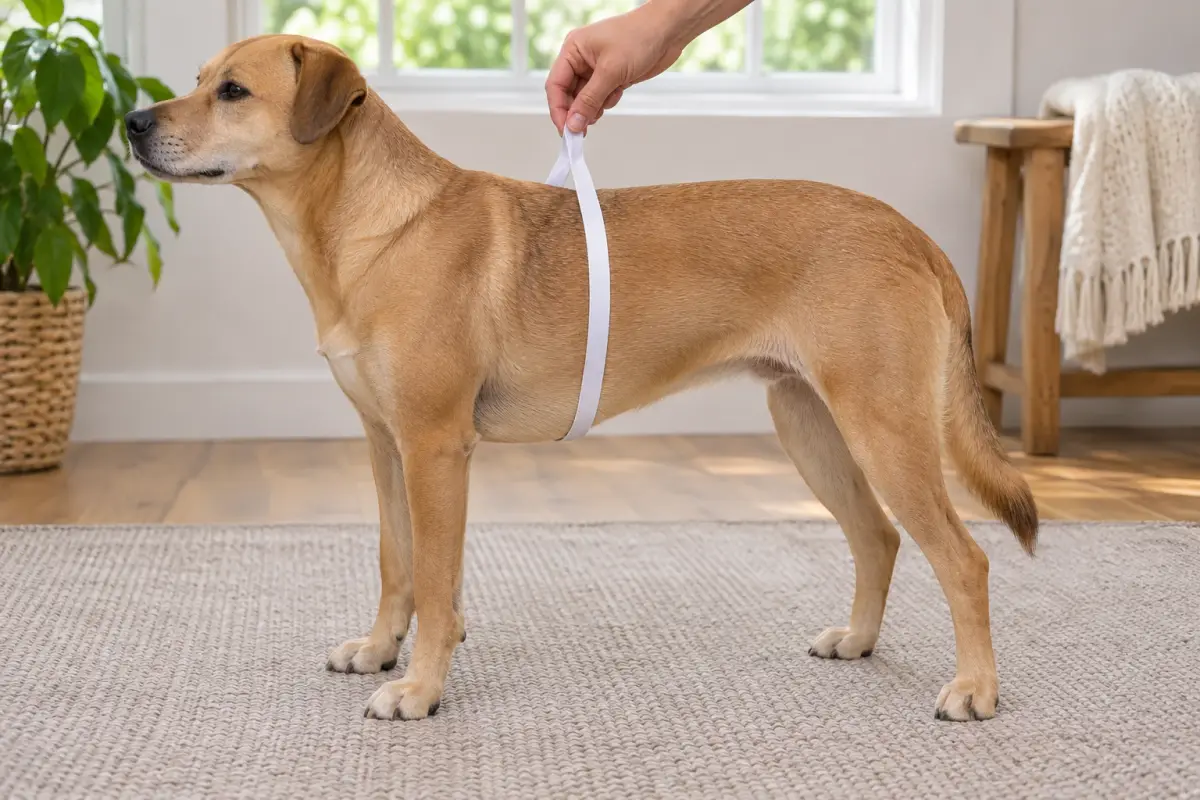
Step 1: Use a soft tape measure around the neck, around the widest part of the rib cage and around the hips. Step 2: Measure the length of the back from the base of the neck to the base of the tail. Step 3: Weigh your dog. If you have no pet scale, weigh yourself, then weigh yourself holding your dog and subtract the difference.
Step 4: Compare all three measurements with the brand's own size chart, because sizes vary widely between makers. Rib cage girth usually decides the size. Step 5: Check the fit at home. It should be snug, with room for two fingers under the straps, as the AKC suggests. Your dog should be able to sit, lie down and swim level without the jacket riding up.
How to introduce your dog to water
Start in shallow water with a gentle slope rather than a deep pool edge. Use a toy or treats to encourage your dog in, and never pull or toss a dog into water, as the AKC warns. Let your dog get used to wet feet first, then move a little deeper while you praise them. Go back to shallow water whenever your dog looks worried.
Show your dog the way out every time. In a pool, that means the steps or a ramp, and the AKC suggests practicing until your dog heads for the exit on their own. Keep early sessions short. The AKC suggests a maximum of about 10 minutes at first, and recommends that water plus air temperature add up to at least 100°F.
Pool and lake safety for dogs
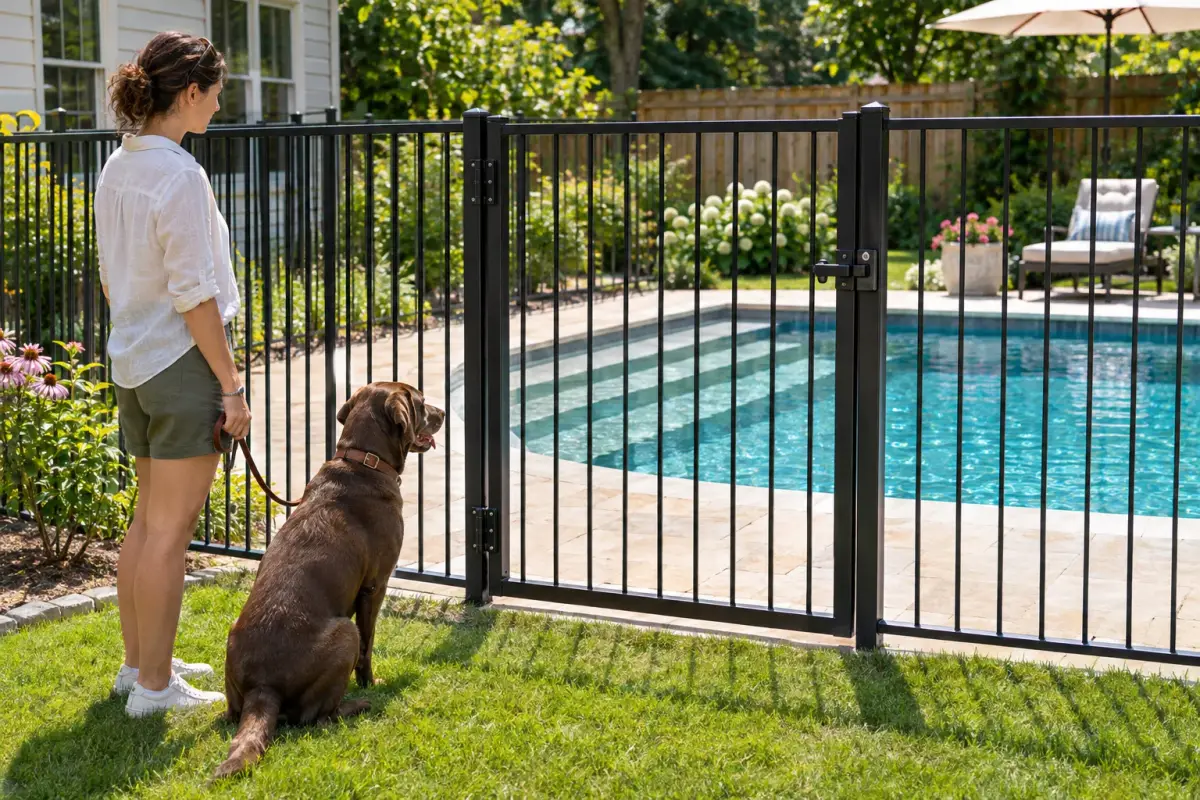
Never leave a dog alone near a pool, lake or beach, a point both the AKC and ASPCA make. A dog that falls into a pool with no ramp can tire trying to climb the smooth sides, so a pool ramp is worth having if your dog spends time in the yard. Fence the pool if your dog is ever outside unsupervised.
The ASPCA advises against letting dogs drink pool, lake or ocean water, and suggests rinsing your dog after a swim to remove chlorine or salt from the coat. Dry the ears well afterward. After cold water, watch for shivering or a limp tail that does not wag, which the AKC says are reasons to see your vet.
Signs your dog is in trouble in the water
A dog that is tiring often swims more upright, with the back end sinking and the front paws slapping the surface. Frantic splashing, a head that dips under, coughing or a sudden change of direction toward you are all signs to get your dog out now. Dogs can become disoriented and lose track of the exit.
After a swim, call your vet if your dog coughs a lot, breathes fast, seems weak or vomits, or if you think they swallowed a lot of water. The AKC also mentions vomiting after swimming as a warning sign worth taking seriously.
This page is general information, not veterinary advice, and it cannot replace an examination by the vet who knows your pet.
Common questions
Are some dog breeds unable to swim?
Some breeds find it very hard. Flat-faced, stocky, short-legged and long-bodied dogs often struggle to stay level, and lean sighthounds are less buoyant. With a life jacket and supervision, many can still enjoy shallow water.
How should a dog life jacket fit?
Snugly. The AKC suggests you should be able to fit two fingers under the straps, and your dog should be able to swim level, sit and lie down without the jacket slipping or riding up.
Is pool water bad for dogs?
Dogs should not drink it. The ASPCA advises against letting dogs drink pool, lake or ocean water, and recommends rinsing your dog after swimming to remove chlorine or salt from the coat.
Sources we checked
This guide is general information, not veterinary advice. If your pet is unwell or injured, contact your veterinarian.


