






Care & how-to
Dog Pool Safety: How to Keep Your Dog Safe Around a Pool
Dog pool safety comes down to four habits: keep the pool fenced or covered so your dog cannot reach it alone, teach your dog where the exit is, put a fitted life vest on dogs that tire or struggle, and never leave a dog unsupervised near the water. Even strong swimmers can fail to find the way out of a pool. This guide covers each habit and what to do afterward.
By Matt GarnettUpdated November 14, 20265 min read3 sources
Fence or cover the pool first
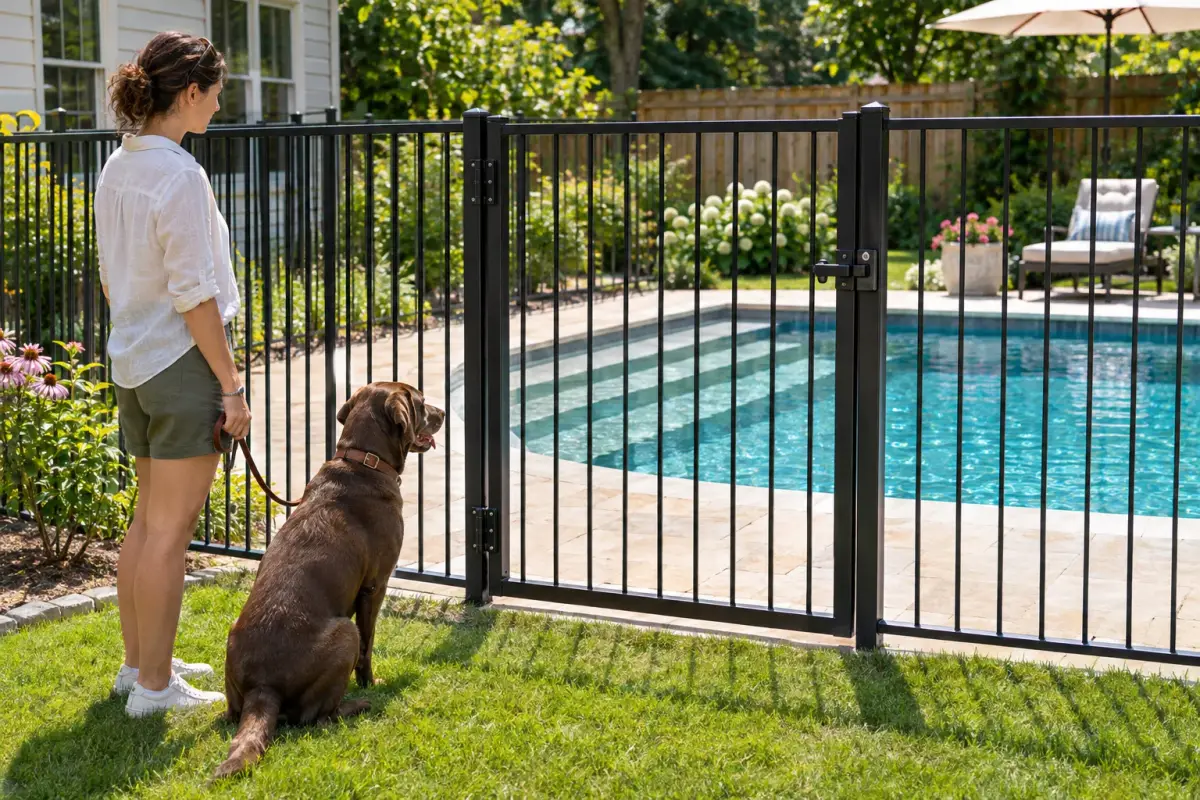
The first rule of pool safety for dogs is that a dog should never be able to swim without you watching. VCA Animal Hospitals advises fencing off and covering a pool so a dog cannot get into the water on its own. A gate your dog cannot nose open, and a cover that is secured rather than draped, matter most when you are indoors, on a call, or distracted.
Think about the times a fence is most likely to fail: a gate left ajar after guests leave, a puppy squeezing through a gap, or a dog that follows a ball over a low barrier. Walk the edge of your yard from a dog's point of view and look for gaps. If a dog can slip out of the house and reach the water while nobody is outside, the setup is not safe yet, however well the dog swims.
Teach your dog how to get out
Many pool accidents are not about swimming at all. Dogs can paddle happily but fail to find the way out, because a pool wall is slick and steep and every edge looks the same. AKC advises teaching a dog to climb out without help. Start in the shallow end, point your dog toward the steps or ramp, and stay beside the exit so the dog learns that this one spot is the way to safety.
Repeat the exercise from different spots in the water until the dog heads for the exit on its own. A gradual slope into the water helps, which is why a pool ramp or wide shallow steps are worth considering if your pool has a steep edge. Move to deeper water only gradually, and if your dog seems overwhelmed, go back to the shallows and let it calm down before trying again. Our dog life jackets can add a safety margin while the dog is still learning.
Use a life vest when it makes sense
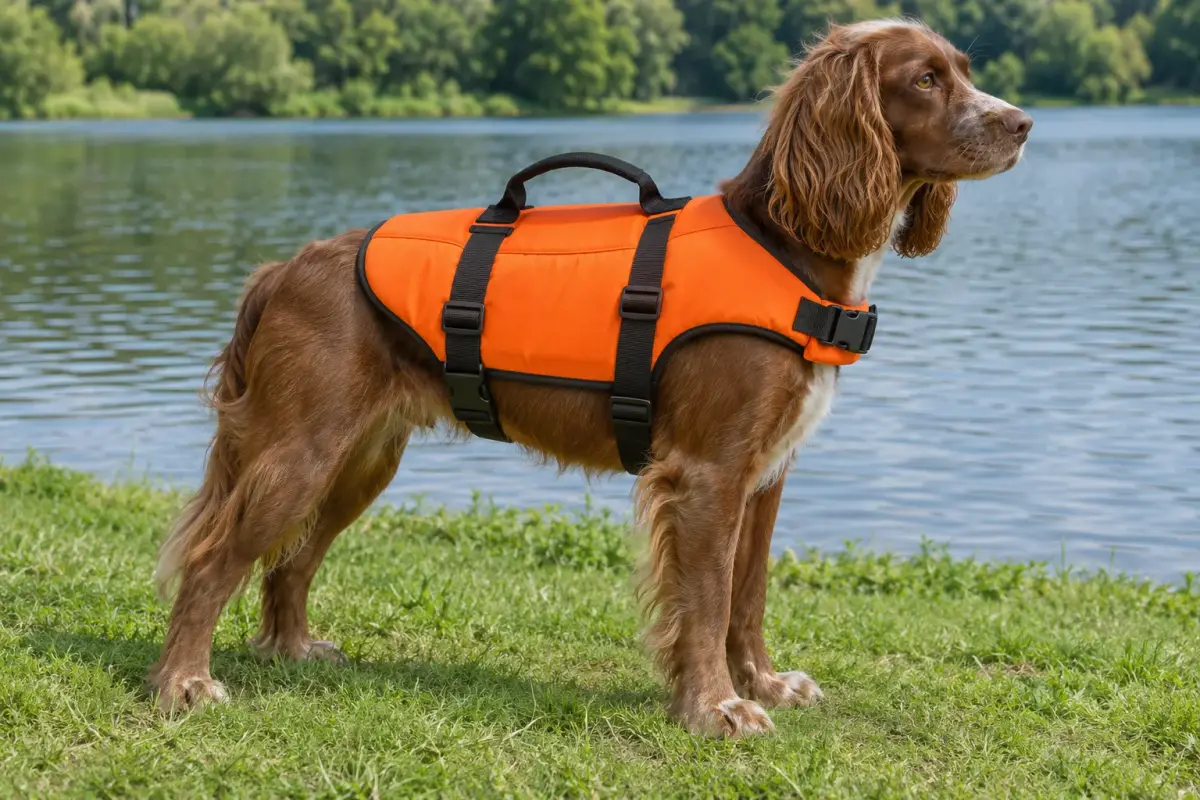
AKC notes that some breeds have a weight distribution that makes swimming difficult without help, and that short-legged or long-bodied dogs can struggle. Stocky, short-legged breeds such as bulldogs and pugs should wear a life jacket any time they are in the water. A vest helps keep the back level so all four legs paddle, and it helps a dog float while it works out where the edge is. A handle on the back lets you lift a tired dog out quickly, and a style like the pet life jacket type with adjustable straps can keep fitting as a young dog grows.
Fit matters as much as having one. AKC suggests checking that you can slide two fingers under the straps, and that the dog can swim level, sit and lie down while wearing it. Too loose and it slips off, too tight and it restricts movement. Introduce it at home first with treats, then test it in shallow water on a leash before the first real swim. Jackets cover more of the body and suit deep water or boating, while lighter vests suit casual pool swimming. Our guide to choosing a dog life jacket explains the types. A shark-fin design such as the dog life vest summer shark is one style of vest, and fit still has to be checked on your own dog.
Supervision, rest and water conditions
AKC states plainly: never leave your dog unsupervised in or near the water. Stay close enough to reach the dog, and consider wearing a life vest yourself when you swim with a dog, because a panicked dog may climb on you. Dogs that chase a toy or another dog can suddenly find the bottom has dropped away, so keep play near the shallow end.
Swimming is hard work, so build in rests. AKC recommends keeping swim sessions short, with a maximum of 10 minutes, to reduce the risk of water toxicity from swallowing too much water, and vomiting after a swim is a common sign. It also says the water temperature plus the air temperature should total at least 100°F before swimming, because cold water can cause hypothermia or cold tail, a limp tail that stops wagging. Provide shade and a bowl of fresh water so your dog is less tempted to drink the pool.
After the swim: rinse, dry and watch
VCA advises rinsing your dog after swimming, since chlorine, salt and debris can irritate skin, and cleaning the ears with a cleaner that contains a drying agent to lower the risk of ear infections. A towel or one of our dog drying coats speeds up drying on a cool day. Keep the leptospirosis vaccine up to date if your dog also swims in ponds or streams, as VCA notes the disease spreads through contaminated water.
Call your vet the same day if your dog coughs persistently, vomits repeatedly, seems unusually tired or breathes with effort after a swim. If a dog was pulled from the water after struggling or going under, go to an emergency vet right away, even if it seems fine, because trouble can show up later. Check with your vet before swimming at all if your dog has arthritis, heart disease or epilepsy, since VCA says those conditions can make swimming risky.
This page is general information, not veterinary advice, and it cannot replace an examination by the vet who knows your pet.
| When | Poolside check |
|---|---|
| Before opening the gate | Locate the steps or ramp your dog can use to leave the water. Put fresh drinking water and a towel nearby. |
| While the dog is in the pool | Agree on who is watching. If that person needs to leave, bring the dog out or hand supervision directly to another adult. |
| After swimming | Bring your dog outside the pool enclosure and check that the gate has latched before putting the swimming gear away. |
Common questions
Can dogs drink pool water?
It is best to prevent it. Both VCA and AKC advise trying to stop dogs swallowing swimming water, which is hard to avoid, so offer fresh drinking water and shade, and keep swim sessions short to limit how much your dog swallows.
Do dogs need a life jacket in a pool?
Not every dog does, but AKC says stocky, short-legged breeds such as bulldogs and pugs should wear one any time they are in the water, and a vest helps any dog that tires, is learning, or is swimming in deeper water.
How do I teach my dog to get out of the pool?
Start in the shallow end and point your dog toward the steps or ramp, staying near the exit. Repeat from different spots until your dog heads for it alone, and only move to deeper water gradually.
How long should a dog swim at one time?
AKC suggests keeping sessions short, with a maximum of 10 minutes, and letting your dog rest on land when it seems overwhelmed. Stop sooner if your dog seems tired, shivers or reluctant to continue.
Should I rinse my dog after the pool?
Yes. VCA advises rinsing after swimming because chlorine, salt and debris can irritate the skin, and cleaning the ears with a drying-agent cleaner afterward to reduce the chance of ear infections.
Sources we checked
This guide is general information, not veterinary advice. If your pet is unwell or injured, contact your veterinarian.


