






Buying guides
Best Dog Life Jacket: How to Choose One That Fits and Floats
The best dog life jacket has flotation under the chest and a float panel under the chin to keep the head up, a strong grab handle on the back, and straps that fit snugly without restricting the legs. Bright colors and reflective trim help you see your dog in the water. Size by chest girth and weight, and replace the jacket as soon as the foam or straps wear, because the AKC warns a worn-out life jacket can be dangerous.
By Matt GarnettUpdated November 14, 20264 min read3 sources
What matters most: flotation, handle and fit
The AKC calls putting your dog in a life jacket one of the most important steps before any water activity, saying a properly fitted jacket in good condition can help prevent drowning accidents. Not every dog is a natural swimmer, and even strong swimmers tire, get cold or are caught by currents. A life jacket buys time, which is what matters in an emergency.
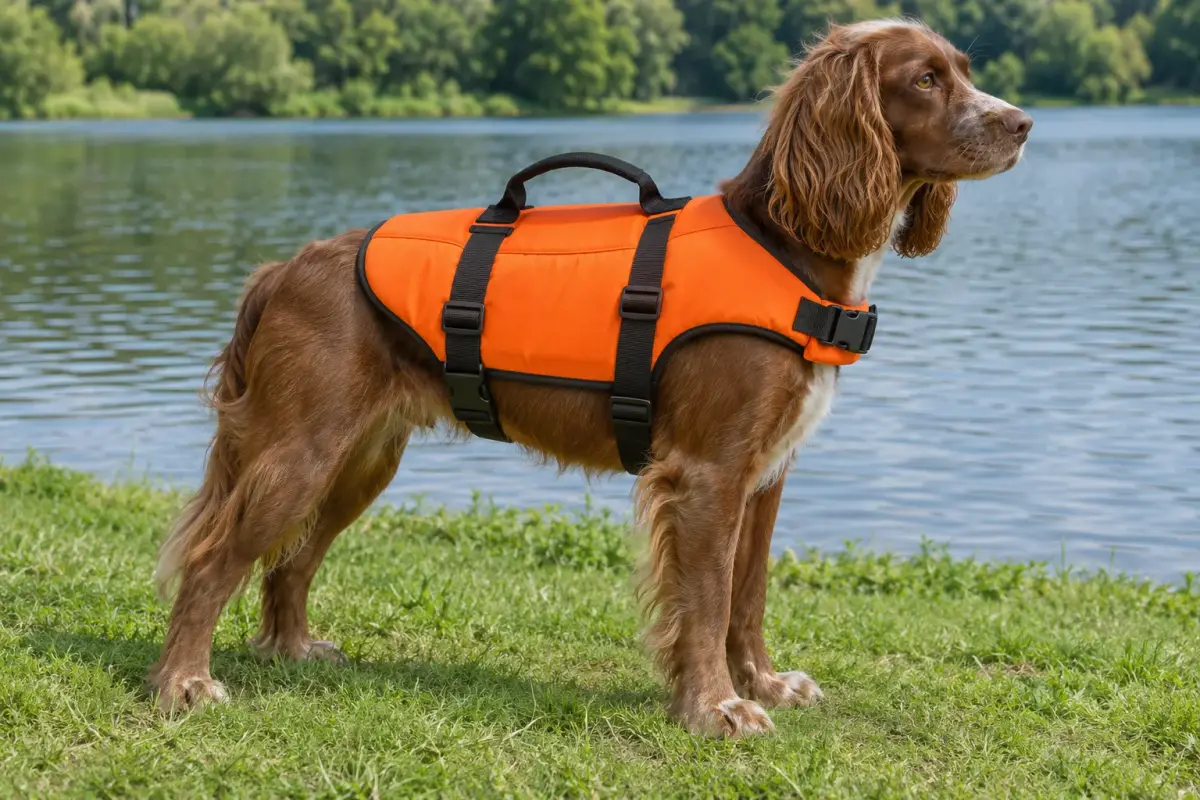
Three features make a jacket useful. Flotation should sit along the chest and belly, plus a panel under the chin that supports the head. A sturdy handle on the back, stitched into the jacket rather than glued, lets you lift your dog out of the water or into a boat. And the fit must be snug: the AKC quotes a hydrotherapist who has seen dogs get a front leg caught in a loosely fitted jacket.
The main styles compared
Vest-style jackets, like this dog life vest, with a foam panel on the back and sides, a chin float and belly straps are the standard choice and suit most dogs. Full-coverage jackets add more foam under the chest and belly, which suits dogs that are new to swimming, heavy, short-legged or flat-faced. Low-profile neoprene vests are lighter and less buoyant; they suit strong swimmers doing water sports rather than nervous swimmers.
Look at the hardware. Side-release buckles should be large and easy to operate with wet hands. A leash ring lets you clip on for boat docks and shore walks. Some jackets have two handles, front and back, which helps with large dogs. Reflective trim and bright colors such as orange or yellow make a dog much easier to spot.
Best jacket for each dog
For short-legged, deep-chested or flat-faced breeds such as Bulldogs, Pugs, Dachshunds and Corgis, choose a full-coverage jacket with a generous chin float, since these dogs often struggle to keep their heads up. For small dogs on boats and paddleboards, a jacket with a strong handle is the priority, so you can lift your dog in one motion.
For confident retrievers and water dogs (see life jackets for large dogs), a well-fitted vest-style pet life jacket with a sturdy handle is enough for most outings, and still worth wearing on boats and in open water. For senior dogs or dogs with joint problems, more flotation reduces effort. For puppies, buy an adjustable jacket and introduce it in shallow water, since sizing changes quickly.
What to avoid
Avoid jackets that ride up over the head when your dog swims, jackets whose straps rub the armpits, and jackets with only a flimsy plastic handle. Avoid buying a size up to allow for growth; a loose jacket shifts in the water and can trap a leg. Avoid dark colors that disappear in water, especially in lakes and the sea.
Never rely on a life jacket instead of supervision. Keep your dog away from strong currents, rip tides and cold water, and do not let it drink from the sea or from water with algae blooms. If your dog inhales water, coughs persistently or seems lethargic after swimming, call your vet, because problems can develop hours after a near-drowning.
How to measure and fit a dog life jacket
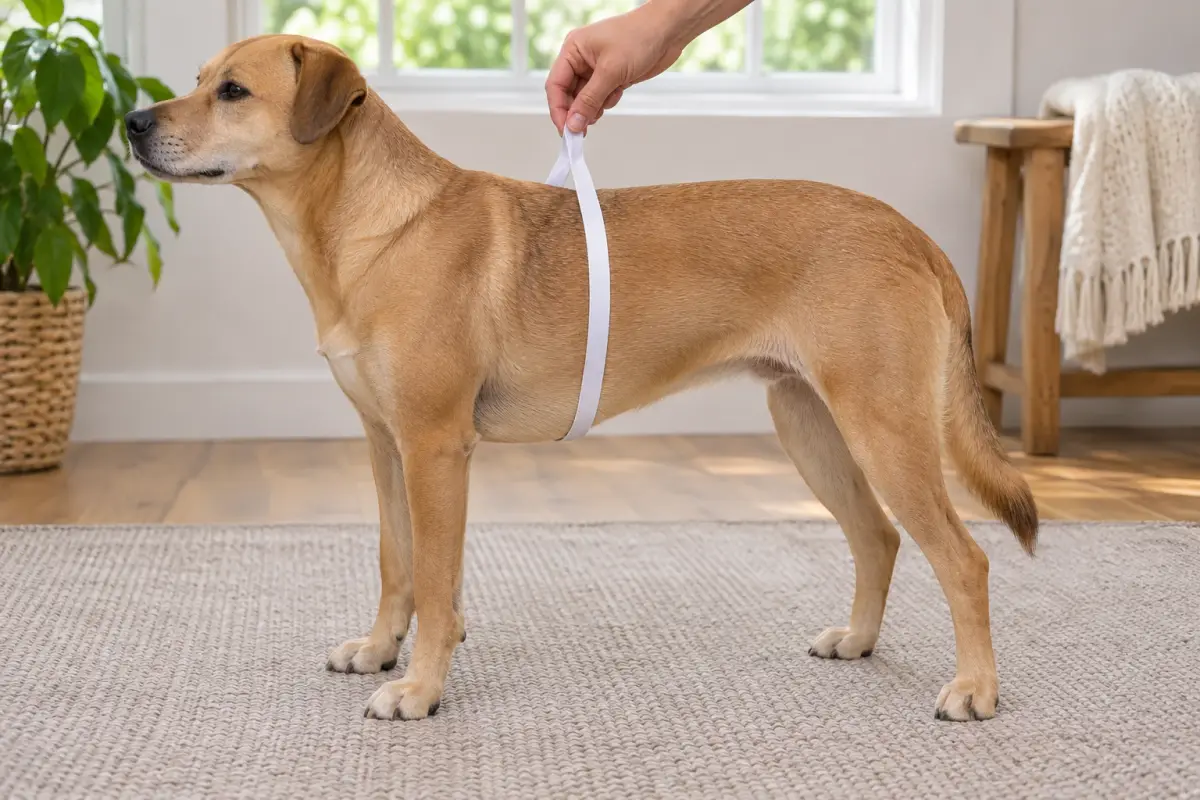
Measure the chest at its widest point just behind the front legs, the neck where a collar sits, and the back length from the base of the neck to the base of the tail. Most jackets are sized by chest girth with a weight range; if your dog falls between sizes, follow the maker's advice, which usually favors the snug fit. Then adjust every strap with the jacket on.
Check the fit at home. You should be able to slide two fingers under the straps, and the jacket should not slide when you lift your dog gently by the handle. Then test it in calm, shallow water. The AKC advises inspecting the jacket for wear before each trip and making sure it fits securely without restricting movement.
Care and when to replace it
Rinse the jacket in fresh water after every use, especially after salt water or chlorinated pools (for a day out, see taking your dog to the beach), and let it dry fully out of direct sun, which breaks down foam and fabric. Store it flat or hanging, never crushed under heavy gear, so the foam keeps its shape.
Replace the jacket when the foam is compressed, cracked or waterlogged, when straps fray, buckles crack or the handle stitching loosens, or when your dog has grown or changed weight. Most jackets last a few seasons of regular use. A jacket that no longer floats your dog high enough has done its job and should go. Browse our dog life jackets when it is time for a new one.
Common questions
Does my dog need a life jacket if it can swim?
It is still wise on boats, in open water, in currents and in cold water, where even strong swimmers tire. The handle also lets you lift your dog out quickly in an emergency. See also can all dogs swim.
How should a dog life jacket fit?
Snug, with two fingers of room under the straps. It should not slide when you lift your dog by the handle, and it should not ride up over the head when your dog swims.
What is the best life jacket for small dogs?
A jacket with a chin float and a strong, well-stitched back handle, sized by chest girth. Small dogs on boats and paddleboards often need lifting, so the handle matters most.
Do flat-faced dogs need a special life jacket?
Flat-faced and short-legged breeds benefit from full-coverage jackets with a generous chin float, because many struggle to keep their heads above water. Introduce it in shallow water first.
Sources we checked
This guide is general information, not veterinary advice. If your pet is unwell or injured, contact your veterinarian.


