






Care & how-to
Sour Crop in Chickens: Signs and Veterinary Assessment
A chicken with a persistently abnormal crop, poor appetite, or a sour odor needs prompt advice from a poultry veterinarian. Sour crop is associated with yeast overgrowth, but an enlarged crop alone does not establish that diagnosis. Impaction and other problems can interfere with normal emptying. Do not invert the bird, squeeze fluid out, or select an antifungal treatment from an online photograph.
By Matt GarnettUpdated November 11, 20264 min read3 sources
Know what the crop normally does
University of Maryland Extension describes the crop as a temporary food-storage part of the digestive tract. A visible fullness after eating can be normal; feed later passes onward for further processing. The timing of an observation matters, so describe whether you noticed the change after a meal or before normal morning feeding.
A crop that remains unusually full before feeding deserves attention, particularly when the bird is also quiet or eating poorly. Do not repeatedly manipulate it to prove your suspicion. Record what you can observe calmly and ask a poultry veterinarian how the bird should be assessed.
Distinguish sour crop from other crop problems
The Maryland guide discusses impacted, pendulous, and sour crop as different problems that can interact. Indigestible material may obstruct normal movement, while an abnormally stretched crop may fail to empty properly. A swelling at the base of the neck therefore does not identify one treatment or establish that yeast is the only issue.
Merck describes candidiasis as an opportunistic digestive infection involving Candida organisms that can also occur normally in healthy birds. It notes that culture alone is not enough to establish disease. The veterinarian must interpret the bird’s condition and appropriate findings, rather than an owner diagnosing infection from a smell or photograph alone.
Avoid forced emptying and home flushing
Maryland specifically warns that aggressive massage of a fluid-filled crop can lead to aspiration pneumonia. Do not turn a chicken upside down, squeeze fluid toward its mouth, or attempt a home crop wash. These actions can create another serious problem while leaving the original cause unresolved.
Ask the clinic what the bird should have access to while awaiting examination and how to transport it. Do not syringe water, oil, salt mixtures, or food into a weak bird without instruction. A proposed home remedy should not delay professional assessment of a chicken that is losing condition or struggling to eat.
Review recent treatment and flock hygiene
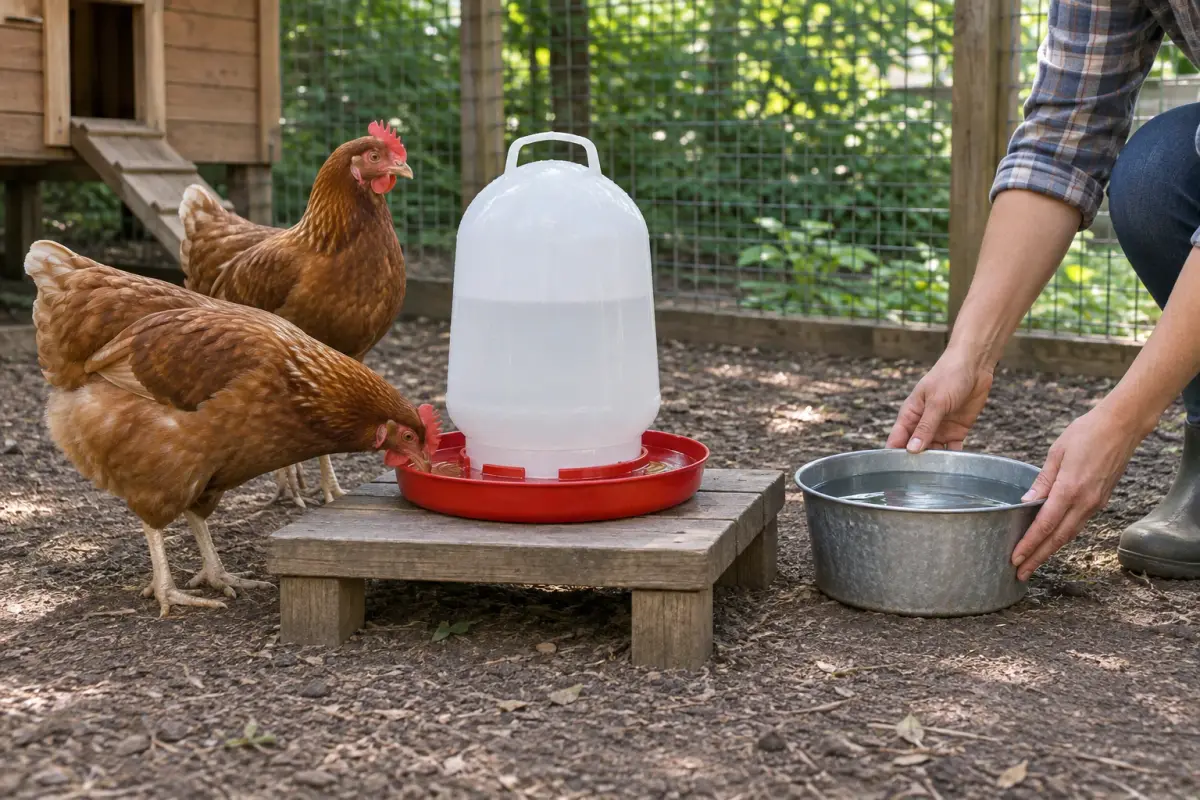
Merck identifies disruption of the normal digestive microbial balance, including after antimicrobial use, among factors associated with candidiasis. Unsanitary drinking equipment is another concern it describes. Give the veterinarian the names and timing of any products used, including medicines obtained for a different bird or suggested informally.
Inspect water containers, feed condition, and the cleaning routine without assuming that finding a dirty container proves the diagnosis. Remove spoiled material and maintain clean drinking facilities. Changes that improve hygiene support flock care, but they do not establish that an affected bird no longer needs an examination.
Leave treatment decisions to the poultry veterinarian
Treatment depends on the actual crop problem and any underlying contributor. Do not choose a human yeast medicine, antibiotic, copper preparation, or supplement on your own. Merck’s professional discussion includes important treatment limitations, which is another reason not to convert an internet mention of a product into a home prescription.
Tell the veterinarian whether the bird produces eggs for eating, and obtain clear instructions about any restrictions associated with prescribed treatment. Keep a written plan and ask when the bird should be rechecked. Persistent weight loss, reduced intake, or recurrence needs follow-up rather than another unplanned treatment trial.
Recognize urgent illness and prevent repeat access problems
Seek urgent veterinary attention for breathing difficulty, collapse, marked weakness, or inability to swallow normally. Contact the veterinarian promptly for persistent poor intake or a crop that does not seem to empty normally. Do not wait several days for severe changes while repeatedly trying massage or food additions.
Review access to string, plastic, long fibrous scraps, and other indigestible material described in the Maryland guide. Compare Chicken Coops and Chicken Runs against practical cleaning access and secure waste management. Good daily maintenance reduces avoidable exposures while the veterinarian addresses the affected bird.
This page is general information, not veterinary advice, and it cannot replace advice from a veterinarian who treats poultry.
Common questions
Does a full crop always mean sour crop?
No. A crop may be full after a meal, and several different problems can affect emptying. Timing, appetite, overall condition, and veterinary findings matter more than an isolated photograph of swelling.
Can I squeeze or massage a fluid-filled crop empty?
Do not attempt forced emptying. Maryland Extension warns that aggressive massage of a fluid-filled crop can cause aspiration pneumonia. Ask a poultry veterinarian about examination and immediate care instead.
Should I choose an antifungal treatment myself?
No. Yeast overgrowth is only one possible issue, and treatment needs to fit the actual bird and findings. Discuss any previous medicines and follow the poultry veterinarian’s directions, including egg-use restrictions.
When is a crop problem urgent?
Breathing difficulty, collapse, marked weakness, or inability to swallow normally needs urgent veterinary attention. Persistent poor appetite or an unusually full crop before feeding also warrants prompt advice rather than prolonged home experimentation.
Sources we checked
This guide is general information, not veterinary advice. If your pet is unwell or injured, contact your veterinarian.


