






Buying guides
The Smallest Cat Breeds: Sizes, Personalities and Care
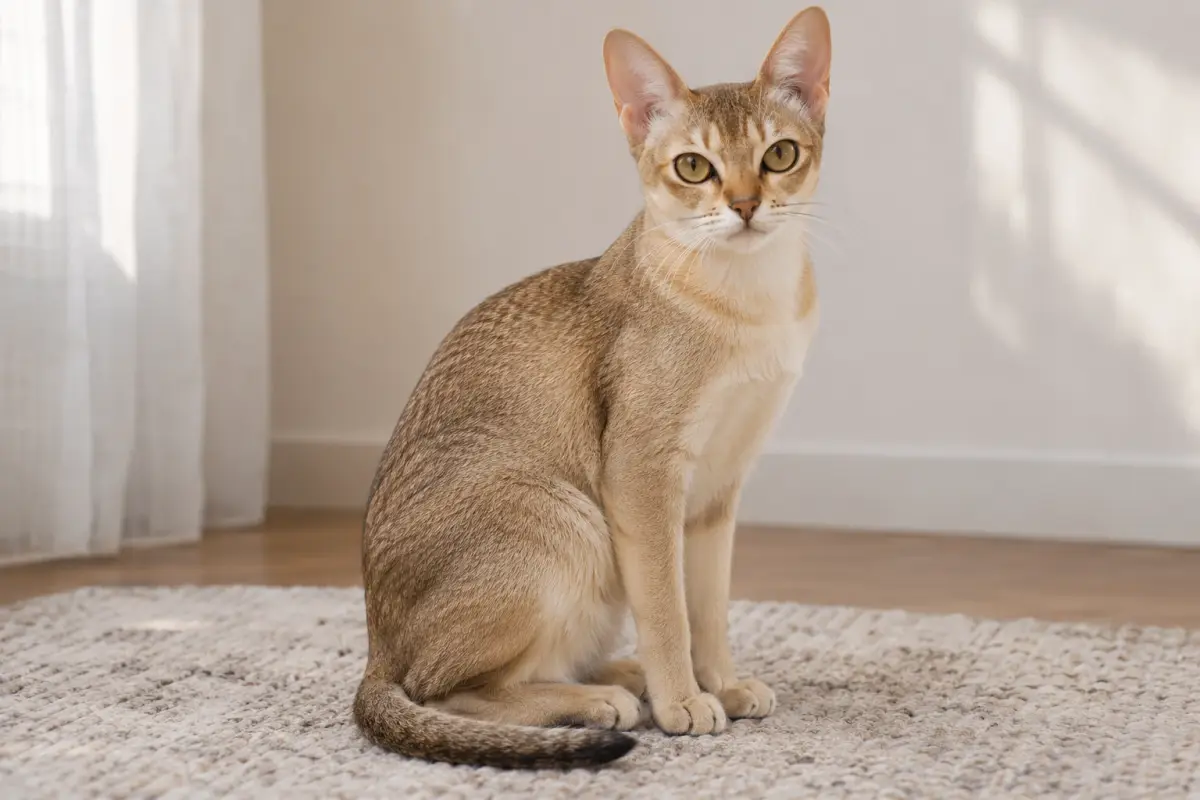
The Singapura is the smallest pedigreed cat breed you are likely to meet: the Cat Fanciers' Association puts adult males at 6 to 7 pounds and females at 4 to 5. Close behind are the Cornish Rex, Siamese, Devon Rex and American Curl, most of them in the 5 to 10 pound range. Small does not mean quiet: most of these breeds are busy, playful and people-focused, and they need more attention than their size suggests.
By Matt GarnettUpdated November 14, 20265 min read4 sources
Side by side
Weights below are VCA Animal Hospitals' ranges unless noted. Singapura: 4 to 8 pounds (CFA: males 6 to 7, females 4 to 5), lifespan 9 to 15 years, full maturity at about 2 years. Cornish Rex: 6 to 8 pounds, 15 to 20 years. Siamese: 5 to 8 pounds, 12 to 15 years. American Curl: 5 to 10 pounds, 15 to 18 years, up to 3 years to mature. Devon Rex: 7 to 12 pounds (CFA: typically 6 to 9), 15 to 20 years.
Energy: the Singapura, Cornish Rex and Devon Rex are the most active; the American Curl is calmer. Grooming: all five are low maintenance, and VCA rates both Rex breeds and the Singapura 1 out of 5 for shedding. Voice: the Siamese is the big talker, rated 5 out of 5 for chattiness. Training: VCA rates the Rex breeds 5 out of 5 for ease of training. Best for: people who are home a lot and want an interactive, playful cat rather than a sleepy lap ornament.
Singapura: tiny and tireless
The CFA calls the Singapura one of the smallest of all pedigreed cats, and VCA describes it as surprisingly strong and muscular for its size. It has a short, silky, sepia-ticked coat with no undercoat, huge almond-shaped eyes and oversized ears. The breed traces its roots to the streets of Singapore and was brought to the United States in 1975; it is still rare, with few breeders.
Do not expect a napper. VCA describes the Singapura as extremely energetic, a cat nicknamed the Velcro Cat for wanting to be with its people all the time, and one that may paw you awake early to play. It enjoys learning tricks, chasing bubbles and opening cabinets. Because it can squeeze into narrow gaps, check behind appliances and inside cupboards before you close them.
Cornish Rex and Devon Rex: the curly-coated pair
Both Rex breeds have short, curly coats from natural mutations, and both are small to medium cats with fine bones and solid muscle. The Cornish Rex has a soft, close-lying wave and no guard hairs, an egg-shaped head and very large ears; VCA calls it clown-like, extremely athletic and kitten-like well into adulthood. The Devon Rex has a pixie face, a wedge-shaped head and enormous bat-like ears, and prefers perching on shoulders to sitting in laps.
Their thin coats mean little shedding and little brushing, but they also mean these cats feel the cold and seek out warm spots, so provide a heated or covered bed in winter. VCA notes the Cornish Rex benefits from regular baths and the Devon needs its ears cleaned to prevent wax buildup. Despite the claims, VCA says neither breed is hypoallergenic, though the Devon sheds less than most cats.
Siamese: small, sleek and talkative
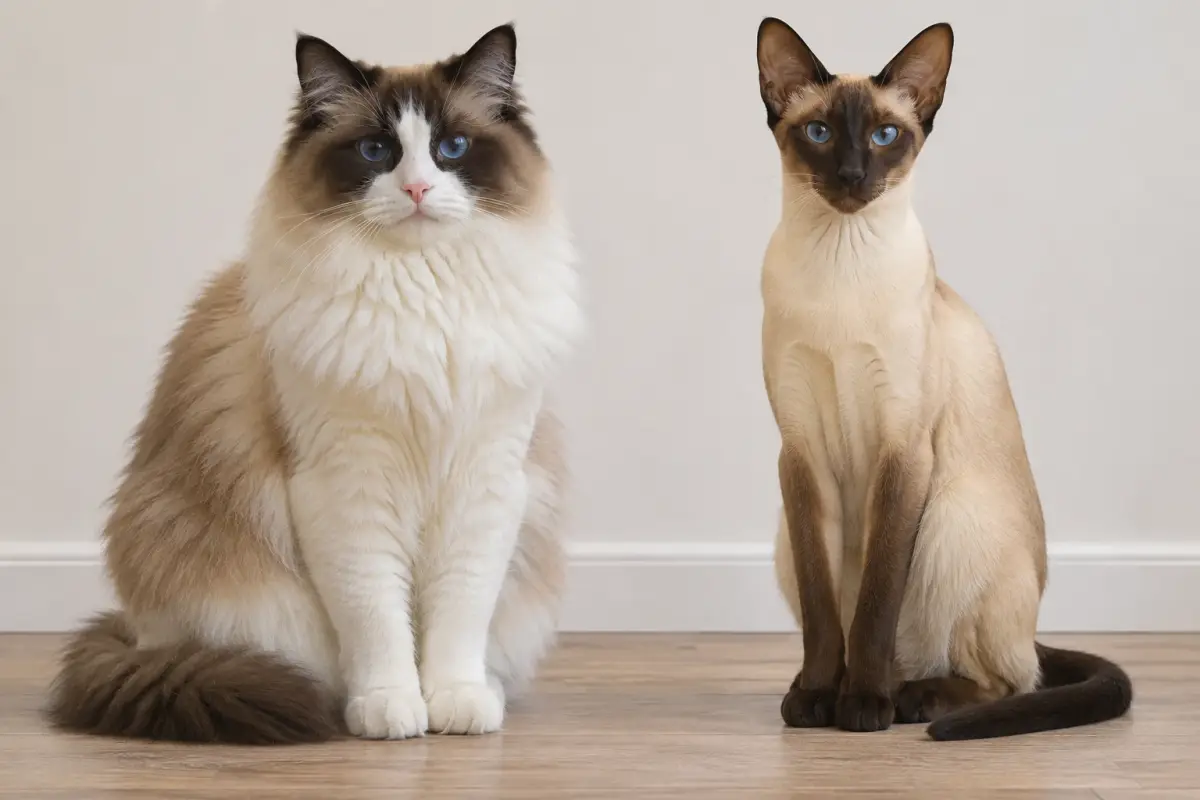
The Siamese is one of the oldest domesticated breeds, dating to 14th-century Siam, and among the first breeds the CFA accepted in 1906. VCA lists it at 5 to 8 pounds, with a long, lean body, a triangular head, blue eyes and darker points on the ears, face, tail and feet. The short coat needs only a weekly comb and sheds little.
VCA describes the Siamese as extremely active, very loving and a big talker, with a range of sounds including one that resembles a baby's cry. It often does best with another cat for company, ideally another Siamese, and can become anxious and over-groom when left alone too much. Determined climbers, Siamese need sturdy cat trees and shelves so they do not climb the drapes.
American Curl: small, calm and adaptable
The American Curl is a medium-built cat at 5 to 10 pounds, recognizable by ears that curl back toward the back of the head. VCA notes that every kitten is born with straight ears, which begin to curl within a couple of weeks. It comes in shorthaired and longhaired versions, and even the longhair needs only weekly brushing.
Of the five breeds here, the Curl is the easiest fit for a calmer household. VCA describes it as loyal, affectionate and adaptable, cuddly but not clingy, and not as energetic as an Abyssinian or Siamese. It welcomes other pets and people of all ages, likes to be the center of attention, and can learn to fetch.
Living with a small cat
A small, active cat needs vertical space more than floor space: a sturdy cat tree, wall shelves or a window perch give it somewhere to climb that is not your curtains. Daily interactive play with a wand toy matters more for these breeds than for a placid one. Our guide to how to entertain a bored cat has ideas.
Small cats are easy to overfeed because the right portion looks tiny, and the Rex breeds in particular have appetites bigger than their frames. Ask your vet what a healthy weight is for your cat, and weigh it every few months. A small cat can also slip out an open door or into a gap in seconds, so check that window screens are secure and keep up regular vet checkups.
This page is general information, not veterinary advice, and it cannot replace an examination by the vet who knows your pet.
Common questions
What is the smallest cat breed?
The Singapura is usually named the smallest pedigreed breed. The CFA puts adult males at 6 to 7 pounds and females at 4 to 5 pounds, and VCA describes it as one of the tiniest breeds.
Are small cat breeds good for apartments?
Many are, as long as they get attention and climbing space. Singapuras, Rex cats and Siamese are energetic and social, so they need daily play and a cat tree more than extra square footage.
Are Devon Rex or Cornish Rex cats hypoallergenic?
No. VCA states that neither Rex breed is hypoallergenic, though the Devon Rex sheds less than most cats. No cat breed is allergen-free, so spend time with the breed before committing if you have allergies.
Do small cat breeds live longer?
Not reliably. VCA lists 15 to 20 years for the Cornish and Devon Rex, but 9 to 15 years for the Singapura and 12 to 15 for the Siamese. Care, weight and regular vet visits matter more than size.
Sources we checked
This guide is general information, not veterinary advice. If your pet is unwell or injured, contact your veterinarian.


