






Care & how-to
Hypoallergenic Cats: Which Breeds Are Easier on Allergies?
No cat breed is truly hypoallergenic. Every cat makes the protein behind most cat allergies, Fel d 1, and the Cat Fanciers' Association says even the low-shedding Devon Rex is not hypoallergenic. Some breeds, including the Devon Rex, Cornish Rex, Sphynx and the single-coated Balinese, shed less hair around the home, and small studies suggest certain cats carry less allergen on their coats. Whether one suits you depends on the individual cat and on you.
By Matt GarnettUpdated November 9, 20266 min read4 sources
Is there such a thing as a hypoallergenic cat?
Not in the sense most people hope. Hypoallergenic means less allergenic, and it is a selling point rather than a medical standard. People who are allergic to cats are reacting to proteins, chiefly one called Fel d 1, and every cat produces it regardless of breed, coat or color. The breed registries are careful about this: the Cat Fanciers' Association describes the Devon Rex as a cat that may be well tolerated by people sensitive to cats, then adds that contrary to popular belief it is not hypoallergenic.
What varies is how much allergen a particular cat carries and spreads. That depends on the individual cat, its coat and its grooming, and on how sensitive the person is. Some allergic owners live comfortably with one cat and react badly to its littermate. So treat any breed on this page as a better starting point, not a solution. Whichever cat you choose, our cat grooming supplies cover everyday coat and skin care.
Where cat allergens come from
Fel d 1 is made in a cat's skin and saliva. When a cat grooms itself, it coats its fur in saliva, and as that dries, the protein clings to hair and flakes of skin. Those particles are very small and light. They drift through the air, settle on furniture, walls and clothes, and can linger in a home long after the cat has gone.
This is why shedding matters, but only partly. A cat that drops a lot of hair spreads allergen-coated fur everywhere. A cat with less hair, or hair that stays in the coat, may leave less behind. But a hairless cat still has skin and saliva, so it still produces the allergen. Coat type changes how the allergen moves around your home, not whether it is there.
What the research shows
The evidence is thin. One small study, published in Clinical and Translational Allergy, compared six ordinary cats with eight cats from breeds sold as hypoallergenic. Samples wiped from the face and chest of the hypoallergenic cats held less Fel d 1, and allergic patients' antibodies reacted more weakly to them. The authors concluded these cats secrete and spread less of the allergen onto their fur.
Fourteen cats is far too few to rank breeds, and the result does not mean any one cat of a given breed will suit you. Claims you may read online that a breed produces a set percentage less Fel d 1 generally come from breeders or from products being sold, not from independent research. The safe reading is that some cats are easier for some people, and you can only find out with the cat in front of you.
Curly and low-shedding breeds
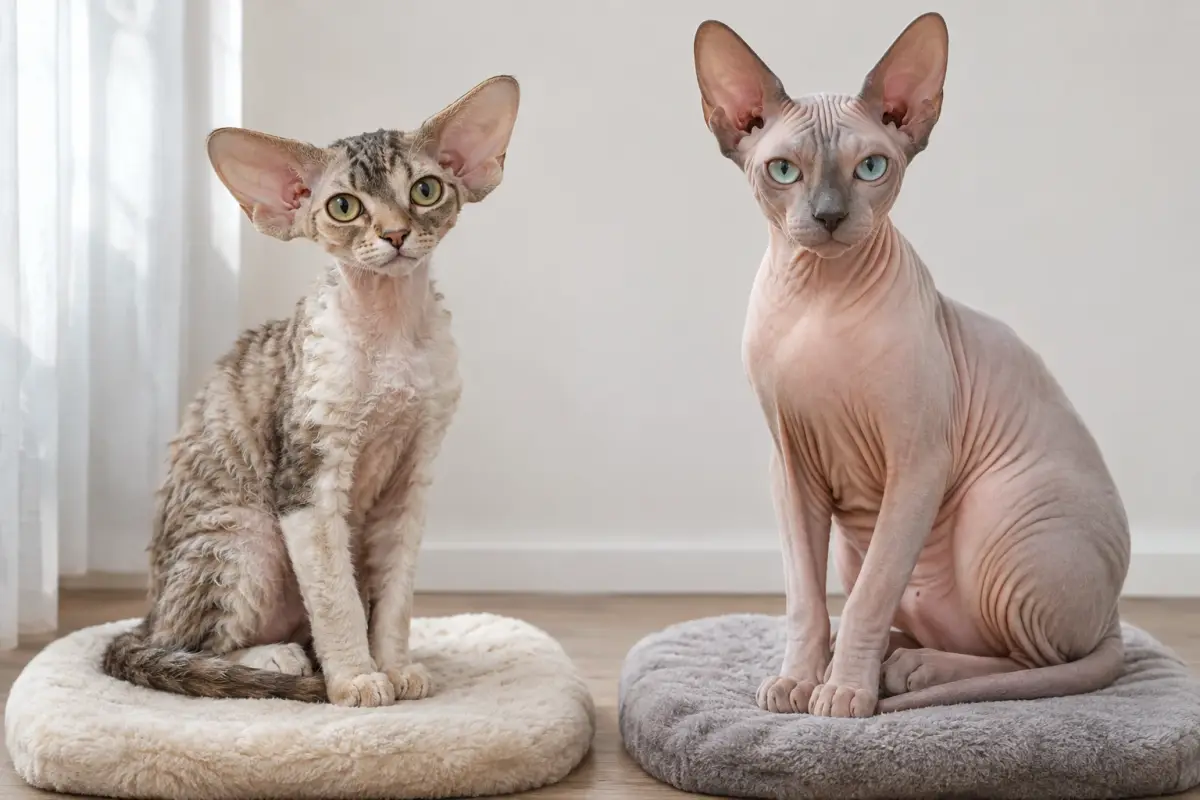
The Devon Rex has a short, wavy coat with very sparse guard hairs and typically weighs 6 to 9 pounds. The CFA describes it as shedding less than most cats while still not being hypoallergenic. Its coat can be fragile, and some Devons have thin or suede-like patches. The Cornish Rex has no outer guard hairs at all, leaving a soft, marcel-waved coat that the CFA says is prone to only minimal shedding.
The LaPerm, which comes in longhair and shorthair, has curls that hold loose hair in the coat much like a Poodle's, so shedding is minimal and the coat seldom mats. All three are active, people-focused cats. Their coats are easy to care for, but none of that changes the saliva on their fur, so allergic owners should still expect to react to some degree.
Single-coated breeds and the Siberian
Many cats have a soft undercoat beneath their outer hair, and that undercoat is a big source of shed fur. The Balinese and Javanese, longhaired relatives of the Siamese, are single-coated, with no downy undercoat, so they mat rarely and need only combing a few times a month. The Oriental is another minimal shedder. The Bengal has a soft, silky coat that the CFA says does not shed heavily compared with other shorthairs.
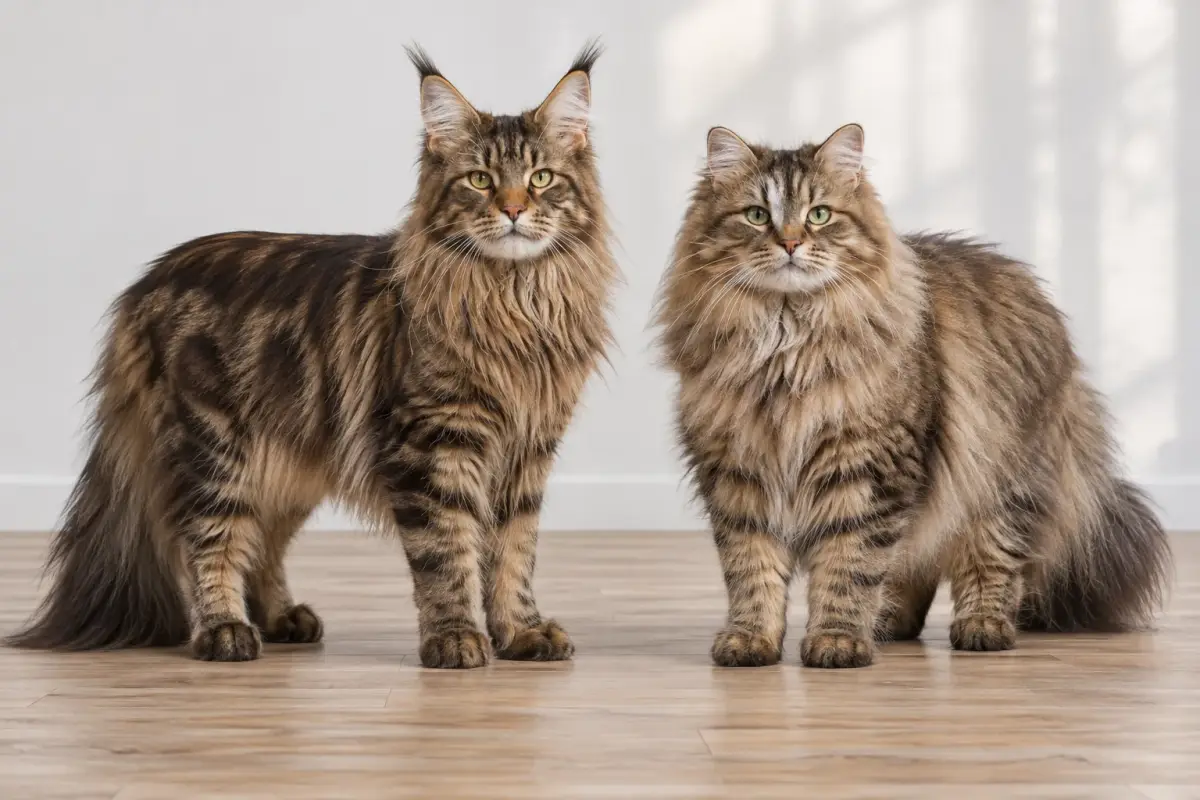
The Siberian is the breed most often promoted as allergy-friendly, which is odd at first sight: it is a large cat, males reaching 12 to 18 pounds and females 8 to 12, with a dense coat that thickens in winter. The claim rests on reports that some Siberians carry less Fel d 1, not on its coat. The CFA breed profile makes no allergy claim, and there is no strong independent evidence for the breed as a whole, so meet the individual cat.
The Sphynx: hairless but not allergen-free
The Sphynx is the best-known hairless cat. It is medium-sized and surprisingly heavy for its size, with warm, soft skin and often a fine fuzz on the nose, ears and tail. Because it has almost no hair to shed, there is little fur to collect on furniture, which some allergic owners find helpful.
The CFA notes that Sphynx skin is very oily and needs regular bathing, and that bathing lowers the amount of allergen on the skin. Without a coat to absorb those oils, an unbathed Sphynx can leave greasy marks on bedding and furniture. Plan on a bathing routine with a cat shampoo for life, ear cleaning, and protection from cold and strong sun. Ask your vet to show you how to bathe the skin without drying it out.
Living with a cat when you have allergies
Before you commit, spend several hours with the specific cat, ideally more than once and indoors, because reactions can take time to build. If anyone at home has asthma, see an allergist before adopting; an allergist can test for cat allergy and tell you whether living with a cat is realistic. A reputable breeder or shelter should let you visit and should take a cat back if it does not work out.
At home, keep the cat out of the bedroom, wash its bedding and your own regularly, vacuum with a HEPA filter and consider a HEPA air purifier. Brushing with cat brushes is best done by someone without allergies, ideally outdoors. Your vet can advise on skin and coat health, since a cat with healthy skin is easier on everyone in the house.
This page is general information, not veterinary advice, and it cannot replace an examination by the vet who knows your pet.
Common questions
What is the best cat breed for people with allergies?
There is no single best breed. The Devon Rex, Cornish Rex, Sphynx, Balinese and Siberian are the most common choices for allergic owners, but individual cats vary more than breeds do, so spend time with the specific cat first.
Are Siberian cats hypoallergenic?
Not reliably. Siberians are often promoted as producing less Fel d 1, but that claim is mostly based on breeder reports rather than strong independent research, and they have a thick coat that sheds seasonally. Some allergic owners cope well with one; others do not.
Are Sphynx cats hypoallergenic?
No. A Sphynx has almost no hair to shed, but it still produces Fel d 1 in its skin and saliva. Regular bathing reduces the allergen on its skin, which is why some allergic owners find a well-bathed Sphynx easier to live with.
Are Bengal cats good for allergies?
Bengals have a short, silky coat that the Cat Fanciers' Association says does not shed heavily compared with other shorthaired breeds. They still produce the same allergen as any cat, so less hair around the home does not mean no reaction.
Sources we checked
This guide is general information, not veterinary advice. If your pet is unwell or injured, contact your veterinarian.


