






Care & how-to
Raising Turkeys: Planning a Healthy Backyard Flock
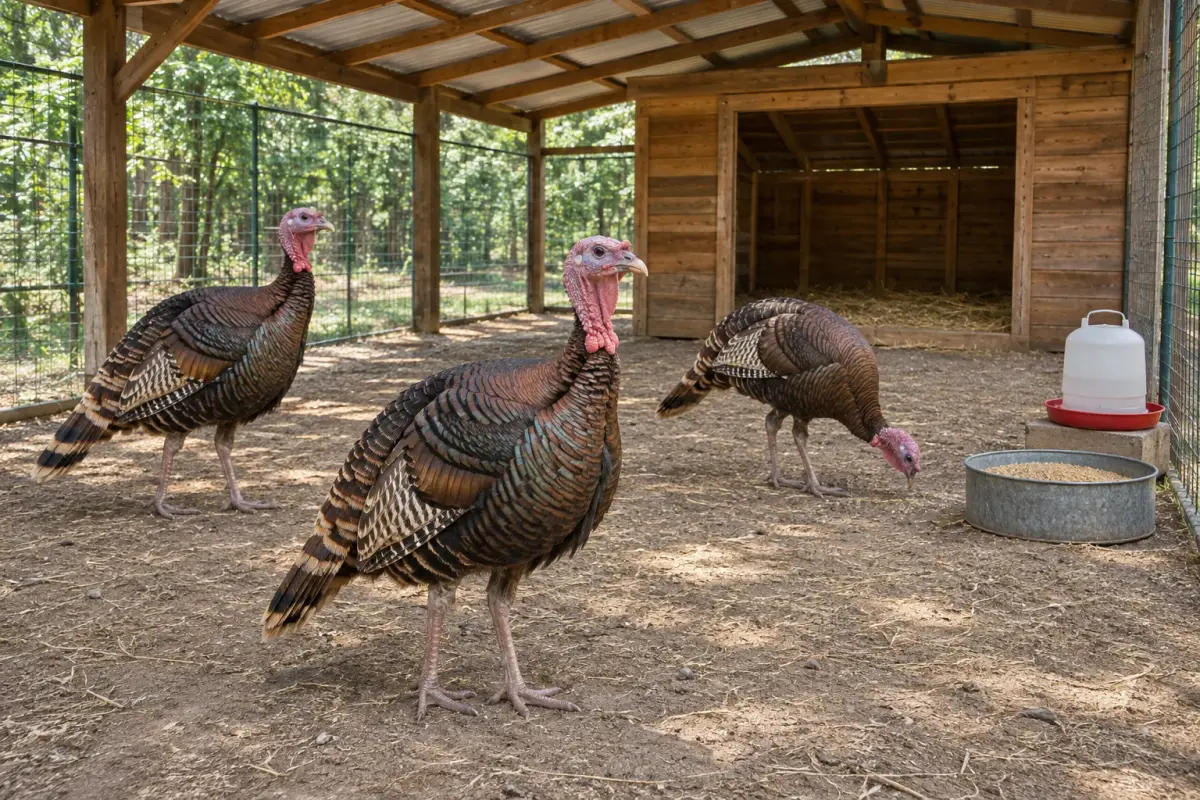
Raising turkeys starts with a prepared brooder, appropriate turkey feed, clean water, and housing that will still fit the birds as adults. Plan to keep them separate from chickens and arrange access to a poultry veterinarian before buying poults. University extension guidance emphasizes that young turkeys need careful early management; a chicken setup should not be assumed suitable without checking the differences.
By Matt GarnettUpdated November 11, 20264 min read3 sources
Decide what the flock will need as it grows
Start by identifying the type of turkey you intend to keep and the space available for its adult size. University of Maine Extension explains that turkey varieties differ in growth and size. A setup that holds a few young poults comfortably may become unsuitable long before you expect it to.
Write down who will provide daily care, how absences will be covered, and where birds will be housed in bad weather. Check local requirements before making commitments. Ask a poultry extension specialist to review the practical arrangement if you are adapting a building or moving from experience with chickens.
Prepare the brooder before arrival
Young turkeys are called poults. Cooperative Extension explains that they need a warm environment because early temperature regulation is limited. Set up and test the brooding equipment before they arrive, following the equipment instructions and advice appropriate to the birds’ age. There must also be room to move away from the heat.
Use suitable dry bedding and remove wet patches. The extension turkey guide recommends wood shavings and warns against slippery newspaper surfaces and sawdust. Round off brooder corners to reduce piling. Check how the poults distribute themselves rather than relying only on how comfortable the room feels to a person.
Make feed and water easy to find and reach
Use a turkey feed appropriate to the birds’ life stage rather than assuming chick starter is interchangeable. New Hampshire Extension stresses this distinction. Keep the feed label available when asking for advice, especially if a product is medicated or the birds have a vaccination history that needs consideration.
Watch the poults actually eat and drink after arrival. The cooperative extension turkey guide notes that some young birds struggle to find the provisions. Use suitable poultry equipment that they cannot fall into or readily soil, and keep it clean. Do not substitute an open pan merely because it is conveniently available.
Keep turkey and chicken arrangements separate
Maine Extension warns that chickens may carry diseases without obvious signs that can cause serious problems in turkeys, including blackhead. Sharing a yard with apparently healthy chickens is therefore not a dependable way to establish safety. Discuss the property’s existing poultry history with a veterinarian before adding turkeys.
Plan separate equipment and a routine that avoids carrying dirty footwear or tools between groups. Tell visitors that bird areas are managed separately. If you cannot achieve workable separation, resolve that limitation before the poults arrive instead of waiting to see whether mixing the birds causes a visible problem.
Review shelter and access as birds become larger
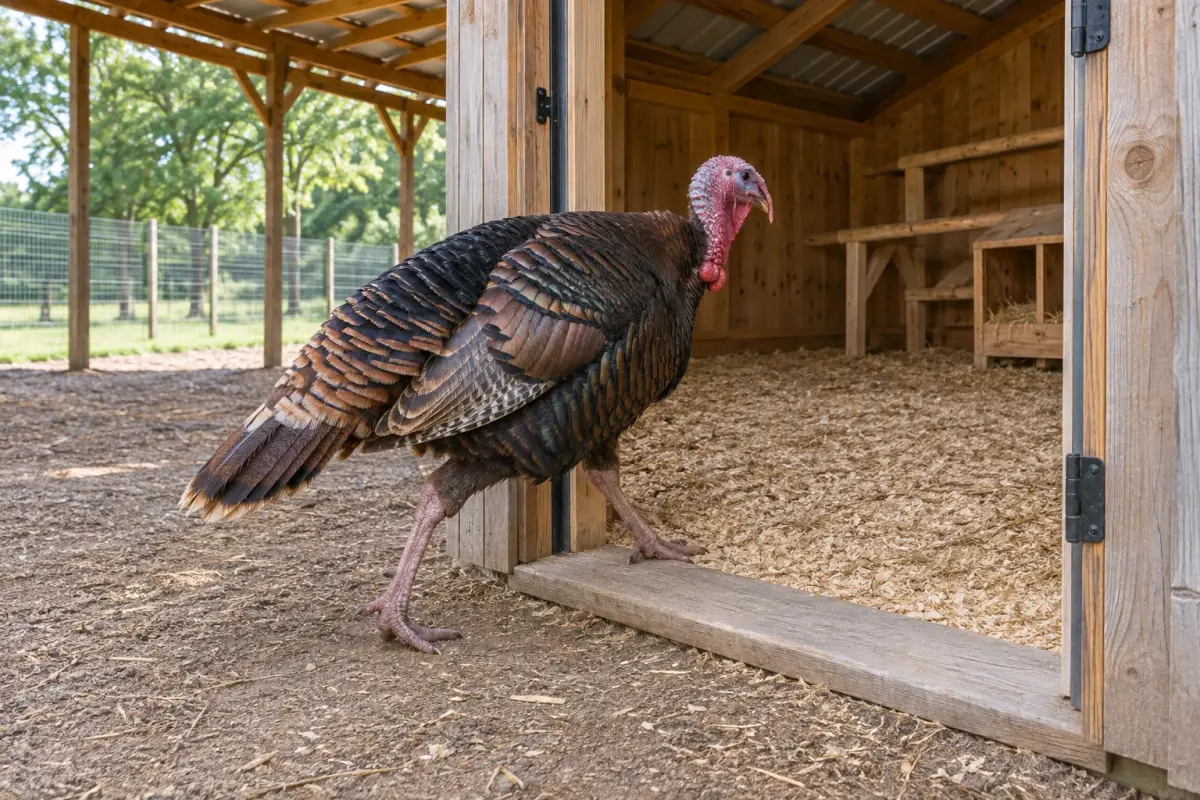
New Hampshire Extension discusses cleanable housing, protection from predators, and the risks of arrangements that cannot be closed securely at night. Check doors, fencing, and any outdoor access at the size the birds are now. A gap or latch that was adequate during the first week may need attention later.
Maintain ventilation without leaving birds exposed to direct drafts. A dry building still needs fresh air; closing every opening is not a complete weather plan. Check bedding, drinkers, and the birds’ movement daily, and ask an extension specialist about space and equipment changes before crowding develops.
Make daily observations useful to the veterinarian
Look at individual birds as well as the group. Record reduced eating, unusual quietness, limping, injuries, breathing changes, or a bird separating itself from others. Contact a poultry veterinarian promptly when these changes appear. Sudden deaths or several birds becoming sick needs an immediate call and professional instructions about possible contagious disease.
Keep a short record of arrival dates, feed changes, other poultry contacts, and whom you called. Do not choose medicines or a supplement mixture from a diagnosis made online. Ask the veterinarian to advise on disease prevention, testing, and any treatment appropriate to the actual flock.
If comparing the Chicken Coops and Chicken Runs collections as a starting point, check turkey-specific space and access needs separately. A structure described for chickens is not automatically suitable for larger turkeys.
This page is general information, not veterinary advice, and it cannot replace an examination by the vet who knows your pet.
Common questions
What do I need before raising turkeys?
Have a tested brooder, appropriate turkey feed, clean drinking equipment, dry bedding, and secure housing planned for the birds’ adult size. Arrange daily care and identify a poultry veterinarian before the poults arrive.
Can turkeys live with chickens?
Plan to keep them separate. Maine Extension warns that chickens can carry diseases without obvious illness that may seriously affect turkeys. Ask a poultry veterinarian about the existing property and practical biosecurity arrangements.
Can turkey poults eat ordinary chick starter?
Do not assume the products are interchangeable. Turkey poults need feed appropriate to their species and life stage. Check the label and ask a poultry specialist about the actual product and vaccination history.
When should I call a vet about a turkey?
Call promptly for reduced eating, unusual quietness, lameness, injuries, or breathing changes. Sudden deaths or several birds becoming sick requires an immediate call. Describe observations and recent changes rather than diagnosing the flock yourself.
Sources we checked
This guide is general information, not veterinary advice. If your pet is unwell or injured, contact your veterinarian.


