






Care & how-to
Pit Bull Grooming: How to Care for a Short, Sensitive Coat
Pit bull grooming is low effort, but it is not no effort. The coat is short, close and glossy, so a weekly brush with a soft tool and an occasional bath with a gentle dog shampoo cover most dogs. The real job is checking the skin underneath while you do it. This guide covers the routine, the tools that suit a short coat, and the signs that mean a vet visit.
By Matt GarnettUpdated November 13, 20265 min read3 sources
What a pit bull coat actually needs
Pit bull type dogs have a short, close, glossy coat. VCA Animal Hospitals describes the American Staffordshire Terrier, a closely related breed, as needing light brushing about once a week to clear loose hair, with moderate shedding. That is the low end of grooming effort for dogs, which is why many owners assume the coat needs nothing at all.
The short coat does not mean the dog is maintenance free. There is little hair between the skin and the world, so dirt, dry air, allergens and parasites reach the skin quickly. A weekly session is partly about hair and partly about looking at the skin, feeling for lumps, and noticing changes before they become problems. If you are wondering how much hair to expect, our guide on whether pit bulls shed covers the seasons.
Step 1: Brush once a week with the right tool
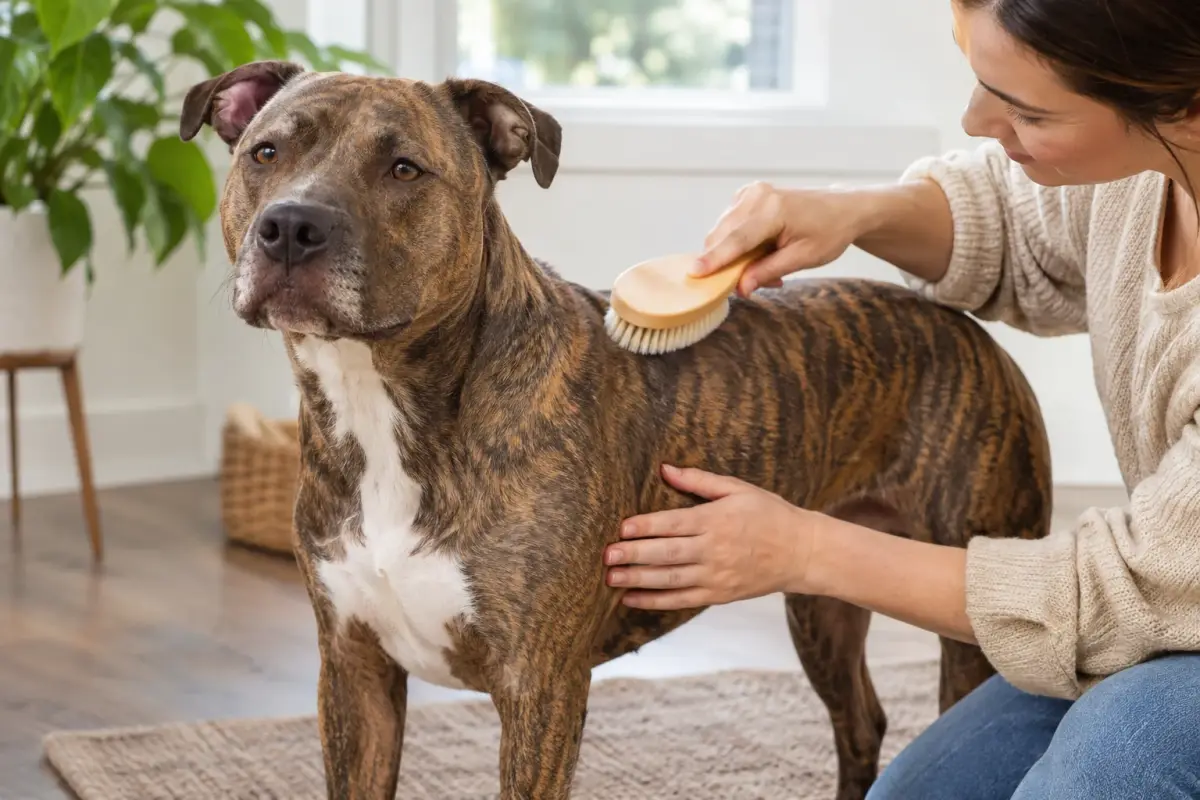
Short coats do best with gentle tools. The American Kennel Club suggests natural-bristle brushes and grooming gloves for short coats, and describes brushing against the direction of hair growth first to loosen dead hair, then with the growth to lift it away. Use small circular strokes with a glove, then smooth the coat in the direction it grows.
A rubber-nubbed grooming glove is a forgiving first tool, especially for a dog that dislikes brushes, because it feels like petting. A soft deshedding brush works well in heavier shedding weeks. Hard metal tools are rarely needed on this coat and are easy to overdo on thin skin over the ribs and hips. Browse our dog brushes for short coats, or look at a type such as a double-sided grooming glove or an ergonomic deshedding brush.
Step 2: Bathe only as often as the skin needs
There is no fixed bath schedule that suits every dog. The AKC says the right frequency depends on coat type, activity level, skin condition and lifestyle, and that single-coated breeds usually need baths less often than dogs with thicker coats. A pit bull that has rolled in mud needs a bath. A clean indoor dog may not need one often, and washing too much can dry out the skin.
Use a shampoo made for dogs, because human shampoo is formulated for a different skin pH and can dry or irritate a dog's skin. For dry, itchy or sensitive skin, the AKC points to soap-free, fragrance-free or lightly scented formulas. Use comfortably warm water, keep suds away from the eyes, nose, mouth and ears, and rinse twice, because suds are hard to remove. Pat dry with thick towels rather than rubbing. Our dog shampoo range and the guide to shampoo for pit bulls explain what to look for on the label.
Step 3: Check the skin while you groom
Grooming day doubles as a skin check, and a short coat makes it easy. Run your hands over the whole body and look at the belly, armpits, groin and between the toes. You are looking for redness, scabs, bumps, bald patches, a greasy or flaky coat, or a smell that was not there last week.
Shedding is normal, but the AKC advises consulting your veterinarian if you notice thinning fur or bald patches, irritated or inflamed skin, or a sudden increase in hair loss. These can point to allergies, hypothyroidism or coat disorders, and only a vet can sort out which. If your dog already uses a topical flea and tick preventative, check with your vet before adding another product.
Nails, ears and the rest of the routine
Grooming is more than the coat. Look at the nails during your weekly session: nails that click on hard floors are due for a trim, and a dog that dislikes having its paws handled is easier to train when the handling is brief and paired with a treat. If you are unsure how short to cut or you are worried about hitting the quick, ask your vet or a groomer to show you once.
Look inside the ears for redness, odor or discharge, and wipe only the visible outer part with a cloth. Do not push anything into the ear canal. Dental care belongs in the routine too, and a vet can show you how to introduce brushing. Keeping the whole session calm and short, with a lick mat or a chew to hold your dog's attention, makes it easier next week.
When to see the vet instead of reaching for another product
Grooming tools and shampoos manage a healthy coat; they do not treat a skin problem. Constant scratching, licking the paws, recurring ear trouble, open sores or hair loss in patches are reasons to book an appointment rather than switch shampoos. The same goes for any lump you find that is new or growing.
Skin trouble that is caught early is usually simpler to deal with. Take a note of when it started, what your dog has been eating, and which products you have used, because it helps your vet narrow things down. For heavier shedding days, a deshedding tool can keep hair off the furniture, but it will not explain unusual hair loss. This page is general information, not veterinary advice, and it cannot replace an examination by the vet who knows your pet.
Common questions
How often should I brush a pit bull?
About once a week is enough for most pit bull type dogs, according to VCA Animal Hospitals, with a little more during heavier shedding periods. Short sessions with a glove or soft brush also let you check the skin.
How often should I bathe a pit bull?
There is no single schedule. It depends on the dog's skin, activity and how dirty it gets, and washing too often can dry the skin. If you are not sure, ask your vet what suits your dog.
What kind of brush is best for a pit bull?
A grooming glove, a natural-bristle brush or a soft deshedding brush suits a short coat. These loosen dead hair without scraping the skin. Avoid pressing hard with stiff metal tools.
Why does my pit bull have dry or itchy skin?
Many things can cause it, including allergies, parasites, harsh products or over-bathing, and the cause is not something you can tell by looking. Persistent itching, redness or sores are a reason to see your vet.
Sources we checked
This guide is general information, not veterinary advice. If your pet is unwell or injured, contact your veterinarian.


