






Care & how-to
Do Pit Bulls Shed? Yes, Moderately: Coat Care Guide
Yes, pit bulls shed, but moderately. Pit bull type dogs, including the American Pit Bull Terrier and the closely related American Staffordshire Terrier, have a short, stiff, glossy single coat that sheds a little year-round, with small peaks in spring and fall. VCA rates the AmStaff's shedding as average. A weekly brush keeps it in check, and grooming is easy.
By Matt GarnettUpdated November 9, 20264 min read2 sources
What kind of coat pit bulls have
Pit bull is a broad term for several muscular, short-coated breeds and mixes, most often the American Pit Bull Terrier, the American Staffordshire Terrier and the Staffordshire Bull Terrier. They share a short, close, single coat without the dense undercoat that makes breeds like Huskies shed in clumps. VCA Animal Hospitals describes the AmStaff coat as short, close and glossy, rates shedding at 3 out of 5, and rates grooming needs at just 1 out of 5.
The hairs are short and fairly stiff, so they tend to stick into fabric, car seats and dark clothing. That can make a pit bull seem like a heavier shedder than it is. For a coat like this, a simple dog brush is all the grooming kit you need.
When pit bulls shed most
Because they have no thick undercoat, pit bulls do not blow coat the way double-coated breeds do. Most shed lightly and steadily all year, with a modest increase in spring and fall as day length and temperature change. Dogs living indoors may shed fairly evenly through the seasons.
Stress, such as a vet visit, a move or a car ride, often triggers a sudden shower of short hairs, which usually stops once the dog relaxes. That is normal.
Grooming a pit bull
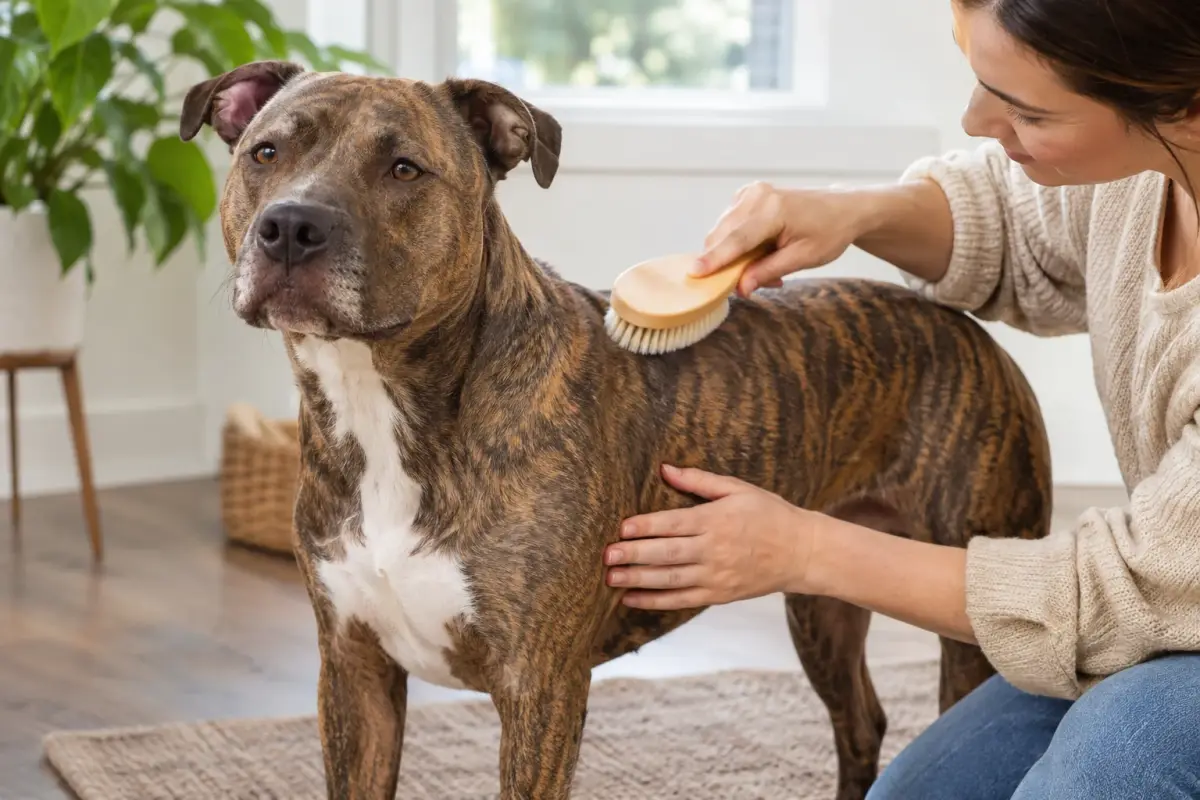
VCA suggests brushing about once a week to remove dead hair. A rubber curry brush or grooming mitt works best on short coats: rub in small circles to loosen dead hair, then brush with the lie of the coat. A soft bristle brush or a damp cloth finishes the job and brings out the shine. During seasonal sheds, two or three short sessions a week help.
Bathe every couple of months or when dirty with a gentle dog shampoo. Pit bull type dogs can have sensitive skin, so avoid frequent baths and harsh products. Keep nails short, since active, muscular dogs put a lot of force through their feet, and check ears and teeth regularly.
Skin problems to watch for
Pit bull type breeds are commonly affected by skin allergies, which show up as itching, red skin, hives, paw licking, ear infections and hair loss from scratching. Their short coat gives little protection from sun, so light-colored or pink-skinned dogs can sunburn on the nose, belly and ears; limit midday sun and ask your vet about dog-safe sun protection.
Other causes of hair loss in short-coated dogs include fleas, mites such as demodex, bacterial skin infections and hormonal conditions. Book a vet visit for bald patches, scabs, bumps, a strong smell, flaky skin or constant scratching. Keep up flea prevention as your vet recommends.
Choosing the right brush for a short coat
Short, stiff coats like a pit bull's do not need slicker brushes or undercoat rakes, which can scratch thin-coated skin. A rubber curry brush or grooming mitt is the most useful tool: it grips loose hair and massages the skin at the same time. Follow with a soft bristle brush to smooth the coat, and finish with a chamois or damp cloth for shine.
Brush in small circles first to loosen hair, then in long strokes with the lie of the coat. Many pit bulls enjoy the massage, which makes grooming a good bonding routine. Avoid blade-style deshedding tools on short single coats, as they can irritate the skin without removing much more hair. Our dog brush buying guide compares the main brush types, and a dog grooming kit bundles the basics.
Living with a pit bull's coat
A washable blanket on the couch and in the car, a rubber glove for lifting short hairs from fabric, and regular vacuuming take care of most of it. Brushing outdoors once a week keeps a lot of hair out of the house. A complete, balanced diet supports a healthy coat; ask your vet before adding supplements.
Pit bulls are not hypoallergenic, so if anyone in the household has dog allergies, spend time with the specific dog first. For most families, though, a pit bull's coat is one of the easiest to look after.
This page is general information, not veterinary advice, and it cannot replace an examination by the vet who knows your pet.
Common questions
Do pit bulls shed a lot?
They shed a moderate amount, steadily through the year. Because the hairs are short and stiff they cling to fabric, so it can seem like more. Weekly brushing with a rubber curry brush controls it well.
Are pit bulls hypoallergenic?
No. Pit bulls shed and produce allergens in dander and saliva like all dogs. People with allergies should spend time with the dog first and talk to an allergist.
Why is my pit bull losing so much hair?
Brief bursts during stress or seasonal change are normal. Ongoing heavy loss, bald patches or itchy skin can mean allergies, mites, fleas or infection, so book a vet visit.
Sources we checked
This guide is general information, not veterinary advice. If your pet is unwell or injured, contact your veterinarian.


