






Care & how-to
Marek’s Disease in Chickens: Prevention and Veterinary Assessment
Marek’s disease is a contagious viral disease of chickens that can affect nerves and cause tumors. Weakness, abnormal walking, or an eye change does not prove that a bird has it; veterinary assessment is needed. Prevention centers on appropriate early vaccination and flock management, while vaccination does not treat an already sick bird or guarantee that infection and shedding cannot occur.
By Matt GarnettUpdated November 11, 20264 min read3 sources
Understand the disease without diagnosing from a posture
Merck describes Marek’s disease as a viral illness associated with nerve enlargement and lymphoid tumors. Its effects vary, so the familiar photograph of a chicken with one leg forward and one backward is not a complete diagnostic test. A bird may have other signs, and another problem can also affect movement.
Contact a poultry veterinarian about a new inability to walk normally, persistent weakness, or a concerning eye change. Give the clinic the bird’s age, onset, vaccination history, and whether others are affected. Do not choose a diagnosis from a picture and then assume professional assessment will add nothing.
Recognize urgent illness and protect access to resources
A bird unable to stand, reach food or water, or move away from other flock members needs urgent veterinary advice. Collapse or breathing difficulty also requires urgent attention. Merck explains that paralysis can leave affected chickens unable to reach essential resources, which makes apparent alertness an inadequate measure of welfare.
Ask the clinic how to house and transport the bird safely while care is arranged. Protect it from injurious pecking and unnecessary handling without exposing other groups to shared equipment. Do not force feed, begin an unprescribed medicine, or wait for every bird to show the same signs.
Keep infection, disease, and vaccination distinct
Merck notes that the virus is widespread and that diagnosis must distinguish infection from the disease and its characteristic changes. The veterinarian may consider history, examination, laboratory findings, or a diagnostic evaluation after a death. Merely finding viral material does not automatically explain every problem in a flock.
The vaccination guide also makes clear that vaccination does not prevent every infection or stop all shedding of field virus. A vaccinated flock still needs health monitoring and appropriate management. Keep records of what vaccine was given and when, rather than treating an undocumented assurance that birds were vaccinated as a complete health history.
Plan vaccination before early exposure
Merck strongly recommends vaccination against Marek’s disease for chickens and emphasizes vaccination at hatch to establish protection early. Discuss the plan with a poultry veterinarian and ask for clear records when obtaining chicks. Timing and correct use matter; vaccination is a prevention decision rather than a cure for a bird already showing illness.
Do not improvise vaccine storage, mixing, injection, or a dose from a general article. Ask an appropriate professional how chicks hatched on the property should be protected. Review the actual flock and local disease context before adding other vaccines, rather than copying an entire commercial program into a backyard setting.
Reduce avoidable movement of contaminated material
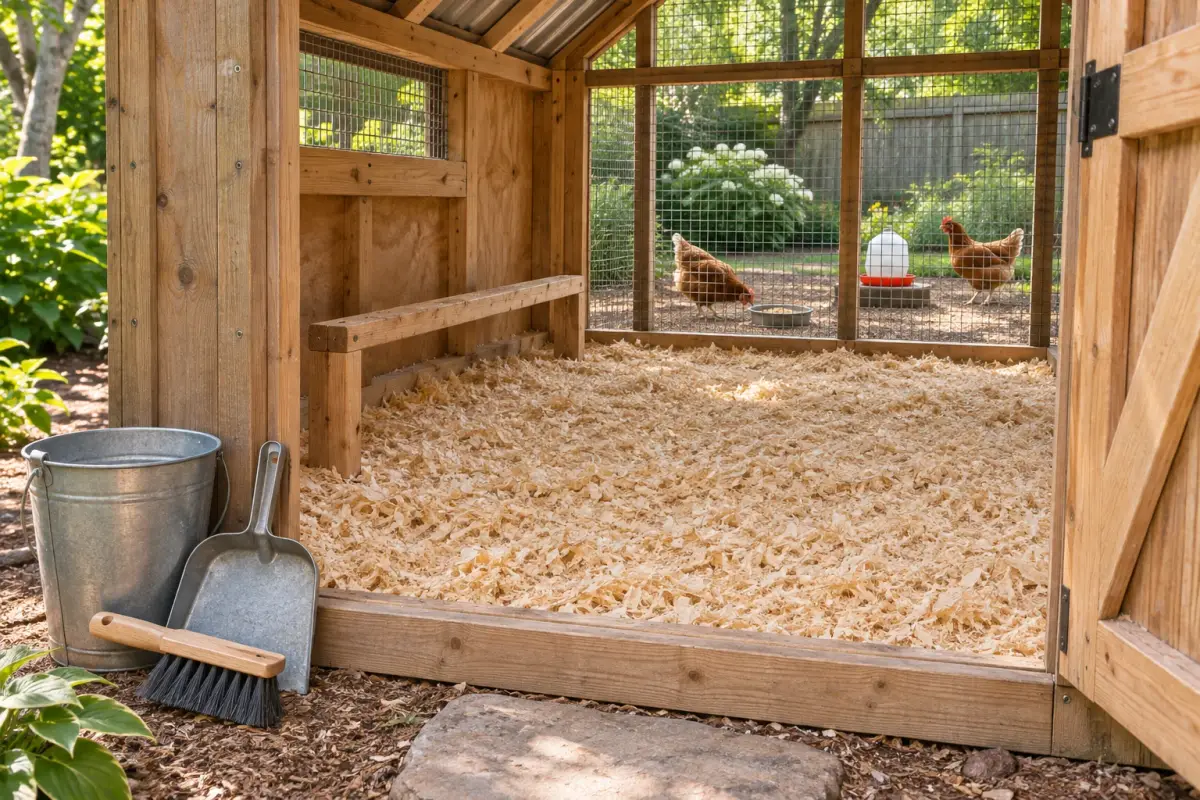
Merck describes transmission through feather dander and dust, with virus capable of persisting in the poultry environment. Cleaning and movement of equipment therefore matter alongside vaccination. Do not assume a quick visual tidy or a bird that appears well establishes that an area is free of infection.
Poultry extension biosecurity guidance emphasizes controlling introductions and cleaning equipment. Ask for a practical flock plan if disease is suspected, including handling order, footwear, shared tools, and whether movement of birds should stop. Do not move an unwell bird to another household in the hope that a different environment will solve the problem.
Discuss prognosis and long-term flock decisions
Merck states that no treatment is available for Marek’s disease itself. That makes a confirmed diagnosis and a welfare discussion important, rather than an excuse to abandon supportive care or an invitation to buy an unproven cure. The veterinarian can explain the findings, realistic options, and the implications for the remaining birds.
Review Chicken Coops and Chicken Runs for practical separation, cleaning access, and observation when planning future housing. A new structure does not replace a disease-management plan for an affected property. Keep records and follow professional advice about future birds, prevention, and any diagnostic investigation needed.
This page is general information, not veterinary advice, and it cannot replace advice from a veterinarian who treats poultry.
Common questions
Does a chicken’s unusual leg position prove Marek’s disease?
No. Marek’s can affect nerves, but posture alone is not a diagnosis. A poultry veterinarian should assess the bird, its history, and appropriate findings rather than relying on a familiar photograph.
Can a vaccinated chicken still carry Marek’s virus?
Yes. Merck explains that vaccination does not prevent all infection or shedding of field virus. Protection against disease does not remove the need for flock hygiene, records, and health monitoring.
Will vaccination cure a chicken that already seems sick?
Vaccination is preventive and is emphasized at hatch to establish early protection. It is not a treatment for an already sick bird. Obtain veterinary assessment instead of attempting an improvised vaccination procedure.
Is there a cure for Marek’s disease?
Merck states that no treatment is available for the disease itself. A poultry veterinarian can investigate the diagnosis, discuss welfare and supportive needs, and guide prevention and future decisions for the flock.
Sources we checked
This guide is general information, not veterinary advice. If your pet is unwell or injured, contact your veterinarian.


