






Care & how-to
How to Keep Chickens Cool in Summer
Keep chickens cool with shade throughout the day, effective airflow, and easy access to fresh, cool drinking water. Check the birds as well as the forecast: heat and humidity can overwhelm their ability to lose body heat. Call a poultry veterinarian immediately for collapse, severe weakness, or breathing distress. Do not wait for a particular thermometer reading before helping a bird that is struggling.
By Matt GarnettUpdated November 11, 20263 min read3 sources
Check shade where the flock actually spends time
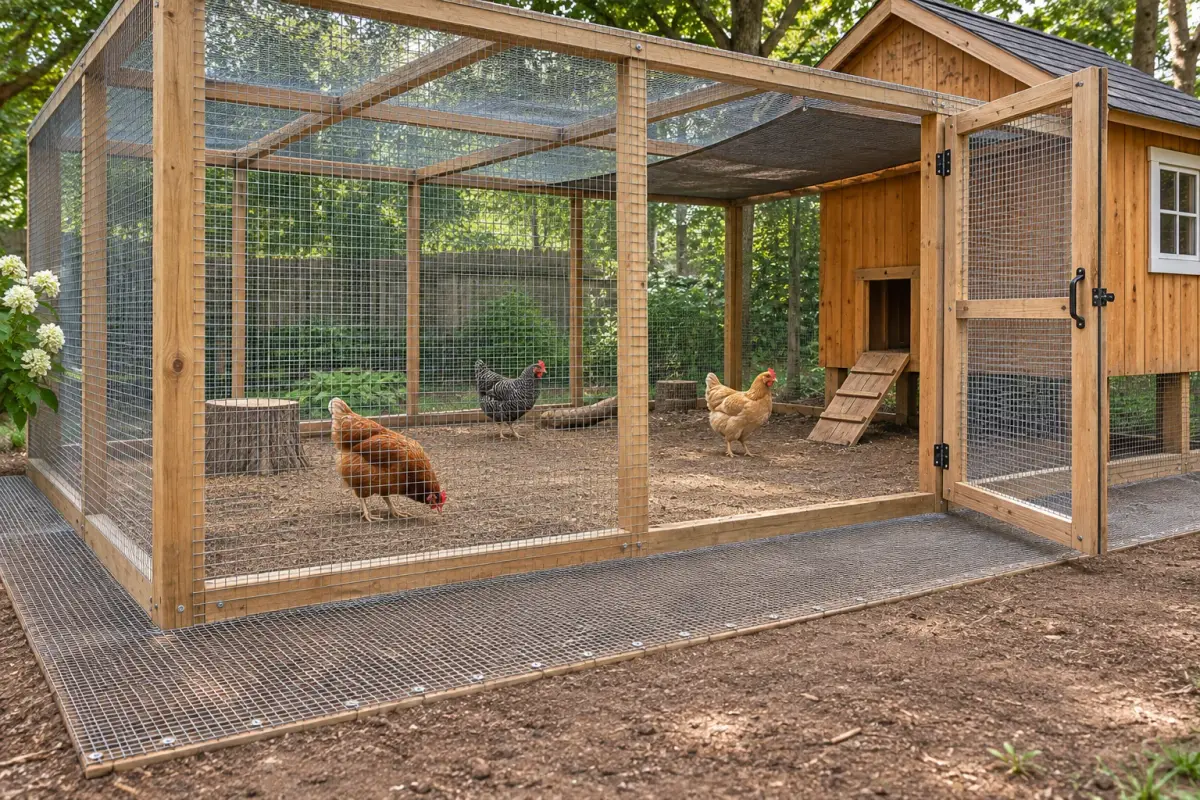
Mississippi State Extension advises providing shade whether chickens are in a coop or outdoors. Look at the space at different times of day, since a shaded morning corner may be exposed later. A small shaded patch is less useful if dominant birds occupy it or the whole flock cannot rest there comfortably.
Plan for the birds’ normal route to water and shelter as well as the resting area. Do not assume an open garden provides a cooler option if reaching it means chasing or moving birds during the hottest conditions. Make adjustments before the heat arrives and check that the flock can use them without crowding.
Make ventilation work at bird level
University of Minnesota Extension identifies airflow at the birds’ level as important for heat removal. A roof vent alone does not tell you whether air moves where hens are resting. Review obstructions, enclosed corners, and the number of birds using the building, while maintaining appropriate protection from predators.
If using a fan, keep it securely positioned with electrical equipment protected from birds, water, and bedding. Mississippi State Extension emphasizes safe fan use because of fire risks in animal buildings. Check the setup while it is running and have a practical plan for a power failure rather than assuming equipment will always remain available.
Check water repeatedly through the day
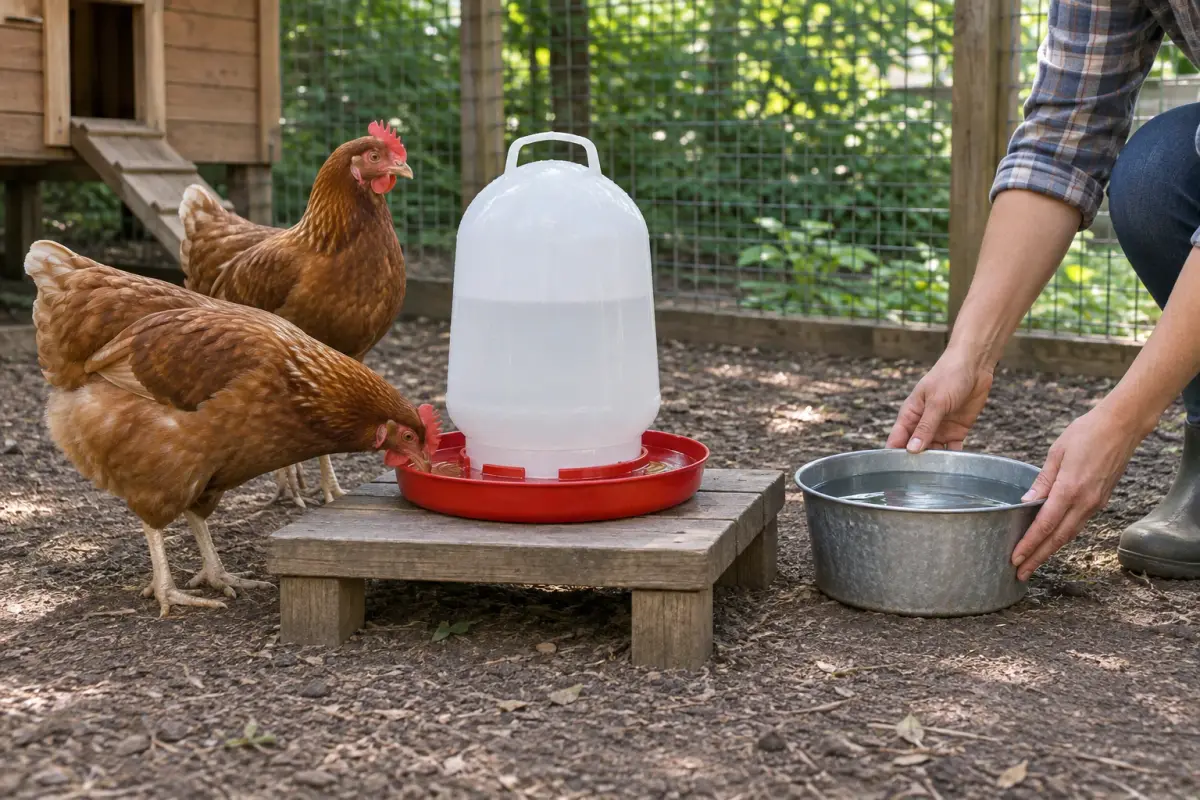
Minnesota Extension explains that poultry drink substantially more during heat stress. Check that drinkers work, contain fresh cool water, and are reachable without birds competing at a single point. Inspect automatic equipment directly; a connected line or a full storage tank does not prove that water reaches the bird.
Refresh water that has warmed or become dirty and review where the containers sit. Make the checking routine explicit for anyone covering the flock while you are away. Do not replace normal drinking access with a treat, or assume birds have had enough because water was present during the morning visit.
Recognize increasing strain and get advice promptly
Mississippi State Extension describes panting and drooping wings among early heat-stress signs, with lethargy as the problem worsens. Observe whether the birds are settling in shade, using water, and moving normally. A bird continuing to deteriorate needs veterinary advice, not a longer experiment with another cooling gadget.
For collapse, severe weakness, or breathing distress, contact a poultry veterinarian immediately and reduce exposure to heat while obtaining instructions. Avoid unnecessary handling or chasing. Describe the conditions, birds affected, water access, and any equipment failure. Those details help the professional direct care without assuming heat is the only possible cause of illness.
Keep supplements and treats in perspective
A cooling treat cannot substitute for shade, water, and ventilation. Mississippi State Extension cautions that treats should not become the only food consumed during hot weather. Keep the appropriate normal ration central and discuss ongoing poor intake with a poultry veterinarian rather than trying to solve it with increasingly elaborate extras.
Do not mix a homemade electrolyte recipe or add supplements by guesswork. Ask a veterinarian or poultry specialist whether a particular product is needed and suitable for the flock. After a difficult hot day, keep watching eating, activity, and egg changes; seek help if a bird remains quiet or unwell after conditions improve.
Assess shade and airflow across the whole setup. Compare the Chicken Coops and Chicken Runs collections with those needs in mind, and check actual conditions where the birds spend the hottest part of the day.
This page is general information, not veterinary advice, and it cannot replace advice from a veterinarian who treats poultry.
Common questions
How do I keep chickens cool in summer?
Provide shade, airflow at bird level, and accessible fresh cool drinking water. Check conditions through the day and observe the birds directly, with an immediate veterinary call if a bird collapses or struggles to breathe.
Is panting always harmless in a hot chicken?
No. Panting is part of the response to heat, but it can signal increasing strain. Improve the environment and monitor closely; persistent distress, weakness, or deterioration needs prompt advice from a poultry veterinarian.
Can frozen treats replace other cooling measures?
No. A treat does not provide the shade, ventilation, or continuous drinking access the flock needs. It should also not displace the appropriate normal ration, especially when hot weather is already reducing intake.
Should I add homemade electrolytes to chicken water?
Do not improvise a supplement mixture or dose. Ask a poultry veterinarian or specialist whether a product is appropriate for the actual flock. Keep clean drinking water available and address heat exposure at the same time.
Sources we checked
This guide is general information, not veterinary advice. If your pet is unwell or injured, contact your veterinarian.


