






Care & how-to
How to Prevent Bloat in Dogs
You cannot rule bloat out completely, but you can lower the risk. Feed two or more smaller meals a day instead of one big one, slow down fast eaters, keep mealtimes calm, and avoid hard exercise for an hour or so around meals. For high-risk breeds such as Great Danes and German Shepherds, ask your vet about a preventive gastropexy.
By Matt GarnettUpdated November 14, 20263 min read3 sources
Know whether your dog is at higher risk
Bloat, or gastric dilatation-volvulus (GDV), is when the stomach fills with gas and can twist on itself. It is most common in large, deep-chested dogs. The Merck Veterinary Manual lists Great Danes, German Shepherd Dogs, Irish and Gordon Setters, Weimaraners, Saint Bernards, Standard Poodles and Basset Hounds among the breeds at risk, and the AKC notes Great Danes are several times more likely to bloat than dogs with a wider, shallower chest.
Other risk factors include being male, getting older, being lean, having a parent or sibling who bloated, an anxious or fearful temperament, eating fast and being fed once a day. If your dog ticks several of these boxes, prevention deserves real attention, and your vet should know your dog's family history.
Feed smaller meals, more often
Splitting your dog's daily food into two or three meals instead of one large meal is one of the most consistently recommended steps. The AKC reports that dogs fed once a day have roughly twice the risk of those fed twice. Keep the total daily amount the same; you are only dividing it.
Feed at regular times so your dog is not ravenous and gulping, and avoid letting it overeat or binge on a large amount of food at once, such as raiding the food bin. Store food where your dog cannot get into it.
Slow down a fast eater
Dogs that gulp their food swallow more air, and the AKC cites studies showing fast eaters have about five times the bloat risk of slow eaters. A slow-feeder bowl with ridges or a maze, a food puzzle, or scattering kibble on a large tray makes your dog eat in smaller bites. A stainless steel slow feeder bowl and a slow feeder bowl with a lick mat are two shapes a slow feeder can take.
In multi-dog homes, feed dogs apart so no one feels it has to race. If your dog is suddenly much hungrier than usual or eats frantically, mention it to your vet, because some medical conditions increase appetite.
Calm meals and rest around them
Stress at mealtime is linked to higher risk, so give your dog a quiet place to eat away from competition and commotion. VCA Animal Hospitals and the Merck Veterinary Manual both advise limiting vigorous exercise before and after meals. A gentle stroll is fine; save fetch, running and rough play for at least an hour or so after eating, and do not let your dog gulp huge amounts of water right after hard exercise.
About raised bowls: they were once recommended to prevent bloat, but the evidence has not held up. The AKC notes that later research linked elevated bowls with increased risk, and the Merck Veterinary Manual advises avoiding them for at-risk dogs. Use one only if your vet suggests it for another reason.
Ask your vet about a preventive gastropexy
A gastropexy is surgery that attaches the stomach to the body wall so it cannot twist. It does not stop the stomach filling with gas, but VCA notes it usually prevents the life-threatening twist. For high-risk breeds, vets often suggest doing it at the same time as a spay or neuter, and it can also be done by itself or laparoscopically.
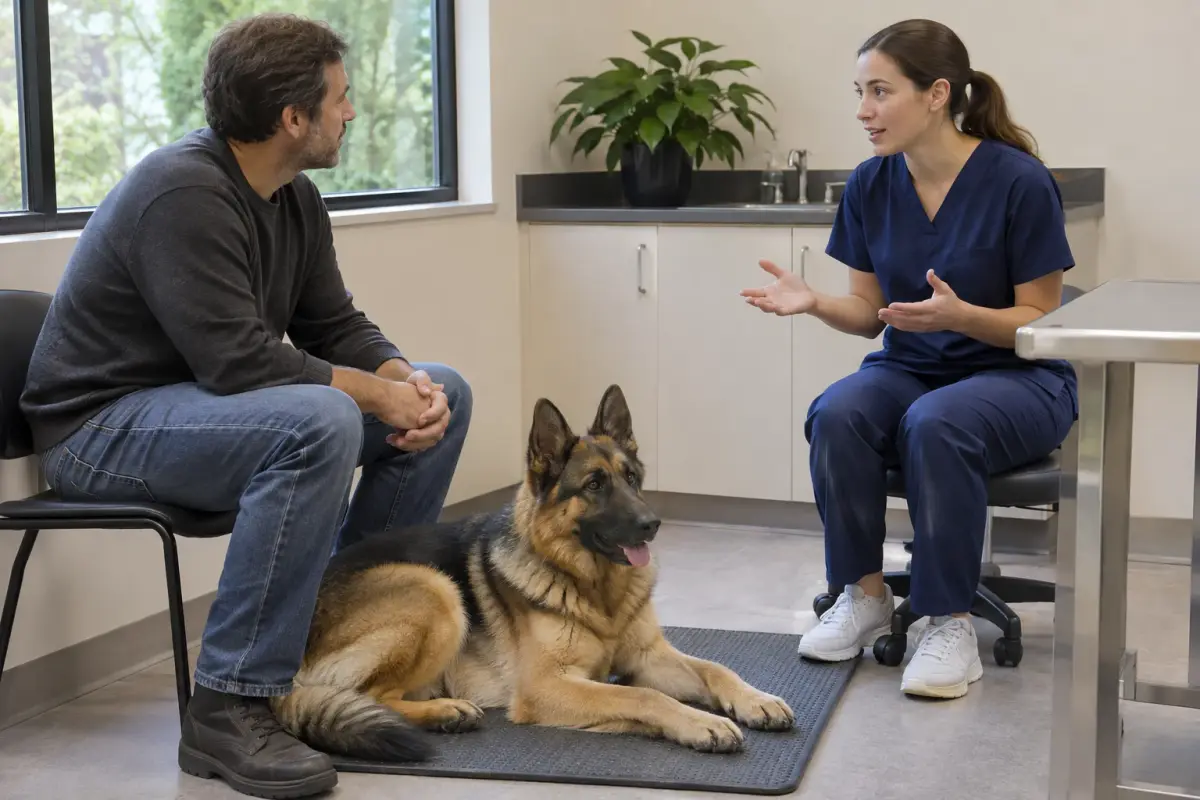
Whether it is right for your dog depends on breed, family history, age and your vet's advice, so raise it at a puppy or wellness visit. Even with a gastropexy, learn the signs of bloat: restlessness, drooling, unproductive retching and a swollen belly. If you see them, call your vet or the nearest emergency vet immediately.
This page is general information, not veterinary advice, and it cannot replace an examination by the vet who knows your pet.
Common questions
Do slow feeders prevent bloat?
They cannot guarantee it, but they help by slowing eating, and fast eating is a major risk factor. Combine a slow feeder with smaller meals and calm mealtimes for the best effect.
Should large dogs eat from raised bowls?
Current guidance leans against raised bowls for dogs at risk of bloat, because studies linked them with higher risk. Use one only if your vet recommends it for a specific medical reason.
How long after eating can a dog exercise?
A common recommendation is to wait at least an hour after a meal before vigorous exercise, and to avoid feeding right after hard activity. Gentle walking for a potty break is fine.
Can small dogs get bloat?
Yes, any dog can, although it is far more common in large and giant deep-chested breeds. The same warning signs apply, and any suspected bloat needs emergency veterinary care.
Sources we checked
This guide is general information, not veterinary advice. If your pet is unwell or injured, contact your veterinarian.


