






Care & how-to
How to Groom a Long-Haired Cat
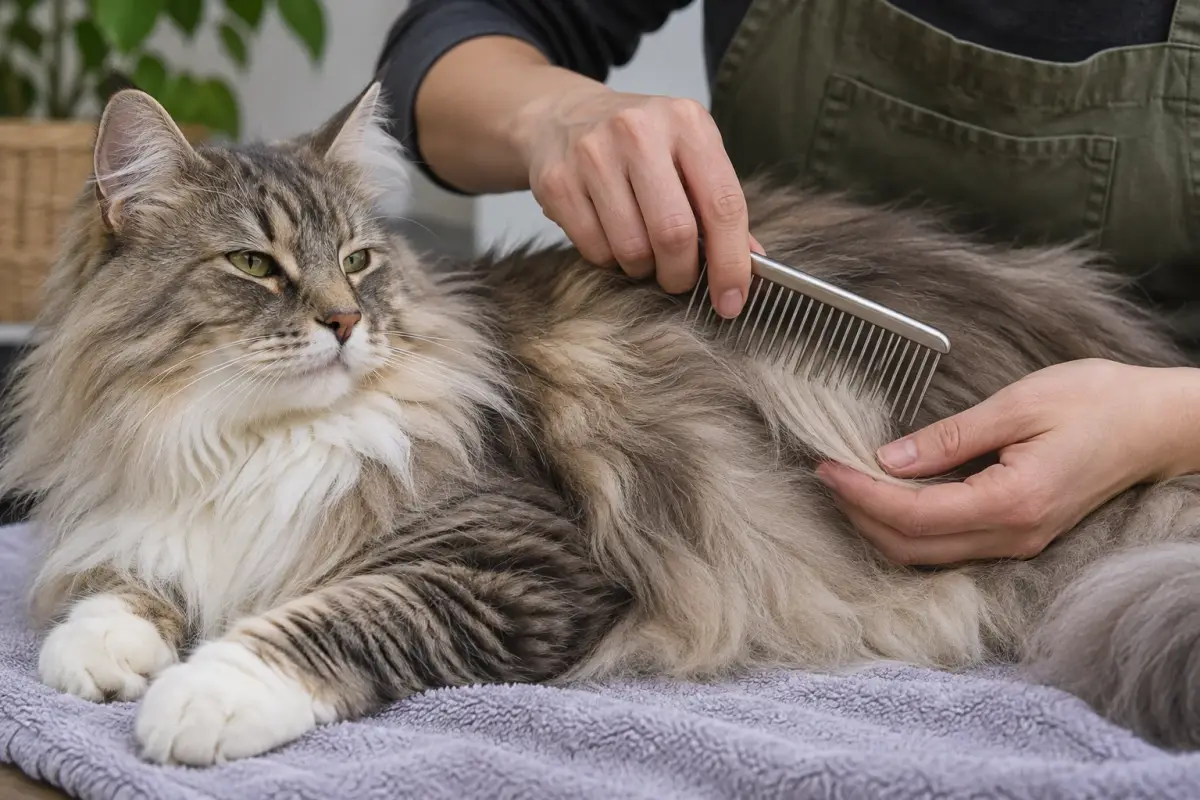
To groom a long-haired cat, comb it gently every day or every few days with a long-toothed metal comb, working from the belly and legs toward the head. Check the armpits, groin, behind the ears and the back of the legs for tangles. Work small knots out with your fingers, and never cut a mat with scissors. Our cat brushes cover the tools.
By Matt GarnettUpdated November 13, 20265 min read2 sources
Why long coats need more help
A long-haired cat sheds year-round, and the silky or curly coats on breeds such as Persians and Maine Coons tangle easily. VCA advises daily brushing for silky or curly long coats, and the ASPCA says long-haired indoor cats need grooming every few days to remove dead hair and prevent tangles. A cat swallows less hair when it grooms itself if you remove the loose hair first, so regular brushing can also mean fewer hairballs.
Mats are the real reason to stay on top of it. They pull on the skin, can be painful, and can lead to skin problems underneath. Short, frequent sessions beat one long weekend fight. Five calm minutes a day teaches your cat that grooming is routine, and it lets you spot lumps, scabs, fleas or sore skin early.
The tools you actually need
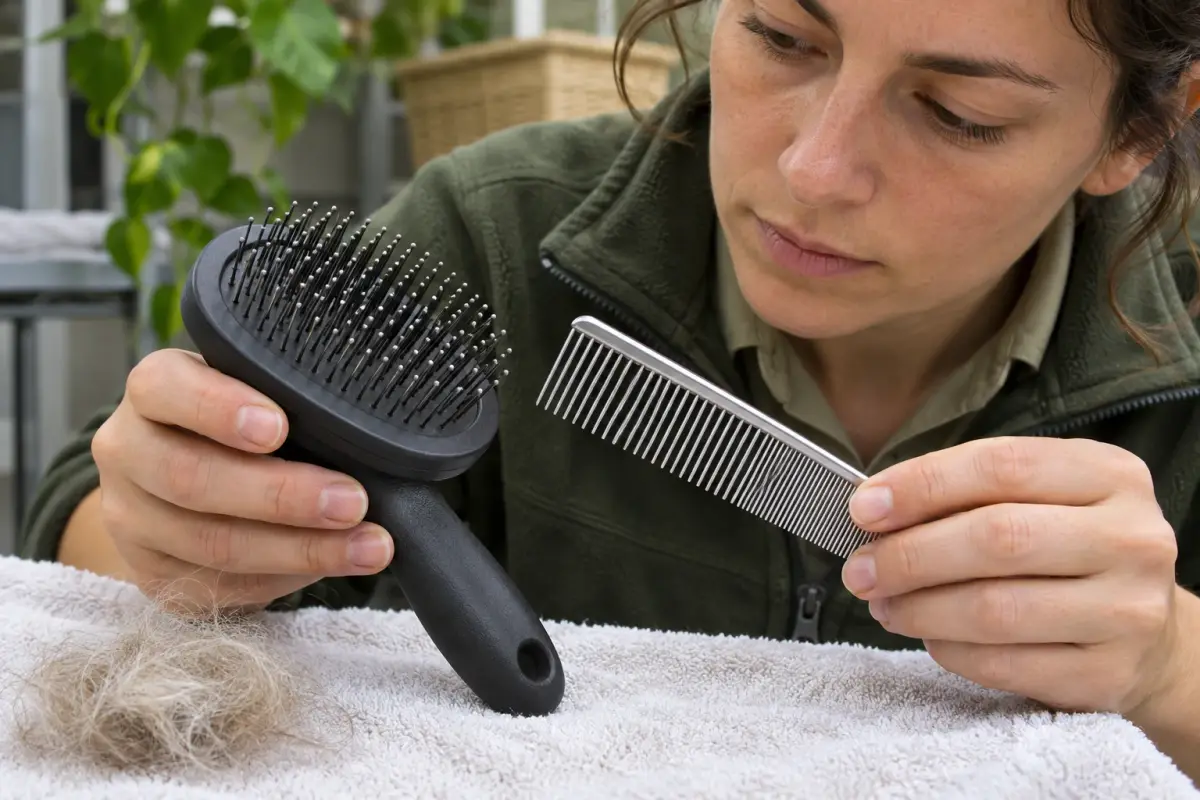
Start with a comb rather than a brush. VCA recommends long-toothed metal combs, especially ones with offset tines, to lift loose hair and smooth minor tangles. A plain cat comb is the tool that finds trouble spots, because teeth that glide through the coat will stop at a tangle. A brush adds finishing and works on the top coat, for example a cat hair brush used after combing.
During heavy seasonal shedding an undercoat comb helps, and VCA says it can also tease small mats out behind the ears or on the back legs. A mat splitter is useful for knots you cannot work out by hand. Keep a wide-toothed comb for after baths. Browse everything in one place in our cat brushes, and read our guide to choosing a cat brush if you are unsure which coat type you have.
Step-by-step: a calm grooming session
Step 1: choose a quiet moment, such as after a meal or play session, when your cat is relaxed. Let it sniff the comb and reward it with a treat. Step 2: start with the easy areas, the back and sides, using light strokes in the direction of the fur. The ASPCA suggests combing the belly and legs upward toward the head and combing neck fur up toward the chin.
Step 3: part the fur down the middle of the tail and brush each side. Step 4: check the trouble spots, the armpits, groin, behind the ears and the backs of the legs, where tangles hide. Step 5: stop before your cat gets annoyed, give a treat and try again later. If a cat swats, flattens its ears or twitches its tail, end the session; forcing it makes the next one harder.
Dealing with tangles and mats
Brush out small tangles before they become mats. The ASPCA suggests sprinkling a little talcum powder on a knot before gently teasing it apart with your fingers, or using a mat splitter for tougher ones. Hold the base of the fur against the skin as you work so it does not pull. VCA also advises brushing burrs and tangles out before any bath, since wet tangles are harder to remove.
For large mats, VCA says clippers, never scissors, may be needed and that you must take great care not to cut the skin, which is thin and loose on a cat. Severe or widespread matting, or a mat that has irritated the skin, is a job for a groomer or vet, sometimes with sedation. A cat that fights grooming and could be injured should also go to a professional.
Baths, nails and summer haircuts
Most healthy adult cats rarely need a bath. VCA notes that arthritic or overweight cats, and cats with allergies, may need one more often. If you bathe your cat, comb out tangles first, use a fragrance-free cat shampoo rather than human or baby shampoo, rinse thoroughly because residue irritates skin and cats lick it off, and dry your cat in a warm, draft-free spot, untangling with a wide-toothed comb as it dries.
Long-haired cats may also grow hair between their toes. The ASPCA suggests trimming it with rounded scissors if it bothers the cat, and trimming nails every ten days to two weeks, cutting only the white tip. Our cat nail clippers cover that side. Most long-haired cats cope with summer heat without a cut, but a groomer can give a lion cut to a cat that mats badly; ask your vet first, since some need sedation.
When to call your vet
Grooming is also a weekly health check. Call your vet if you see excessive shedding, bald patches, dandruff, greasy fur, constant licking, biting or scratching, or skin that looks red or sore. Hairballs that continue despite regular brushing are also worth a visit.
An older or overweight cat that stops grooming itself, or whose coat turns matted and dull, may be struggling with arthritis or another health problem and should be seen. See our guide to cat grooming for short-haired cats and the basics.
This page is general information, not veterinary advice, and it cannot replace an examination by the vet who knows your pet.
Common questions
How often should you brush a long-haired cat?
VCA recommends daily brushing for silky or curly long coats, and the ASPCA says long-haired indoor cats need grooming every few days at least. Frequent short sessions keep tangles from turning into mats and mean less loose hair on your furniture.
What is the best brush for a long-haired cat?
A long-toothed metal comb, ideally with offset tines, is the core tool, because it reaches through the coat and finds tangles. An undercoat comb helps in heavy shedding seasons, and a brush is for finishing. Choose what your cat tolerates.
How do you get a mat out of a cat's fur?
Work small mats out with your fingers and a comb, optionally with a little talcum powder, or use a mat splitter. Never cut with scissors, since cat skin is thin and easily nicked. Large or painful mats need a groomer or vet.
Do long-haired cats need baths?
Most healthy adult cats rarely need baths. Overweight, arthritic or allergic cats may need them more often. Brush out tangles first, use a cat-specific fragrance-free shampoo, rinse well and dry the coat completely in a warm, draft-free room.
Sources we checked
This guide is general information, not veterinary advice. If your pet is unwell or injured, contact your veterinarian.


