






Care & how-to
How to Groom a Cat at Home, Including Long-Haired Cats
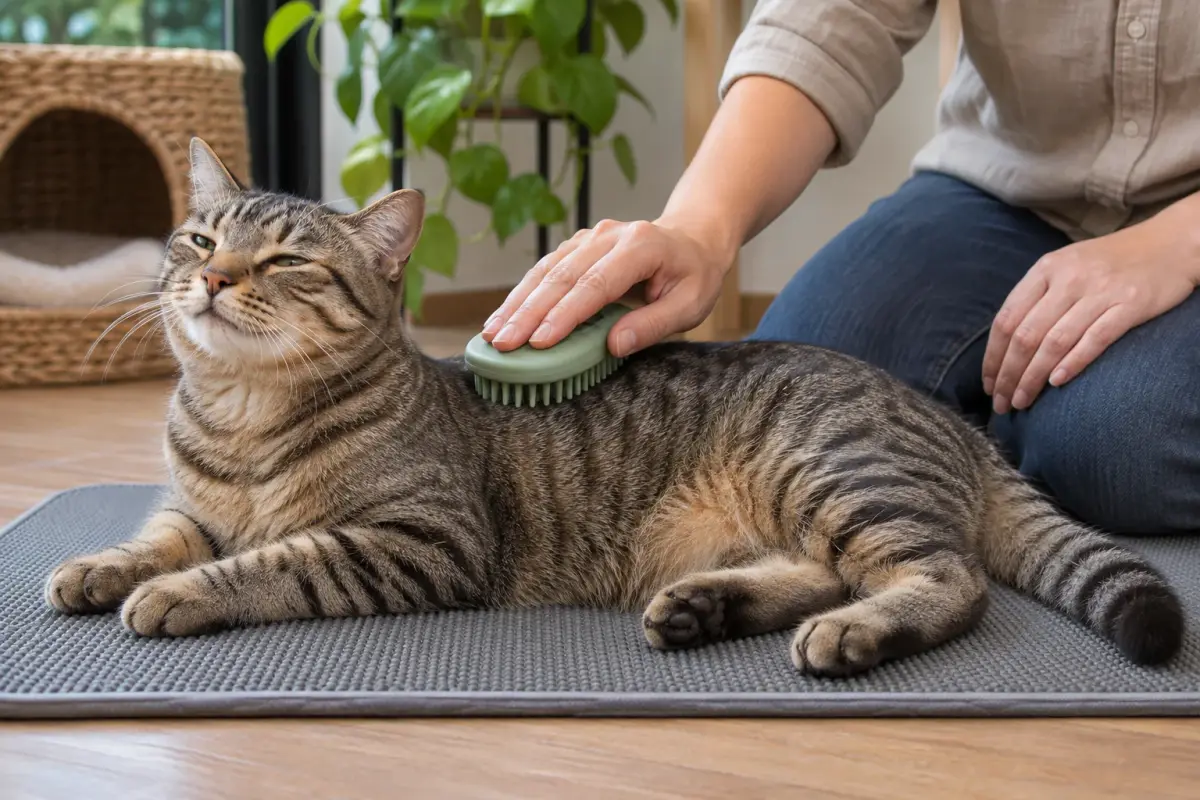
To groom a cat, brush it gently in the direction the fur grows, once or twice a week for short coats and daily for long, silky coats, paying attention to the armpits, belly, behind the ears and the back legs. Check skin, ears and nails as you go. Most cats rarely need a bath. Never cut out mats with scissors; use a groomer or vet for anything large.
By Matt GarnettUpdated November 14, 20263 min read2 sources
Why brushing matters even for cats that groom themselves
Cats spend hours grooming, but brushing still helps. The ASPCA notes it removes loose hair, dirt and skin flakes, and that it becomes more important as cats age and groom less. VCA adds that regular brushing cuts down on hairballs, since your cat swallows less loose fur.
Arthritic or overweight cats often cannot reach their back, hips and tail, so their coats become greasy or matted. VCA advises watching for coat changes in these cats and mentioning them to your vet.
Tools for short and long coats
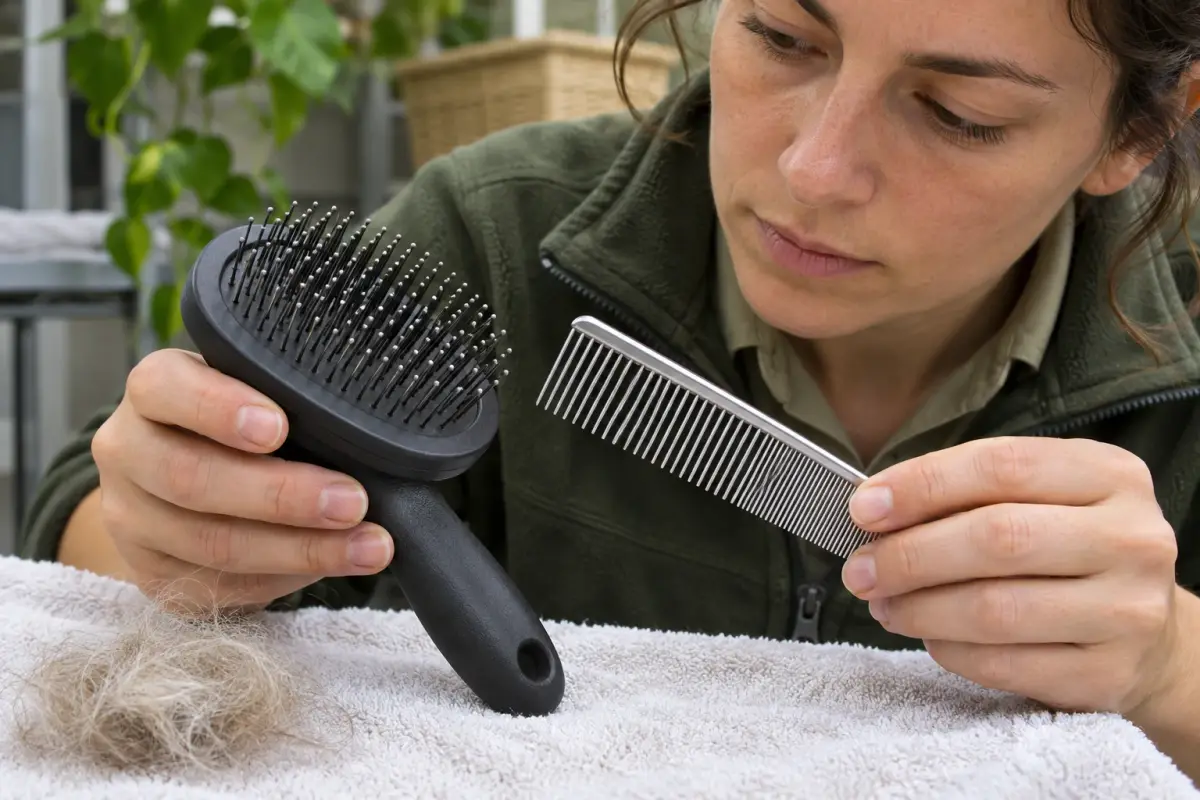
For short-haired cats, the ASPCA suggests a metal comb worked head to tail and a rubber brush for loose hair; VCA mentions stiff bristle brushes. For medium and long coats, VCA recommends long-toothed metal combs or offset-tine brushes, plus an undercoat comb during heavy shedding.
A rubber grooming glove is a good first tool for cats that dislike brushes, since it feels like petting. Keep sessions short and rewarding, and stop before your cat gets fed up.
Step-by-step: brushing a short-haired cat
Step 1: Choose a calm moment, perhaps after a meal, with your cat on your lap or a table. Step 2: Start with places your cat enjoys being touched, such as the cheeks and back. Step 3: Comb or brush gently from head to tail in the direction of growth, never pulling.
Step 4: Work the sides and, if your cat allows, the belly and legs. Step 5: As you go, check the skin for bumps, scabs, fleas or flea dirt, as the ASPCA recommends. Step 6: Finish with a treat. Once or twice a week is plenty for most short coats.
How to groom a long-haired cat
Long, silky or curly coats need daily brushing, VCA advises, especially around the ears, armpits and back legs where tangles start. The ASPCA suggests working up from the belly and legs, combing the neck toward the chin, and parting the tail to brush each side.
Use a wide-toothed comb first, then a finer one. Hold the fur at the base, close to the skin, while you work a tangle so you do not pull. Daily five-minute sessions are much easier for both of you than a weekly battle with knots.
Mats, baths and shedding
Small tangles can often be teased out with fingers or a comb. VCA warns never to use scissors on mats, because cat skin is thin and sits right against the mat, and cuts are common. Large or tight mats should be clipped by a groomer or vet; VCA notes some cats need sedation for extensive mat removal.
Most healthy adult cats rarely need baths, according to VCA. If one is needed, the ASPCA advises brushing out mats first, using a cat shampoo rather than a human one, rinsing very thoroughly and drying your cat in a warm, draft-free room. Indoor cats shed lightly all year; outdoor cats often shed heavily in spring and fall.
When to call a groomer or your vet
Book a professional groomer if your cat has many mats, a very long coat you cannot keep up with, or fights grooming so hard that either of you could be hurt. The ASPCA recommends a groomer or vet in that situation rather than forcing it.
Call your vet if you find skin that is red, scabby or bald, lumps, fleas, a sudden greasy or unkempt coat, or if your cat is over-grooming and leaving bald patches. These can point to pain, allergies, parasites or other medical problems.
This page is general information, not veterinary advice, and it cannot replace an examination by the vet who knows your pet.
Common questions
How often should I brush my cat?
Brush short-haired cats once or twice a week and long-haired cats daily. Older, overweight or arthritic cats may need more frequent help with the areas they can no longer reach.
Should I bathe my indoor cat?
Most healthy indoor cats never need a bath. Bathe only if your cat gets into something sticky or harmful, or your vet recommends it, and use a shampoo made for cats.
How do I groom a cat that hates being brushed?
Start with a rubber grooming glove, brush only the areas your cat enjoys for a few seconds, reward with treats and stop before it gets annoyed. Build up gradually over weeks.
Can I shave my long-haired cat in summer?
Most cats cope with heat without being shaved. VCA advises leaving at least one inch of coat if trimming, to protect against sunburn. Ask a groomer or vet before shaving.
Sources we checked
This guide is general information, not veterinary advice. If your pet is unwell or injured, contact your veterinarian.