






Care & how-to
How Much Water Should a Cat Drink?
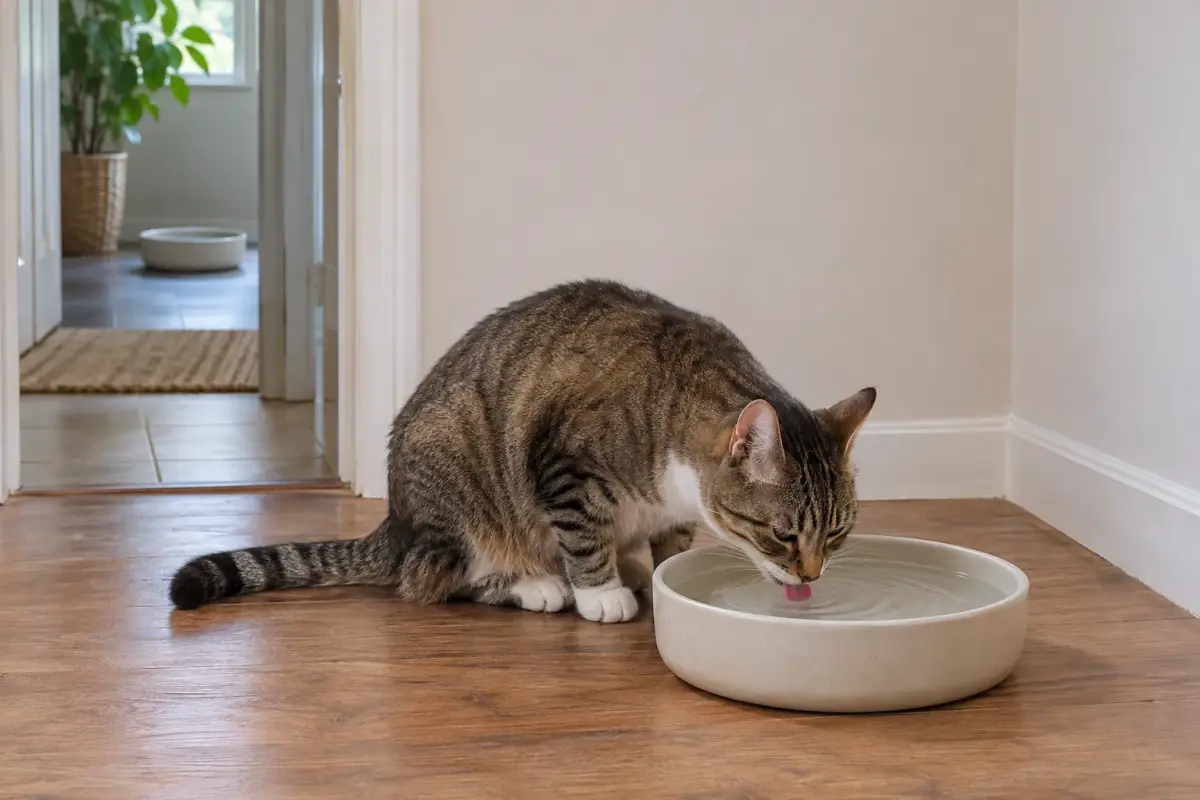
A healthy cat needs about 4 ounces of water for every 5 lb of lean body weight each day, so roughly one cup, or 8 ounces, for a 10 lb cat. That total includes the water in food. Cats eating wet food get much of it from meals and may barely drink, while cats on dry food drink far more from the bowl.
By Matt GarnettUpdated November 9, 20263 min read2 sources
The daily target
Cornell Feline Health Center and VCA both give the same rule of thumb: about 4 ounces of water per 5 lb of lean body weight per day. That is around 6 ounces for a 7 to 8 lb cat, 8 ounces for a 10 lb cat and roughly 10 ounces for a lean 12 to 13 lb cat.
VCA notes that the real figure shifts with temperature, activity, health and especially diet. A cat in a warm apartment in July or a very playful young cat will need more than a sleepy senior in winter. Treat the number as a guide, not a quota.
Why wet food changes the picture
Cornell notes that wet food can be up to 80% water, while dry food contains very little. A 5.5-ounce can is mostly water, so a cat eating two of those a day may get most of its daily need from meals and only sip from the bowl.
A cat on dry food has to drink nearly all its water. If your cat eats mostly kibble and you rarely see it drink, it is worth encouraging more intake, for instance with a cat water fountain such as a circulating cat fountain, and with the steps in our guide to getting a cat to drink more water.
How to tell how much your cat drinks
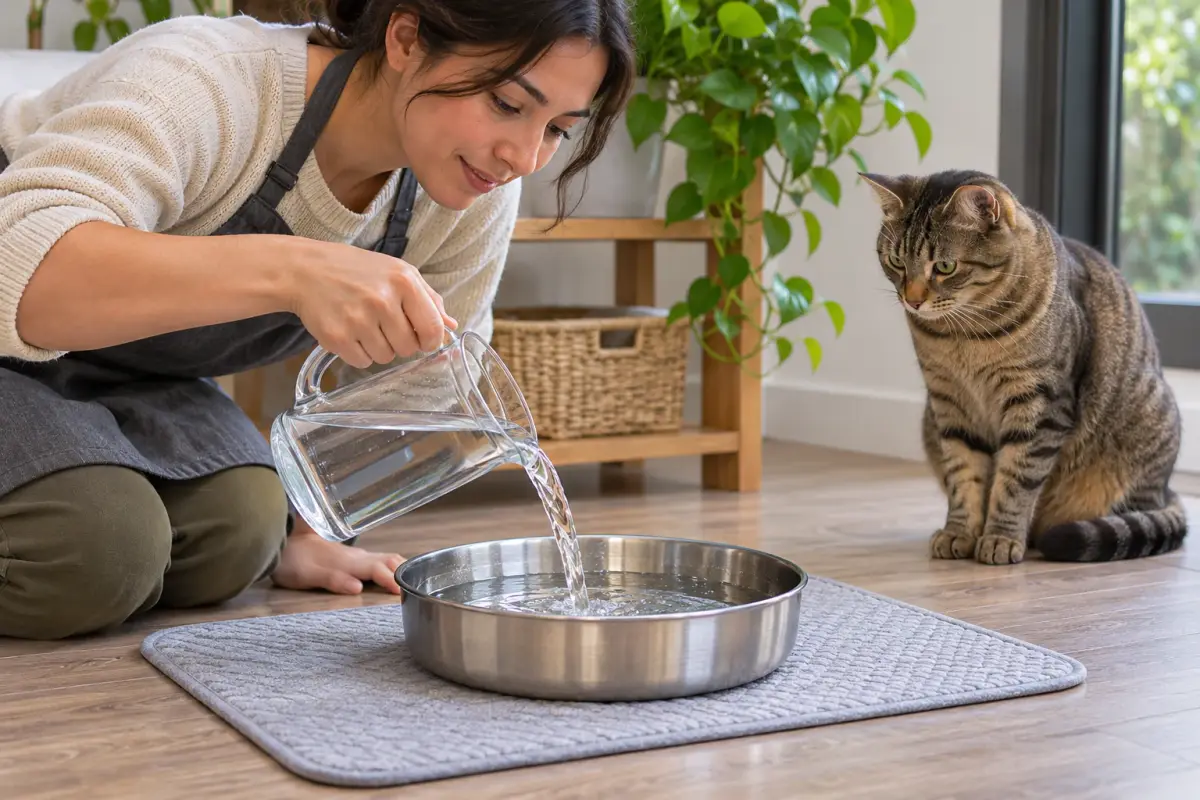
Fill the bowl with a measured amount at the same time each day using a measuring cup, then measure what is left 24 hours later. Repeat for three or four days to get an average, allowing a little for evaporation. In a multi-cat home you will be measuring the household total, so watch for any one cat visiting the bowl far more than the others.
Litter clumps are another clue. Noticeably larger or more frequent urine clumps over a week or two often mean a cat is drinking more, while very few or very small clumps can mean it is drinking less.
Signs of drinking too little
Cornell lists lethargy, weakness, poor appetite and dry, tacky gums as signs of dehydration, with sunken eyes in severe cases. A gentle check: lift the skin over the shoulders; in a well-hydrated cat it springs straight back, while in a dehydrated cat it falls back slowly. Cornell notes older cats can have looser skin even when hydrated, so this test is less reliable in seniors.
Cats can drink less because of dental pain, nausea, illness or a water bowl that is hard to reach or guarded by another pet. Vomiting and diarrhea increase water loss quickly.
Signs of drinking too much
A cat that suddenly drinks much more than usual, empties the bowl, waits by the tap or produces much larger urine clumps needs a vet visit. Cornell lists chronic kidney disease, diabetes and hyperthyroidism among the causes of increased water loss, and all three are common in middle-aged and older cats.
Note roughly how much your cat is drinking before the visit, and if you can, bring a fresh urine sample; your vet can tell you how to collect one using a clean, empty box or non-absorbent litter.
When to call your vet
Call your vet promptly if you suspect dehydration, if your cat has stopped drinking or eating, or if it has been vomiting or has diarrhea. Cornell advises that dehydration needs prompt veterinary care and that the underlying cause has to be found.
Book a visit within a few days for any steady increase in thirst or urination. These changes are easy to miss, so a quick measure now and then is useful for older cats.
This page is general information, not veterinary advice, and it cannot replace an examination by the vet who knows your pet.
Common questions
Is it normal for a cat to not drink water?
A cat eating mostly wet food may drink very little and still be well hydrated, because its food supplies much of its water. A cat on dry food that rarely drinks, or any cat showing signs of dehydration, should be checked.
How long can a cat go without water?
Cats should never be left without water. Even a day without water can be dangerous, especially for kittens, seniors and cats with kidney disease. Always provide fresh water and call your vet if your cat stops drinking.
Do cats drink more in hot weather?
Yes. Water needs rise with heat and activity, and VCA lists ambient temperature among the factors that change how much a cat needs. Offer extra bowls in cool spots during summer.
Sources we checked
This guide is general information, not veterinary advice. If your pet is unwell or injured, contact your veterinarian.


