






Care & how-to
How Much Should I Feed My Cat?
An average healthy, indoor 10 lb adult cat needs roughly 200 to 260 calories a day, which is often somewhere around one-third to one-half cup of dry food, depending heavily on the brand. Start from the calories on your cat's food label rather than the cup, feed that amount split across meals, and adjust by your cat's body shape. Treats count toward the total.
By Matt GarnettUpdated November 9, 20264 min read4 sources
Start with calories, not cups
Cat foods vary enormously in how many calories they pack into a cup or can, so the same scoop of two brands can differ by a third or more. Every bag and can in the US lists calories per cup or per can, usually written as kcal. That number, not the size of the bowl, is the one to work from.
For a starting point, Tufts University's Petfoodology uses about 260 calories a day as a very average figure for a 10 lb cat, and the common veterinary formula gives a little over 200 for a neutered, indoor cat of that weight. The Merck Veterinary Manual notes that two cats of the same weight can need 30% more or less than any calculated figure, which is why the next steps matter.
A rough guide by weight
As a broad starting range for healthy, spayed or neutered indoor adults at a good weight: a cat of about 8 lb often needs around 170 to 210 calories a day, a 10 lb cat around 200 to 260, and a 12 to 14 lb cat around 240 to 300. Active or outdoor cats, and cats that are not spayed or neutered, tend to need more; very sedentary cats less.
These ranges assume your cat is already at its ideal weight. For an overweight cat, feeding for the current weight keeps the extra pounds on. Ask your vet for your cat's ideal weight and a target calorie number, which VCA notes is the best approach.
How to turn calories into a daily portion
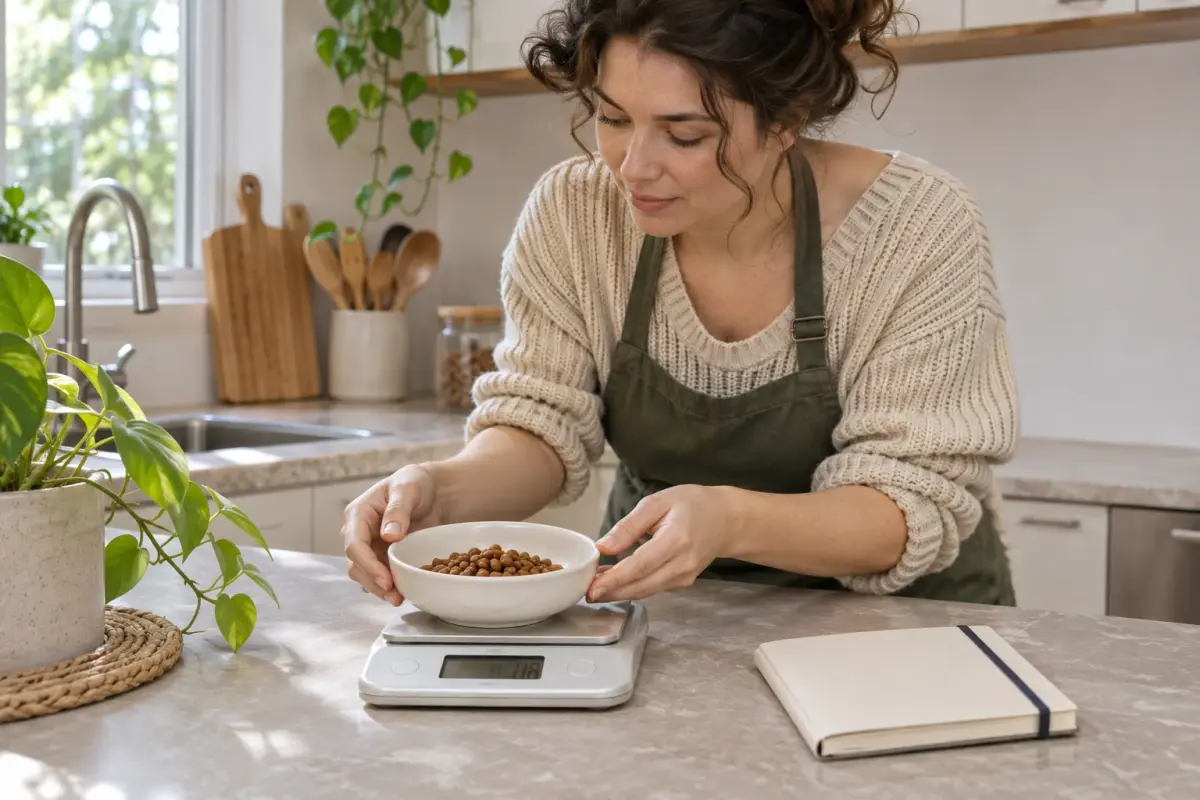
Step 1: Find the calories per cup or per can on the label. Step 2: Divide your cat's daily calorie target by that number to get cups or cans per day. Step 3: Take off about 10% for treats, the limit both VCA and Cornell suggest. Step 4: Split the result across two or more meals; a timed automatic cat feeder such as the Cat Automatic Pet Feeder Intelligence can portion them out.
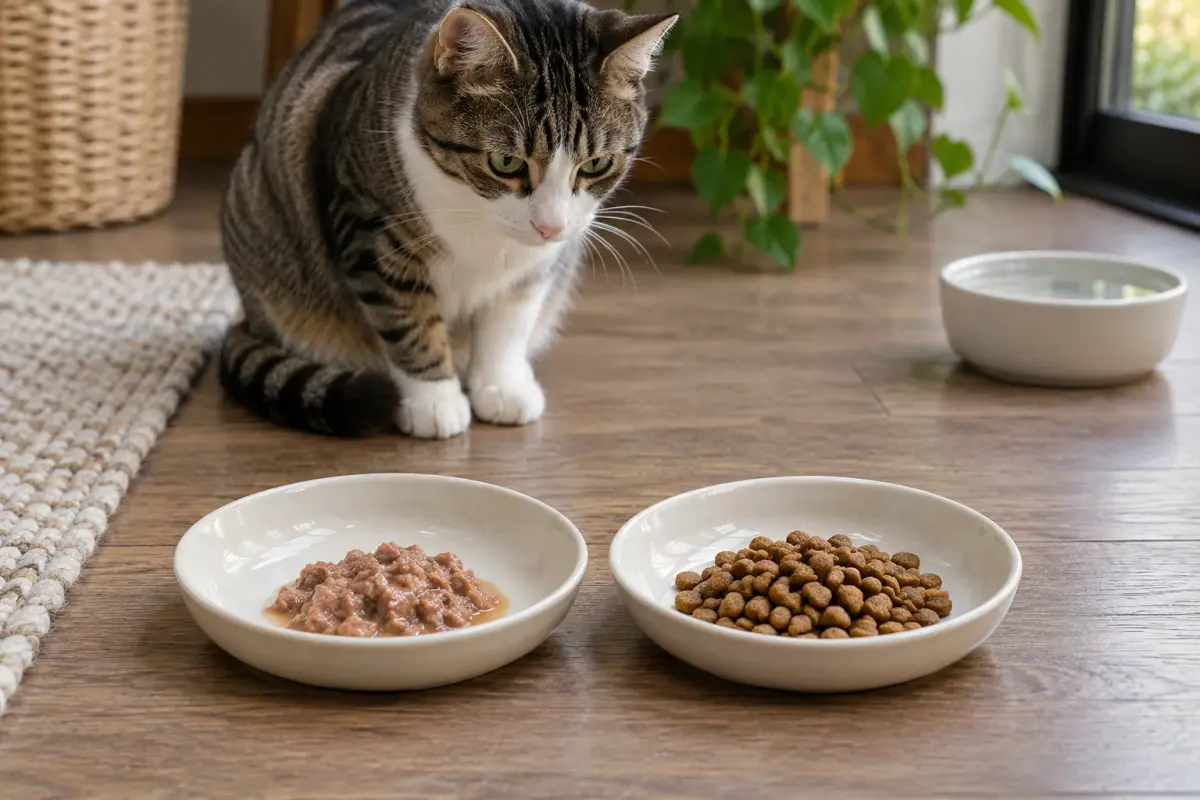
Use a proper measuring cup or, better, a kitchen scale, since a heaped scoop can easily hold a third more than you think. If you feed both wet and dry, work out what share of the day's calories comes from each. Our wet food guide walks through the can math.
Check body shape and adjust
Your cat's body is the real feedback. At a healthy weight you can feel the ribs easily under a thin layer of fat, see a waist from above and find no hanging belly pouch beyond a little loose skin. Cornell includes a nine-point body condition scale where five is ideal, and your vet can score your cat at each visit.
Weigh your cat monthly; a bathroom scale works if you weigh yourself holding the cat and subtract your own weight. If weight creeps up, reduce the daily amount by about one-tenth and recheck in a month. If your cat is losing weight without trying, call your vet rather than simply adding food.
Feeding guides, treats and other common mistakes
The feeding chart on a bag is a starting point written for an average cat. Cornell notes that a less active cat may need less than the label suggests, and many indoor cats gain weight on label amounts. Use the chart, then let body shape decide.
Treats, table scraps and dental chews all carry calories. VCA recommends keeping them to 10% of the daily total, and Cornell says 10 to 15%. Avoid raw meat and milk, which Cornell cautions against, and measure every meal into your cat's bowl, not just the first one each day.
When to call your vet
Call your vet if your cat stops eating for a day, eats much less for several days, loses weight without a change in diet, or suddenly seems ravenous. Cats that refuse food and lose weight should be examined, according to Cornell, and a sudden appetite increase with weight loss can be a sign of illness in older cats.
Ask your vet before putting an overweight cat on a diet, too. Rapid weight loss is dangerous for cats, so a safe plan is gradual and supervised.
This page is general information, not veterinary advice, and it cannot replace an examination by the vet who knows your pet.
Common questions
How much dry food should a cat eat a day?
Many 10 lb indoor cats eat about one-third to one-half cup of dry food daily, but the right amount depends on the calories in that food. Check the calories per cup on the bag and divide your cat's daily target by it.
How many calories should a cat eat a day?
An average indoor 10 lb adult cat needs roughly 200 to 260 calories a day. Individual needs vary widely with age, activity and neuter status, so ask your vet for a target and adjust by body shape.
Am I overfeeding my cat?
If you cannot easily feel your cat's ribs, there is no visible waist from above, or the weight is climbing month to month, your cat is likely eating more than it needs. Measure meals and reduce slowly.
Should indoor cats eat less than outdoor cats?
Usually yes. VCA notes outdoor cats may need more calories than indoor cats because they move more. Most indoor cats need less than the bag suggests, so watch body condition closely.
Sources we checked
This guide is general information, not veterinary advice. If your pet is unwell or injured, contact your veterinarian.


